Address
304 North Cardinal St.
Dorchester Center, MA 02124
Work Hours
Monday to Friday: 7AM - 7PM
Weekend: 10AM - 5PM

Address
304 North Cardinal St.
Dorchester Center, MA 02124
Work Hours
Monday to Friday: 7AM - 7PM
Weekend: 10AM - 5PM

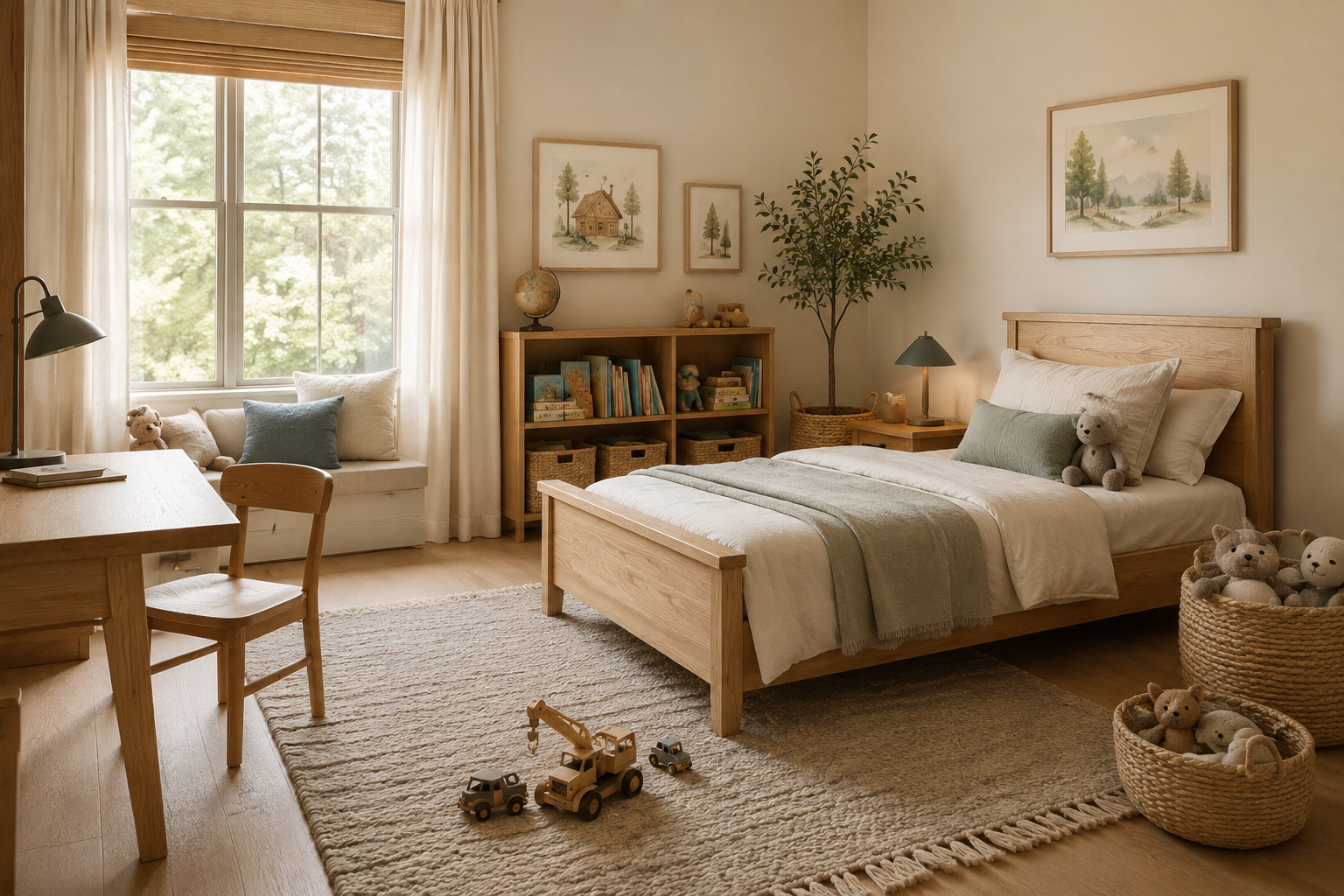
Creating a kids bedroom is about finding the right balance between comfort, personality, organization, and room to play. The best spaces feel playful without becoming visually overwhelming, while practical storage and flexible furniture make it easier for children to use the room every day.
Whether you are decorating a toddler’s room, a young child’s bedroom, or a space for an older kid, small thoughtful details can make a big difference. From creative wall decor and reading corners to smart toy storage and cozy bedding, these kids bedroom ideas can help you create a room that feels special while still working for everyday family life.
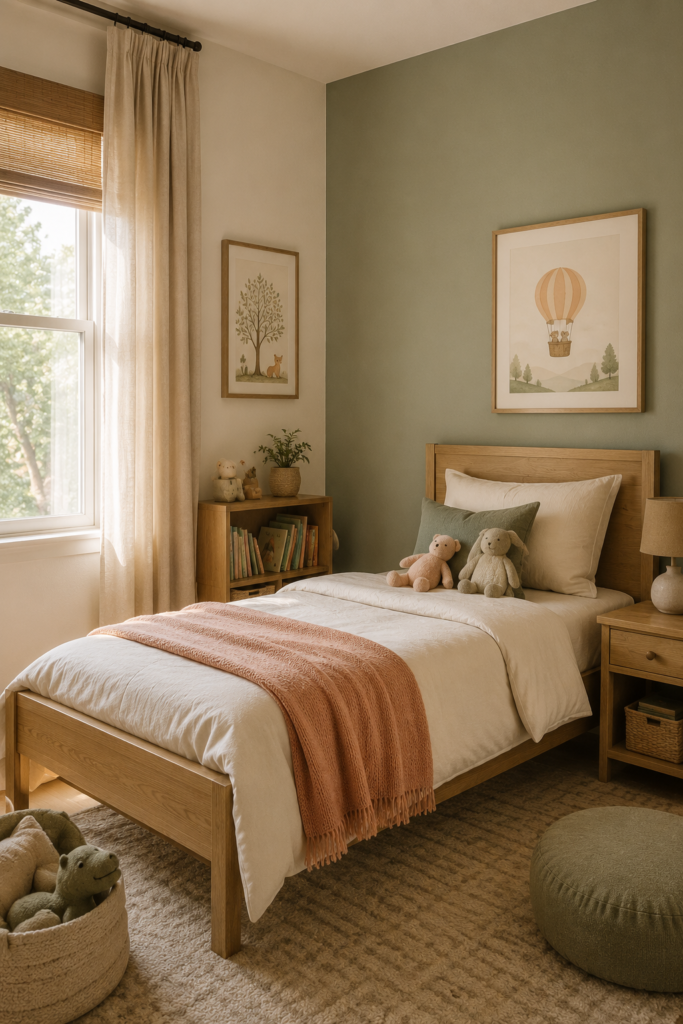
A calming color palette can make a kids bedroom feel peaceful while still leaving room for playful details. Soft sage, dusty blue, warm cream, muted peach, or gentle terracotta can work beautifully as a foundation. Keep larger pieces such as walls, rugs, and bedding relatively simple, then introduce brighter colors through artwork, toys, and accessories. This makes it easier to update the room as your child grows.
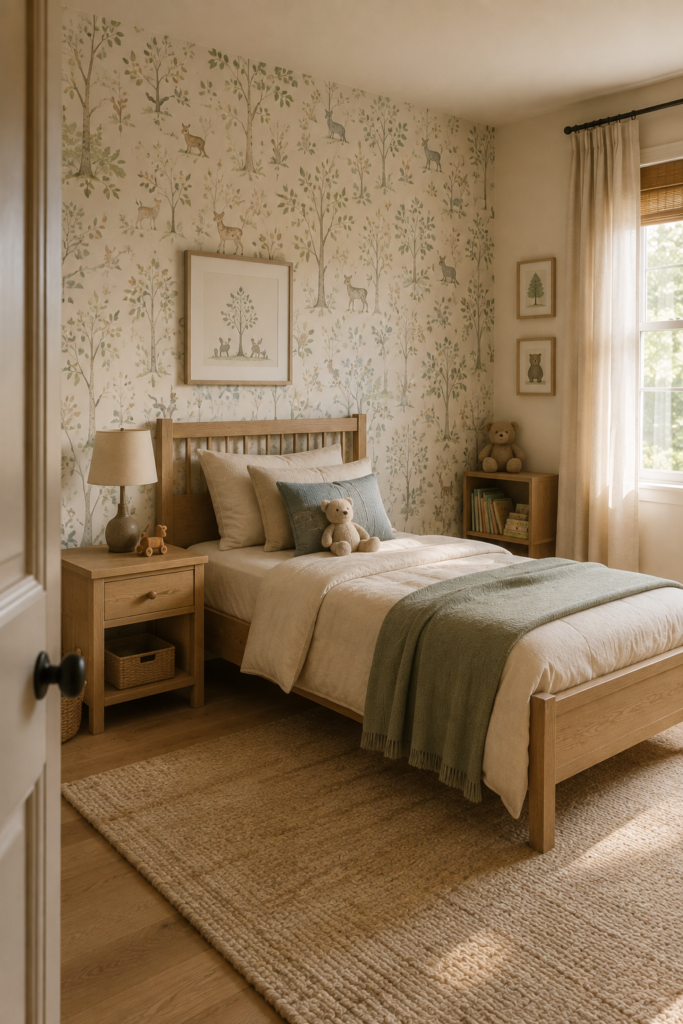
An accent wall can give a child’s bedroom plenty of personality without requiring an entire room makeover. Try removable wallpaper, simple painted arches, subtle stripes, or a playful nature-inspired pattern behind the bed. For renters, peel-and-stick wallpaper is an especially practical option. Keep the remaining walls relatively quiet so the accent wall remains the main focal point.
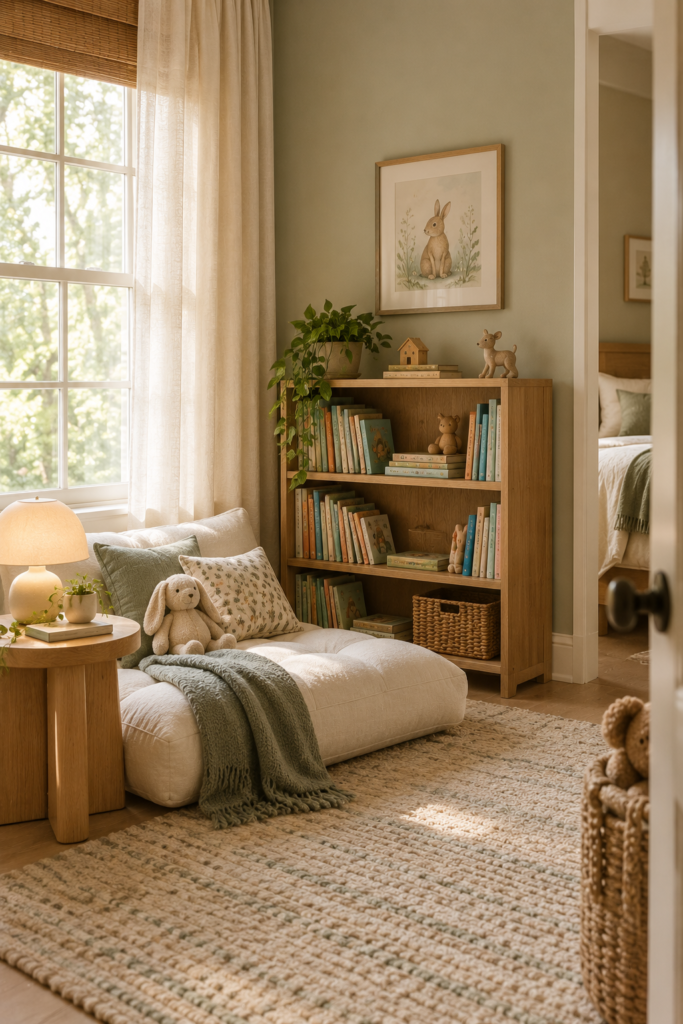
A small reading corner can encourage children to spend more time with books while giving the bedroom a cozy retreat. Place a low bookshelf beside a comfortable floor cushion, beanbag, or small upholstered chair. Add a soft rug and a warm reading lamp to make the area inviting. Displaying books with their covers facing outward can also make the nook feel colorful and accessible.
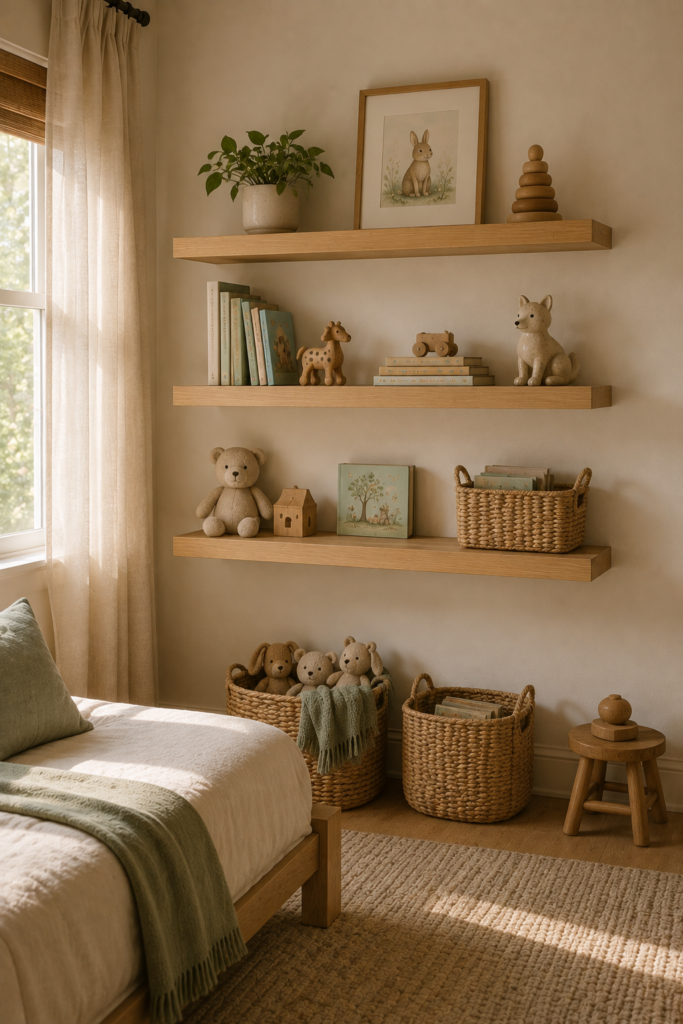
Open shelves can turn everyday toys, books, and decorative objects into part of the room’s design. Install a few sturdy shelves at an accessible height and use baskets to contain smaller items. Leave some open space so the display does not become visually cluttered. Rotating the objects on the shelves can also keep the room feeling fresh.
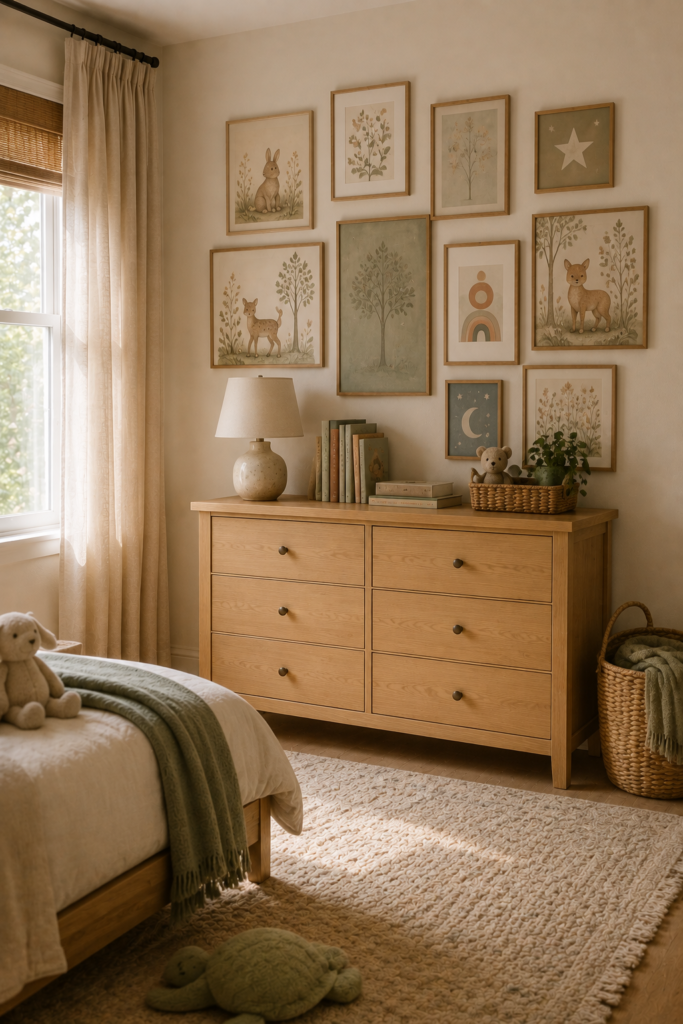
A gallery wall can make a child’s bedroom feel personal without relying entirely on themed furniture. Mix framed children’s artwork, simple illustrations, animals, landscapes, initials, or colorful prints in coordinated frames. Arrange the artwork around a central piece rather than placing everything in a perfectly rigid grid. This creates a collected look that can easily evolve over time.
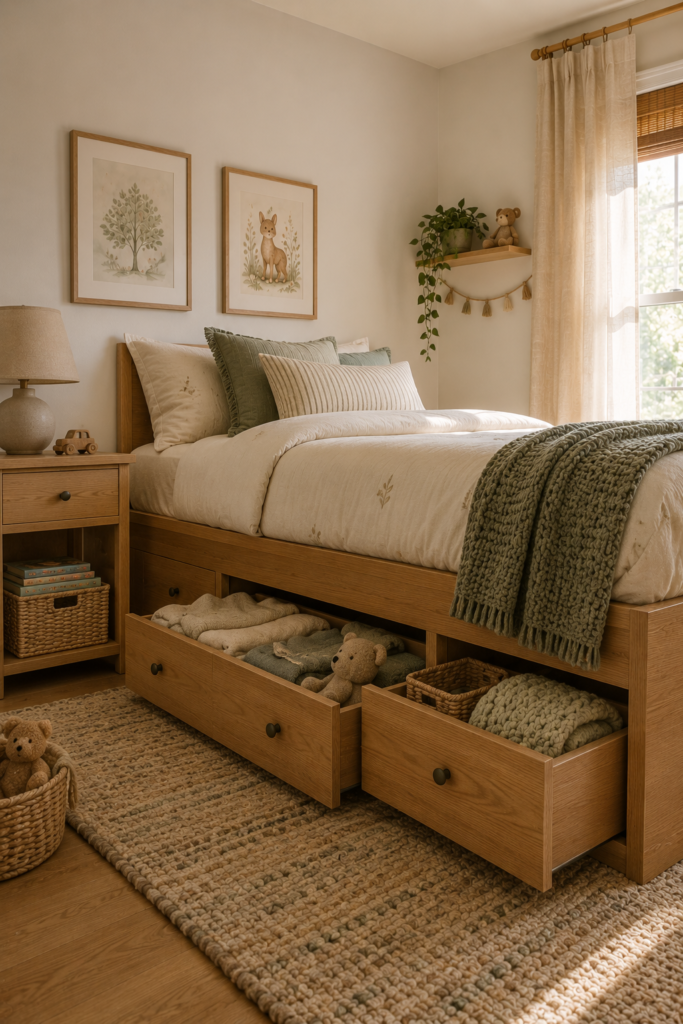
When floor space is limited, a storage bed can make the bedroom considerably easier to keep organized. Drawers underneath the bed can hold extra bedding, seasonal clothing, toys, or craft supplies. Choose a simple wood or upholstered design that works with the rest of the room. Keeping storage hidden helps maintain a calmer appearance even when the bedroom gets busy.
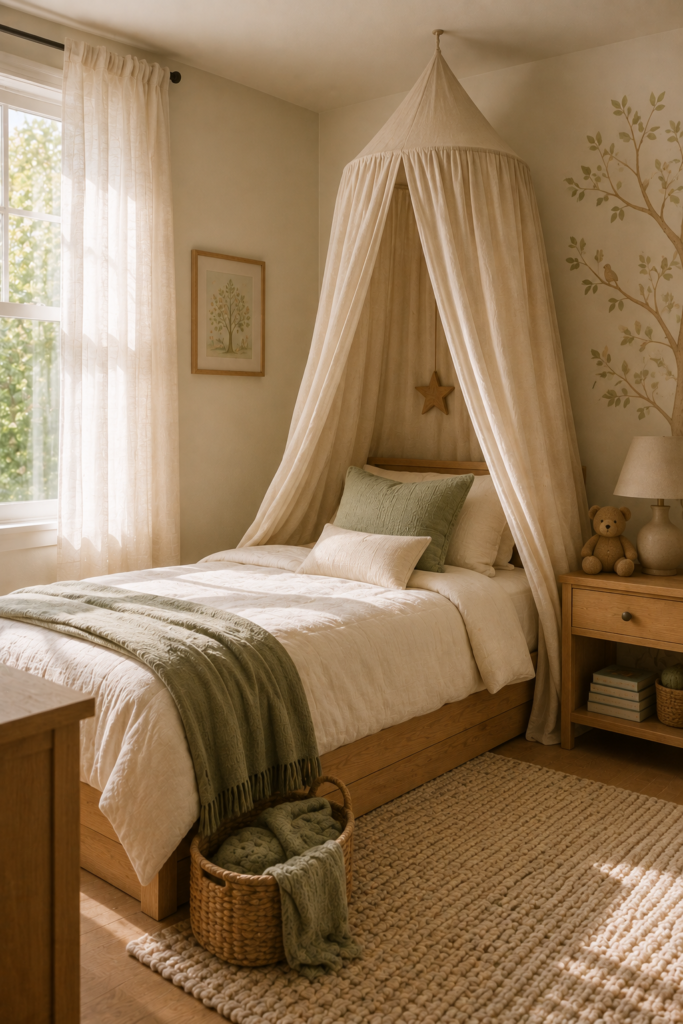
A simple fabric canopy can create a magical feeling without making the room look overly themed. Choose lightweight cotton or linen in cream, soft pink, sage, or another color that complements the bedding. Hang it above the head of the bed or create a small enclosed reading area nearby. The flowing fabric adds softness and makes the bed feel like a special retreat.
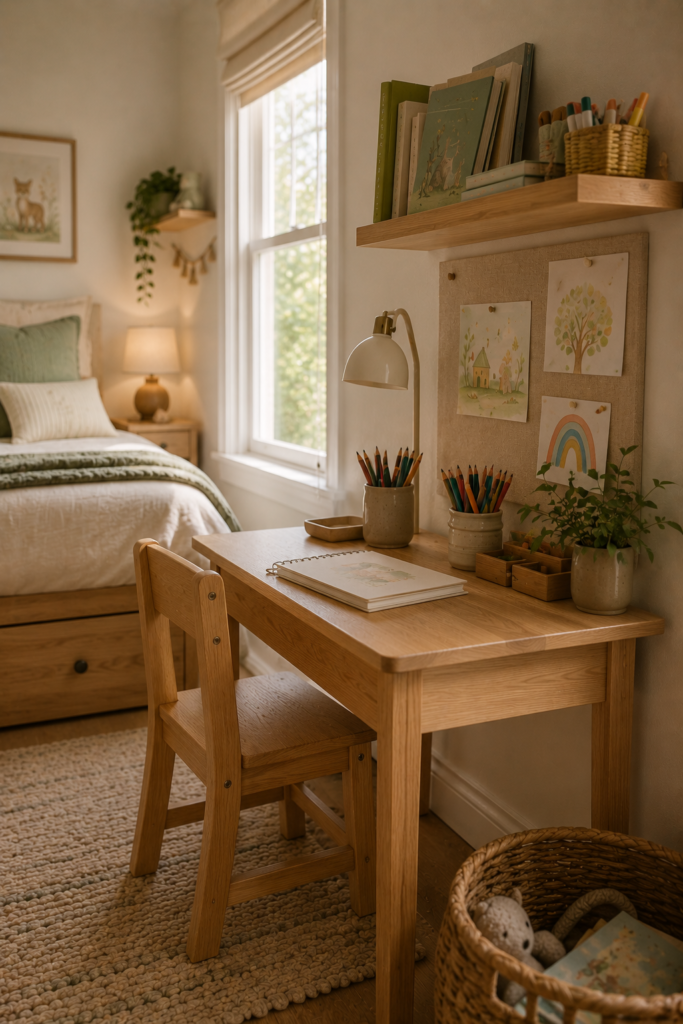
A dedicated creative station gives children a place to draw, read, write, or complete homework. A compact wooden desk with a comfortable chair can fit along an empty wall or beside a window. Add wall-mounted organizers, pencil cups, and a small shelf to keep supplies within easy reach. Keeping the desktop mostly clear makes the area more practical for different activities.
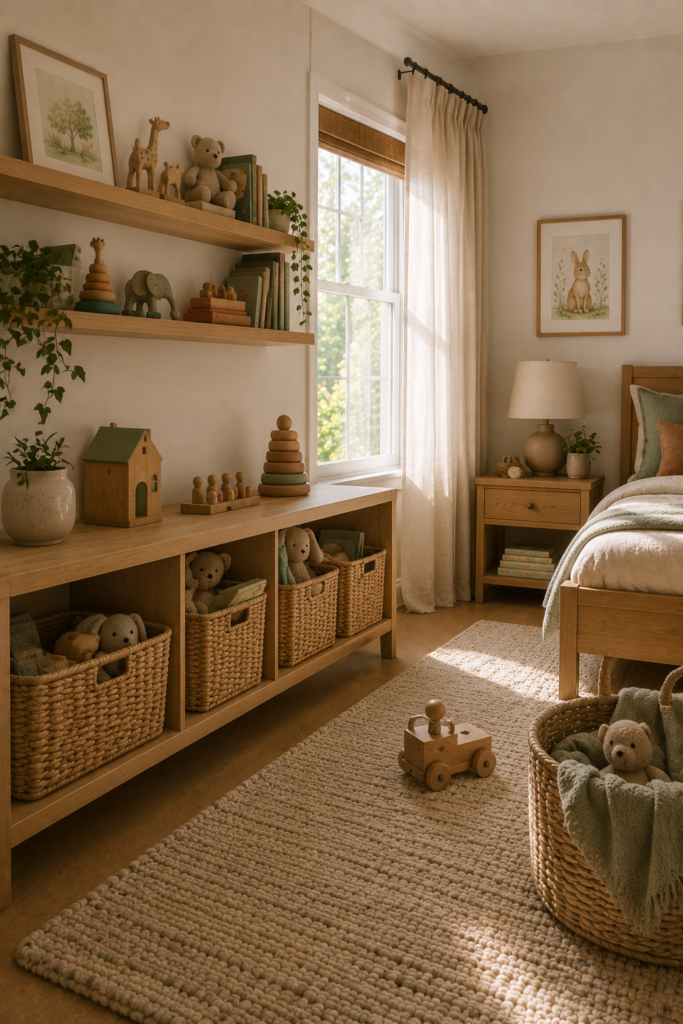
Baskets are one of the easiest ways to control toy clutter while keeping a child’s bedroom attractive. Use woven baskets, fabric bins, or wooden crates to group toys by category. Place larger baskets beneath shelves, beside a dresser, or at the end of the bed where they are easy to access. Open storage also makes cleanup simpler because children can quickly return toys to their designated places.
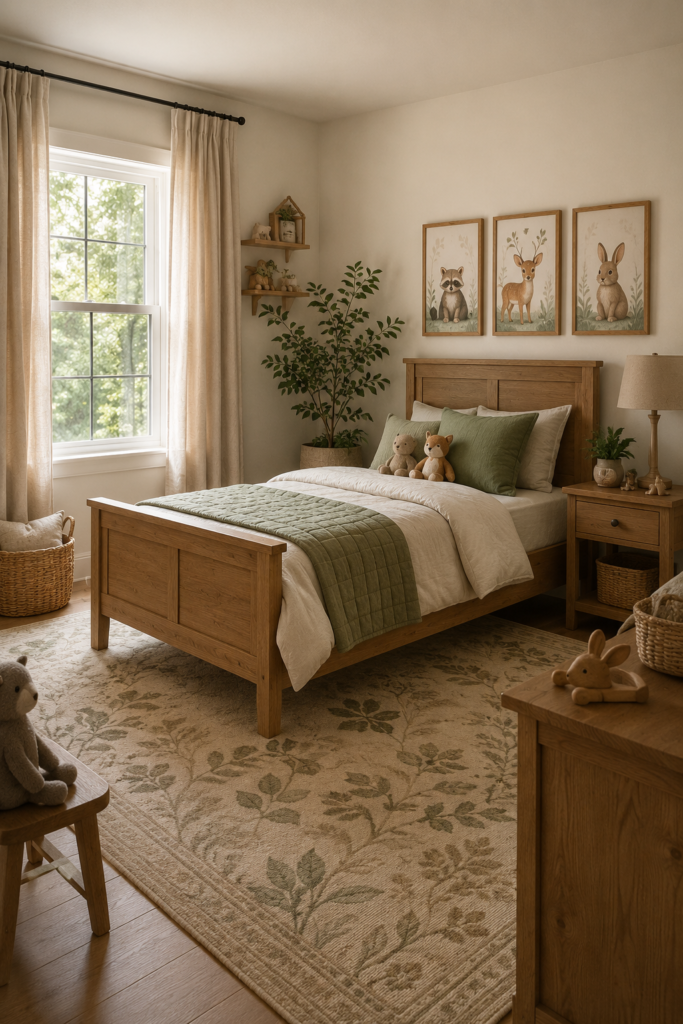
Nature-inspired bedrooms can feel playful while maintaining a calm and timeless atmosphere. Bring in botanical artwork, animal illustrations, natural wood furniture, woven baskets, and soft green accents. A subtle woodland or garden theme can create character without requiring matching character furniture throughout the room. Natural materials also help balance colorful toys and children’s belongings.
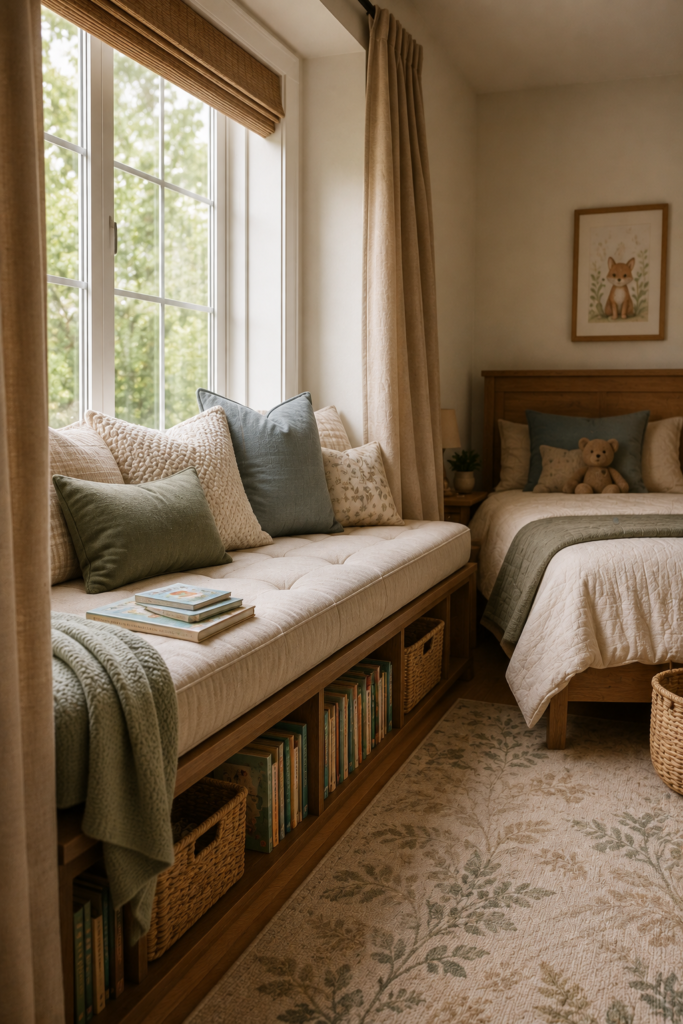
If the bedroom has a suitable window ledge or alcove, turn it into a comfortable little retreat. Add a custom cushion, a few washable pillows, and a small selection of books. Keep the styling simple so the area remains useful rather than becoming another storage zone. A window seat can become a favorite place for reading, relaxing, or watching the world outside.
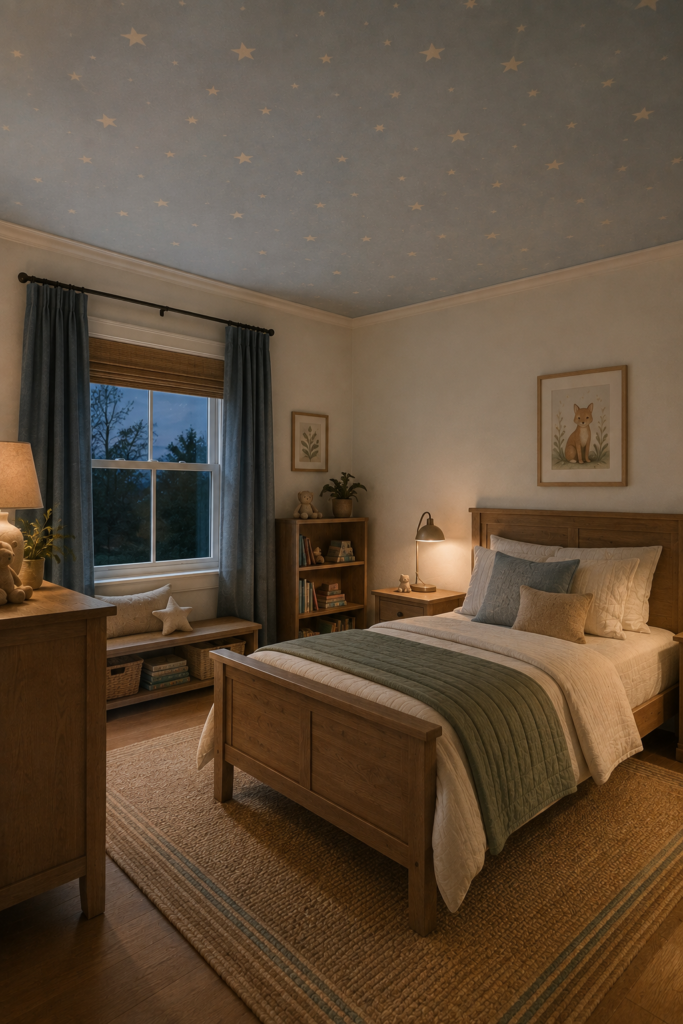
The ceiling is an unexpected place to introduce personality into a child’s room. Consider subtle painted stars, a soft color, small clouds, or a delicate wallpaper pattern overhead. Keeping the design understated prevents it from making the room feel busy. This detail can be especially charming when viewed from the bed.
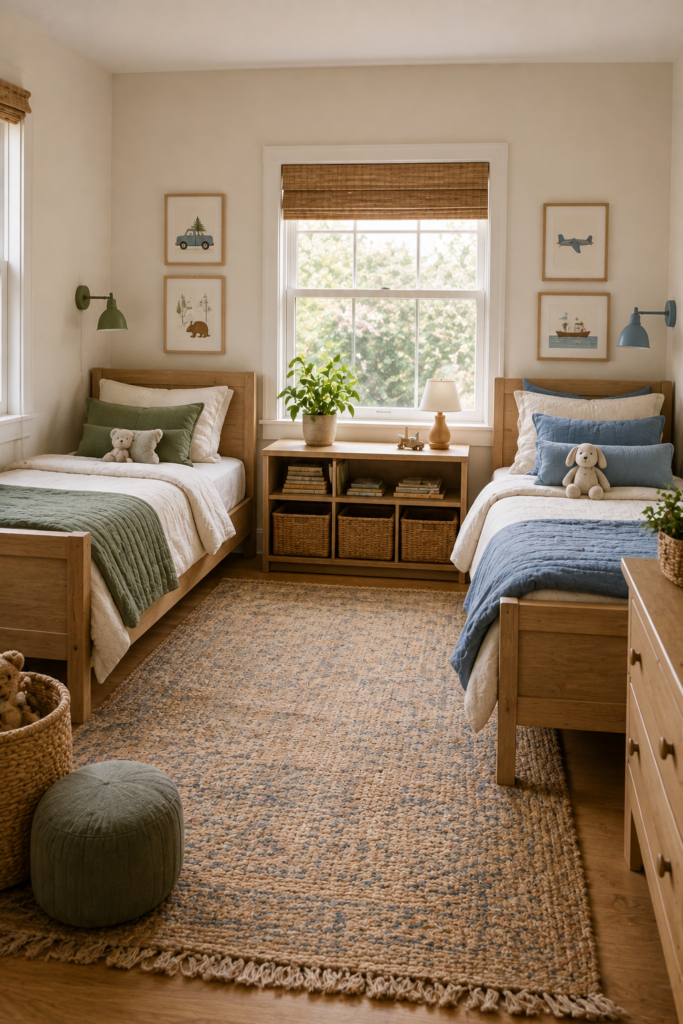
A shared bedroom needs enough structure for each child to have a personal area. Matching or complementary beds can create visual balance, while individual bedding, artwork, and storage baskets give each child their own identity. Use a shared rug or color palette to connect the two sides of the room. Vertical storage can be particularly useful when two children are sharing limited floor space.
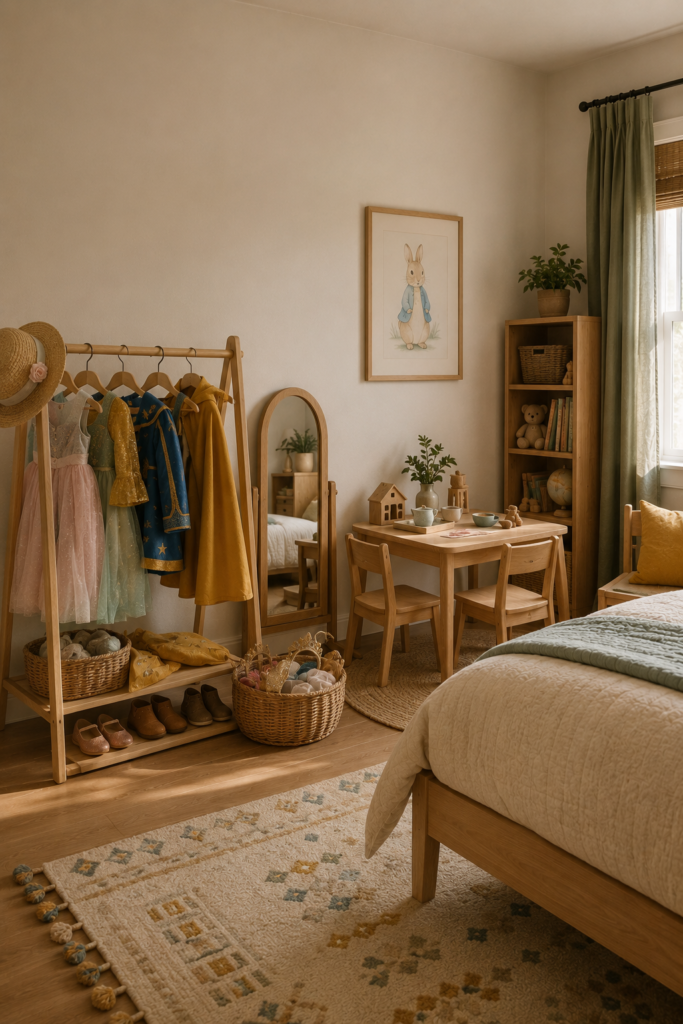
A simple pretend-play area can turn an unused corner into an imaginative space. Add a low clothing rack, a small mirror, a basket for costumes, or a compact play table. Keep the furniture simple enough that the area can eventually be repurposed as your child gets older. A few carefully selected props can provide plenty of opportunities for creative play without filling the entire bedroom with toys.
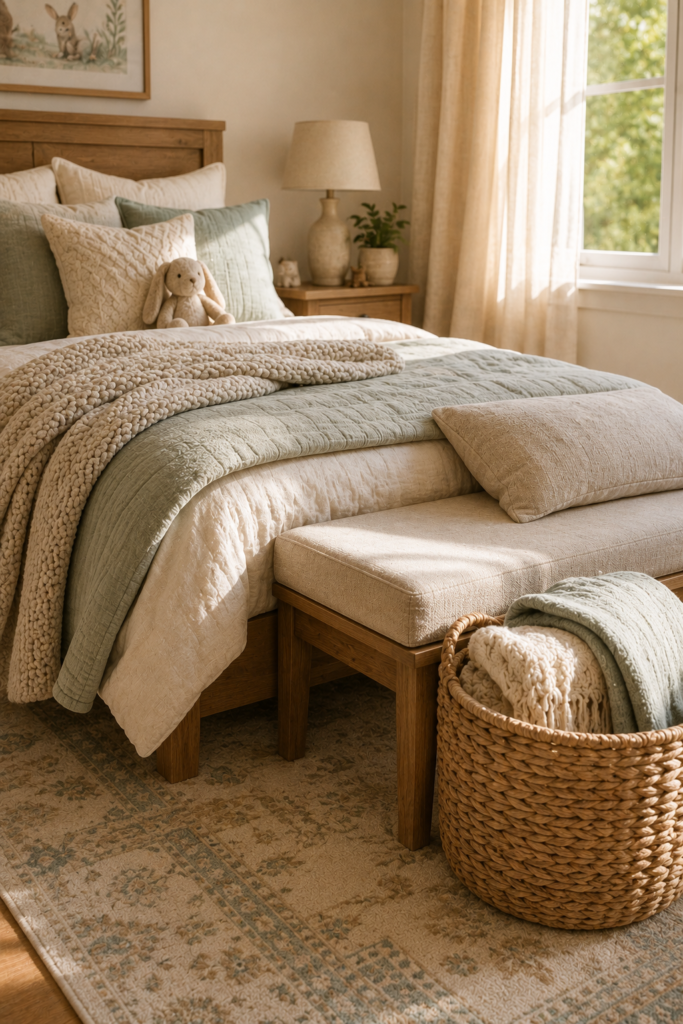
Comfortable textiles can make a kids bedroom feel warm and inviting while also adding color and texture. Choose a washable rug, cotton or linen bedding, soft curtains, and a few durable cushions or throws. Layering subtle patterns can make the room feel playful without becoming chaotic. Practical fabrics are especially important in children’s spaces because everyday spills and messes are inevitable.
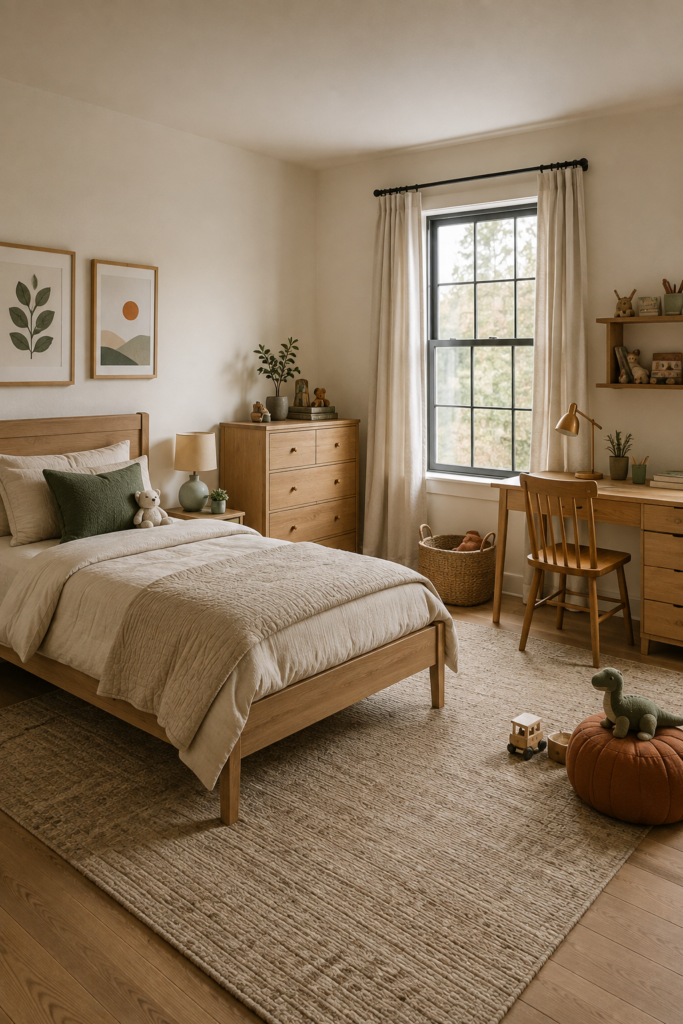
The most successful kids bedrooms are designed to change as the child grows. Choose quality basics such as a simple bed, versatile dresser, neutral rug, and timeless lighting, then use smaller accessories to reflect their current interests. Artwork, bedding, pillows, and decorative objects can be replaced much more easily than large furniture. This approach keeps the bedroom functional and stylish through different stages of childhood.
A beautiful kids bedroom does not need to be packed with color, toys, or themed decorations. The best rooms combine comfortable furniture, accessible storage, creative details, and enough open space for children to play and relax.
Start with a practical foundation, then add personality through artwork, textiles, books, and playful accessories. By choosing flexible pieces that can grow with your child, you can create a bedroom that feels cozy and special today while remaining useful for years to come.
15 Toddler Room Ideas for a Cozy, Playful, and Functional Space