Address
304 North Cardinal St.
Dorchester Center, MA 02124
Work Hours
Monday to Friday: 7AM - 7PM
Weekend: 10AM - 5PM

Address
304 North Cardinal St.
Dorchester Center, MA 02124
Work Hours
Monday to Friday: 7AM - 7PM
Weekend: 10AM - 5PM

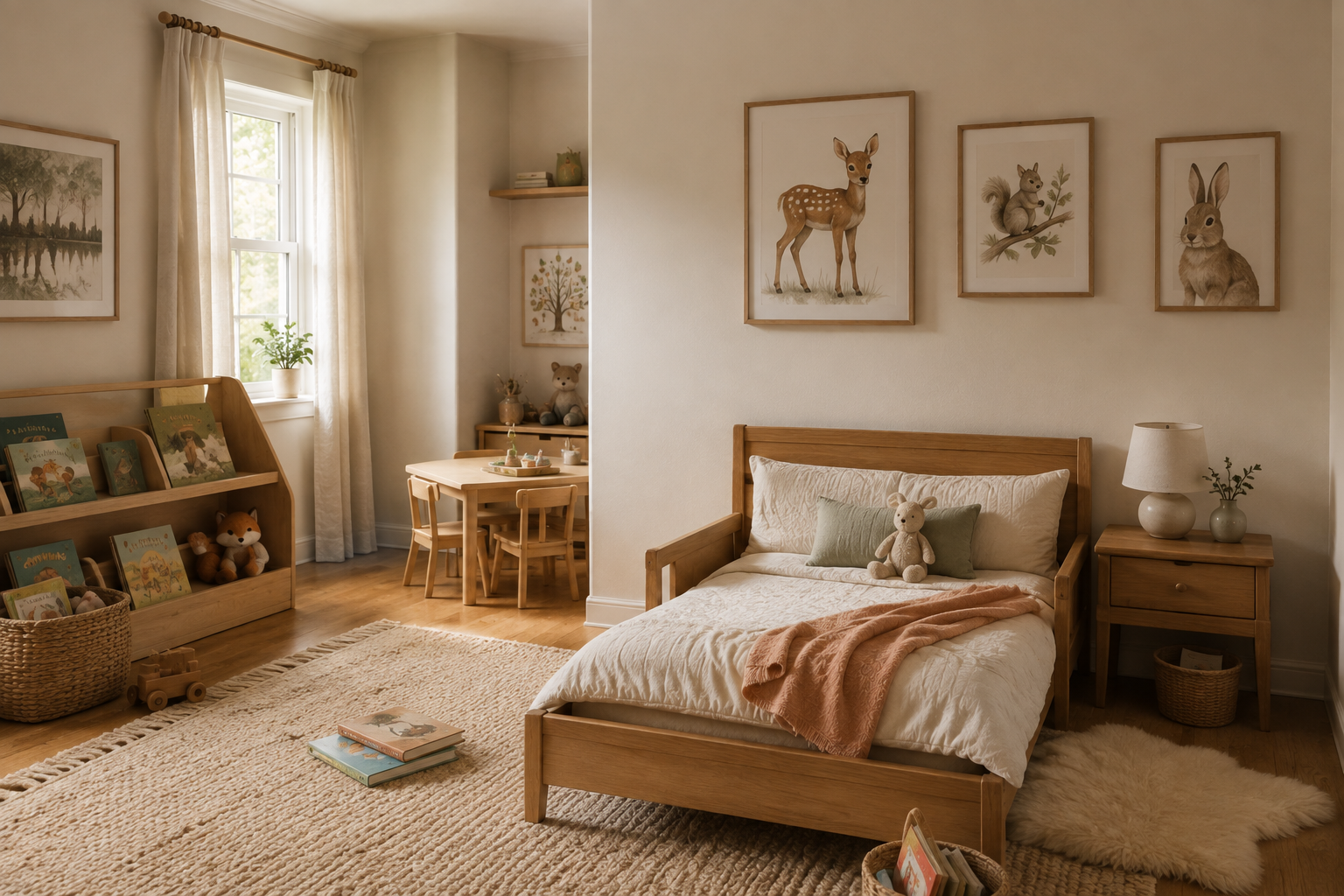
A toddler room needs to do more than look adorable. It should give a young child a comfortable place to sleep, room to play, and simple ways to begin becoming more independent, while still being practical for parents. Current children’s-room design is also moving toward flexible, personality-driven spaces rather than rooms that feel overly themed or designed only for photographs.
The best toddler room ideas combine soft colors, approachable storage, comfortable textures, playful details, and furniture that can adapt as the child grows. Safety should be considered before decoration, especially with tall furniture, windows, cords, and anything a toddler can climb.
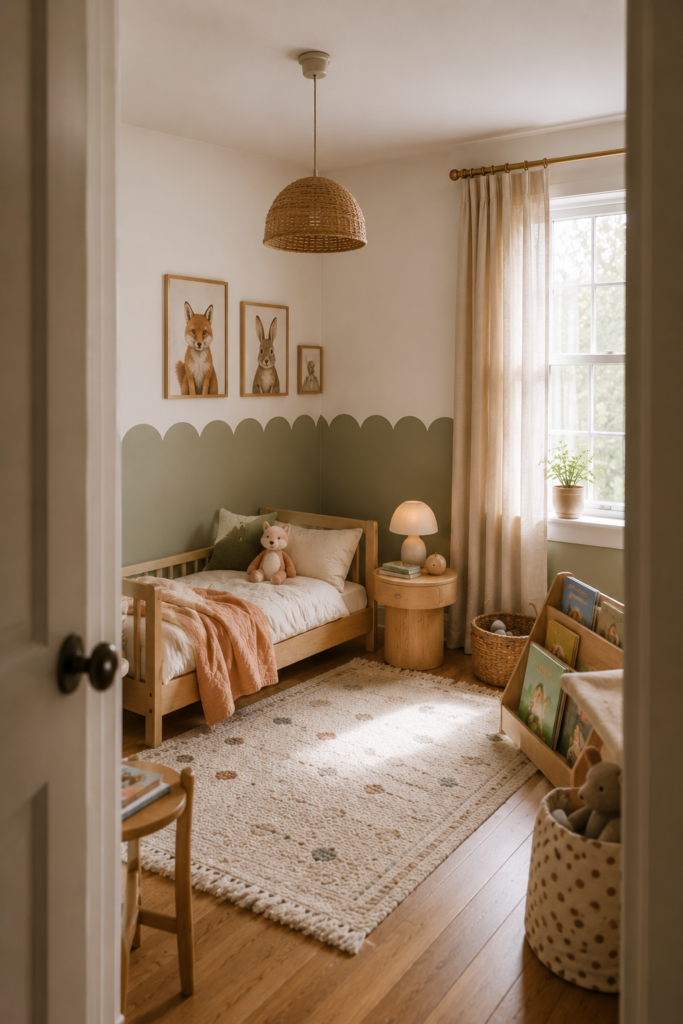
A toddler bedroom can feel cheerful without being covered in bright primary colors. Try warm white, soft sage, dusty blue, muted peach, pale yellow, or gentle terracotta with natural wood furniture. Keeping the larger surfaces relatively calm makes it easier to introduce playful colors through artwork, bedding, toys, and small accessories. A flexible palette can also continue to work as your child gets older.
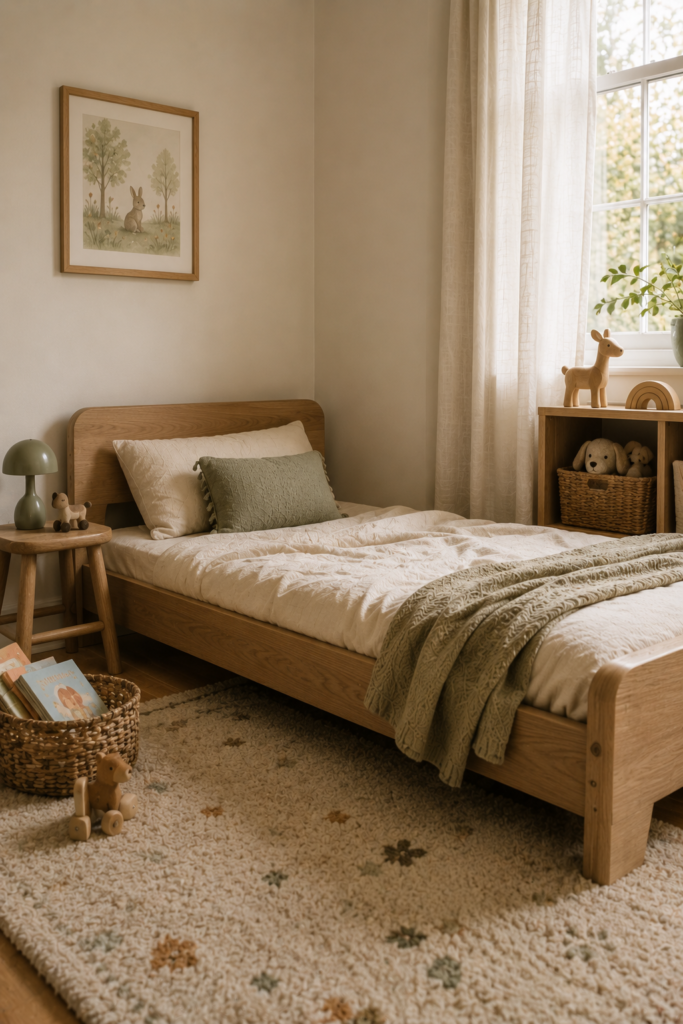
A low-profile toddler bed can make the room feel approachable and comfortable while giving the child a more independent sleeping environment. Choose a sturdy bed with rounded or softened edges and leave enough clear space around it for easy movement. Layer the bed with simple washable bedding in playful but timeless colors. The goal is to make the sleeping area feel special without filling it with unnecessary accessories.
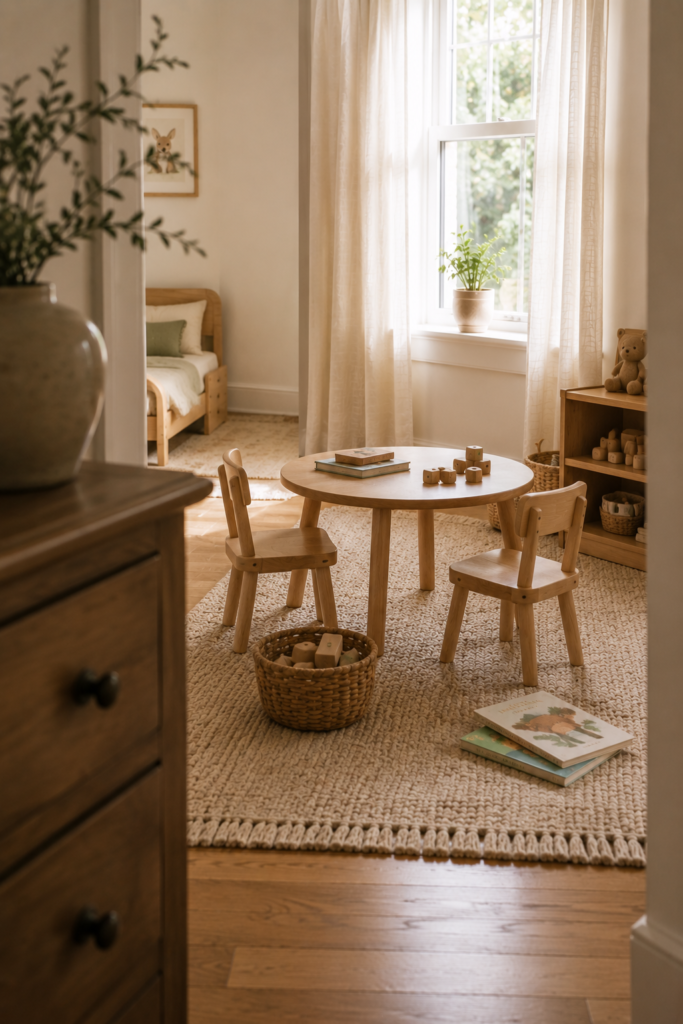
A small play zone can make the bedroom feel much more functional. Add a soft rug, a low toy basket, a small table, or a few floor cushions where your toddler can play comfortably. Keeping toys concentrated in one area also makes the rest of the room easier to organize. Leave enough open floor space for imaginative play rather than filling every corner with furniture.
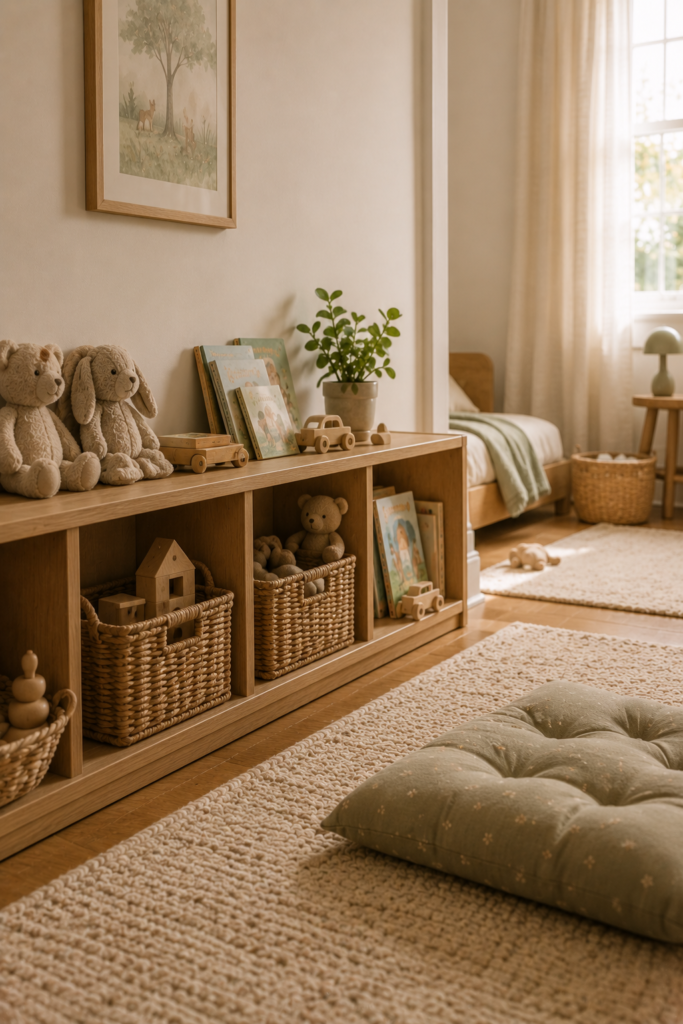
Storage works best when a toddler can actually reach the items they are expected to use. Use low open shelves, baskets, bins, or cubbies to organize books, stuffed animals, blocks, and other favorite toys. Keep heavier items lower and secure larger storage furniture appropriately to the wall.
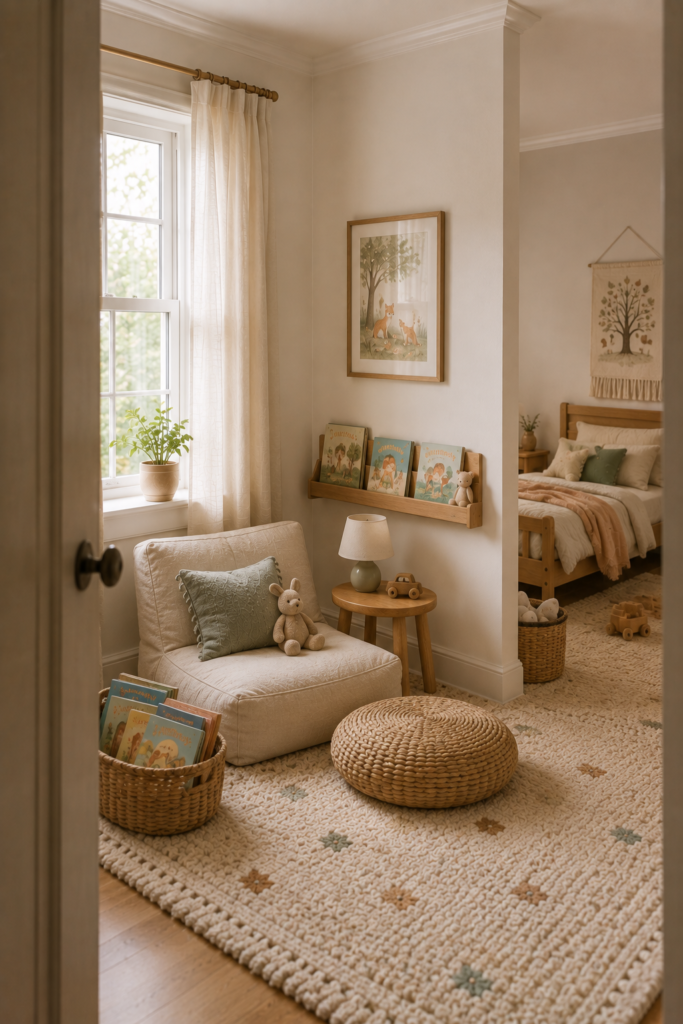
A small reading corner can become one of the most charming features in a toddler room. Place a comfortable floor cushion, small upholstered chair, or low bench beside a basket filled with picture books. Add a soft rug and a simple wall-mounted display for a few favorite books. Keep the atmosphere calm and inviting so the nook feels like a natural place for quiet time.
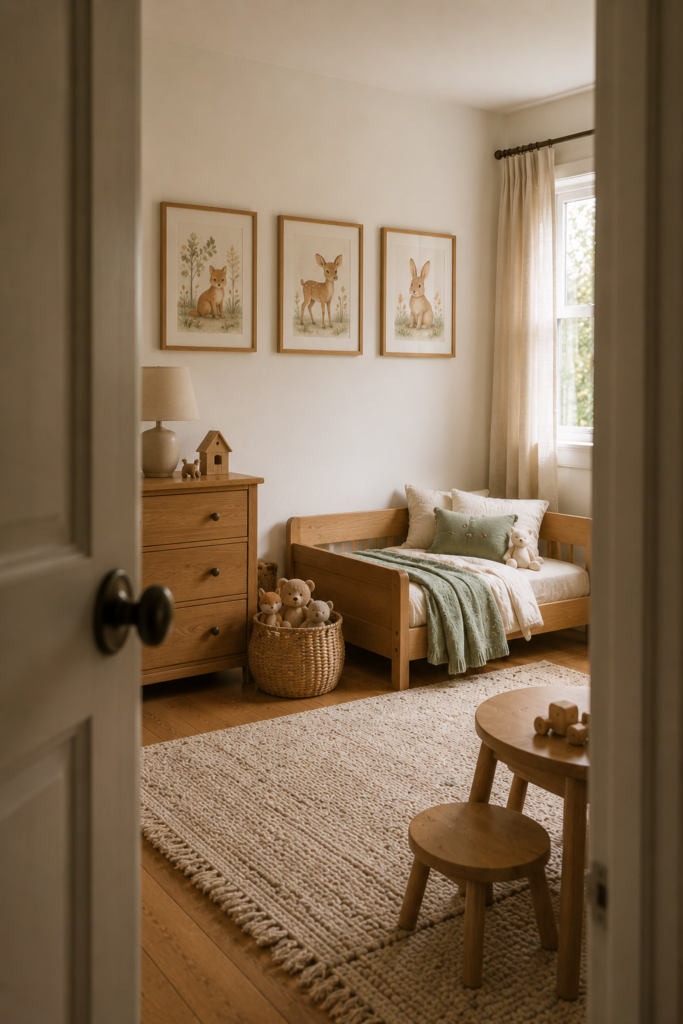
Nature themes can give a toddler room personality without making it feel too childish. Consider woodland animals, gentle botanical illustrations, clouds, rainbows, or a subtle forest-inspired palette. Use wallpaper, removable decals, artwork, or bedding for the theme rather than committing every element of the room to it. This makes the room much easier to update later.
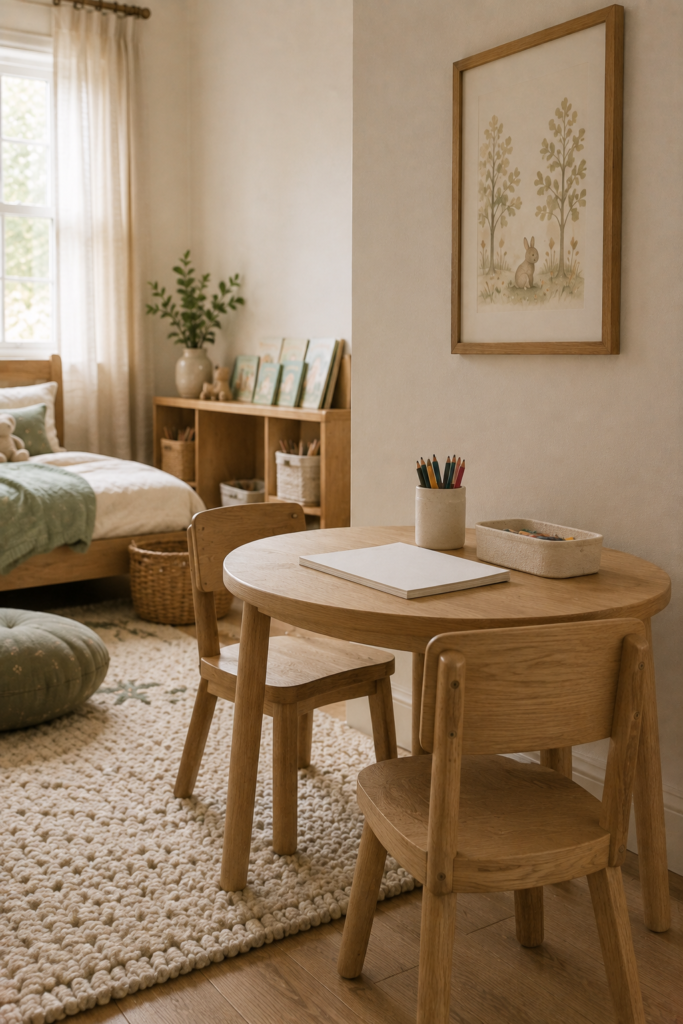
Toddlers benefit from having a designated place for drawing and simple creative activities. A small child-sized table with two sturdy chairs can create a practical activity zone without taking over the bedroom. Store crayons, paper, and other age-appropriate supplies in accessible containers that can be supervised easily. Keep the surrounding decor simple so the area feels energetic without becoming visually chaotic.
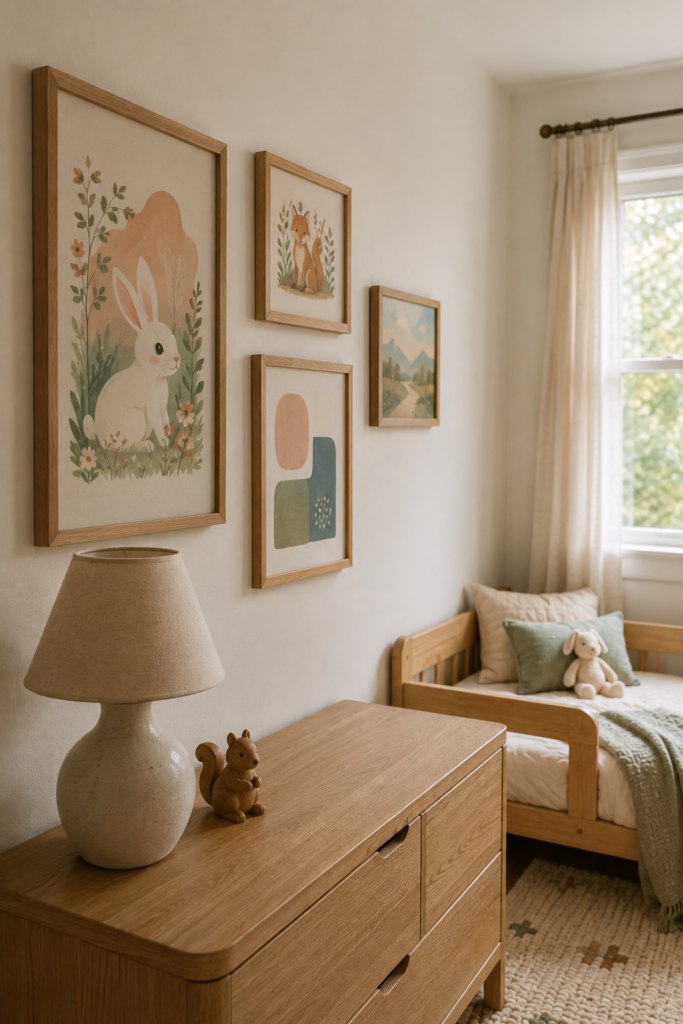
Wall decor is an easy way to bring personality into a toddler bedroom without sacrificing floor space. Hang colorful animal illustrations, whimsical landscapes, alphabet artwork, or simple abstract prints at an appropriate height. A small collection of coordinated frames can create a playful gallery wall while still looking polished. Choose designs that can transition easily as your child’s interests change.
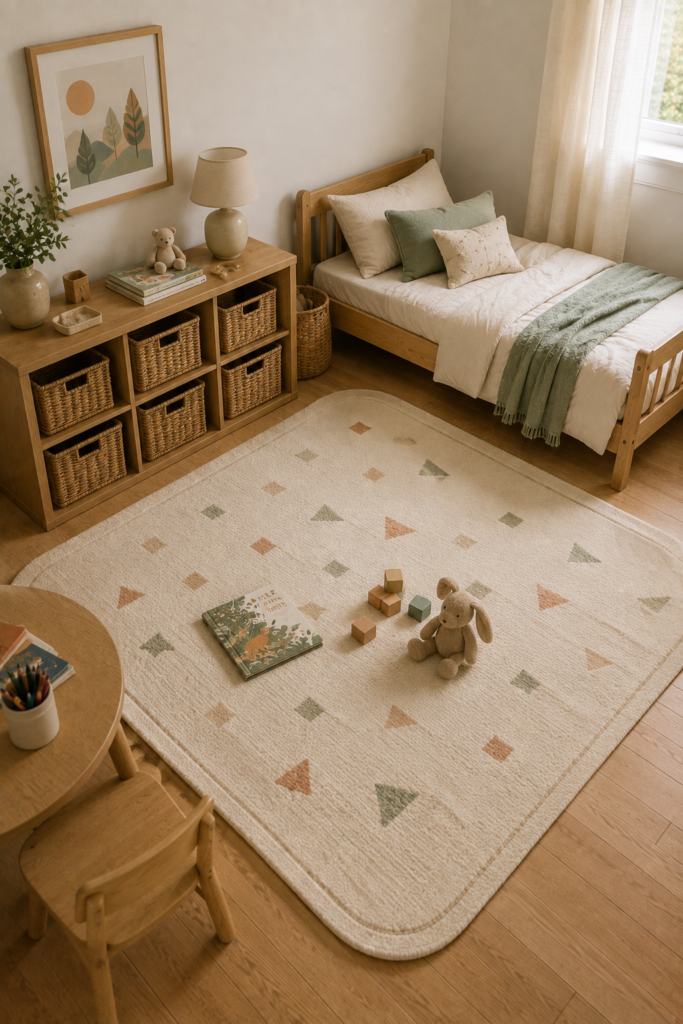
A comfortable rug can visually define the center of a toddler bedroom while creating a softer surface for sitting and playing. Choose a durable, easy-to-clean design in a subtle pattern or warm neutral shade that hides everyday wear. A playful geometric or animal-inspired pattern can also add personality without overwhelming the room. Make sure the rug is positioned securely so it does not become a tripping hazard.
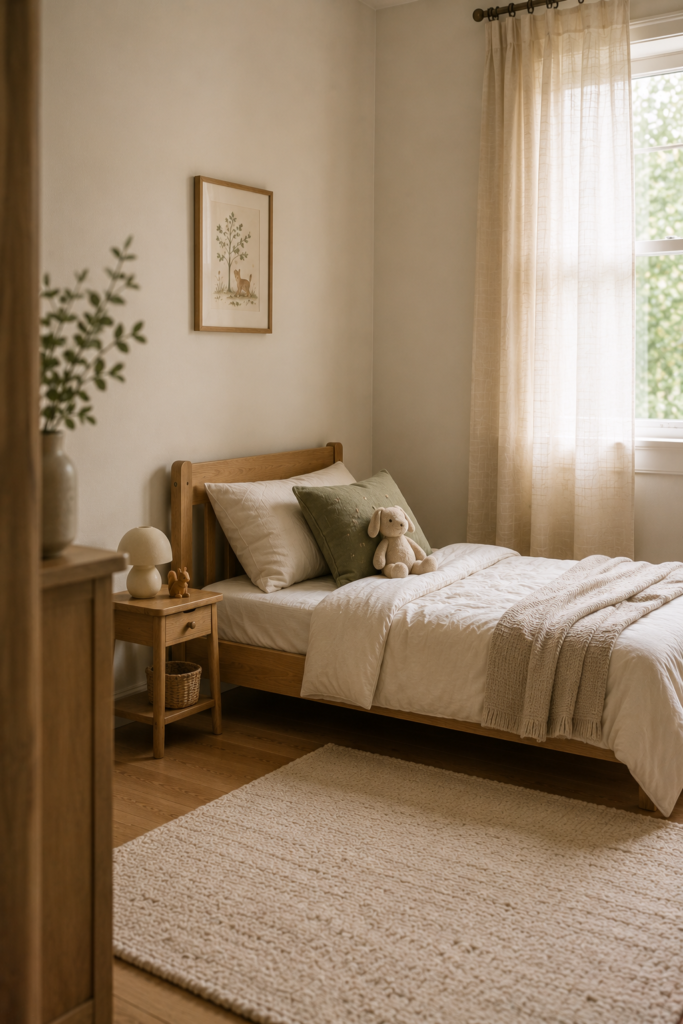
A toddler bedroom should have a clear distinction between energetic play areas and the sleeping zone. Use soft bedding, calming colors, comfortable window treatments, and gentle lighting around the bed. Blackout curtains can be useful when appropriate, while a soft night-light can provide gentle illumination without making the room overly bright.
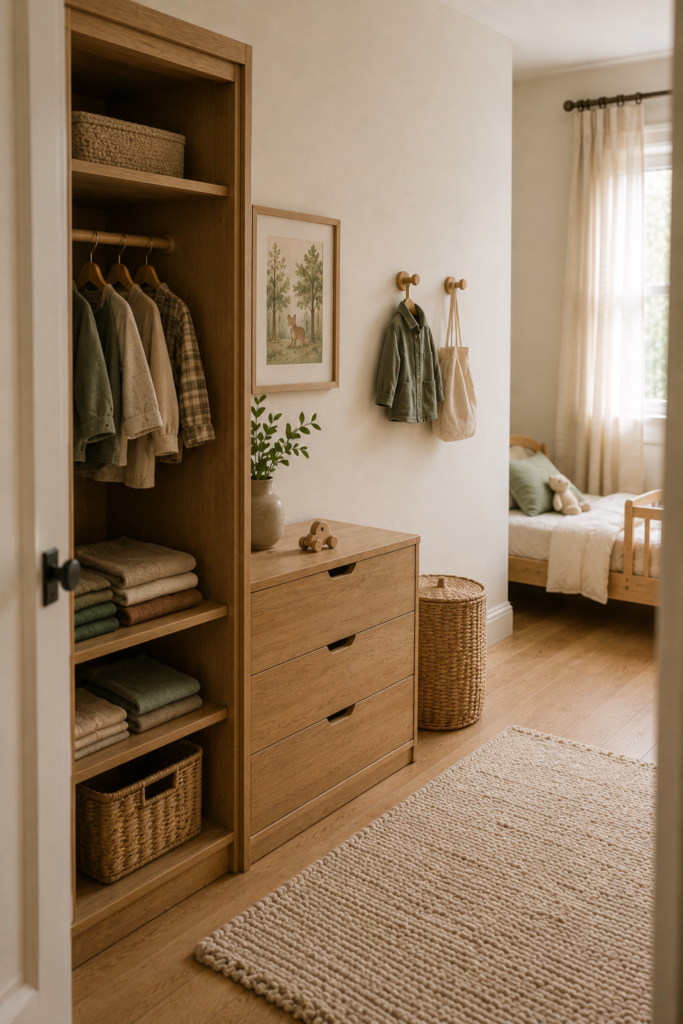
Give your toddler a simple place for clothing and everyday belongings. A compact wardrobe with secure doors or a low dresser can keep the room organized while leaving more floor space available for play. A few accessible hooks or low storage compartments can also encourage children to participate in simple tidying routines. Keep taller furniture securely anchored rather than relying on its weight or position for stability.
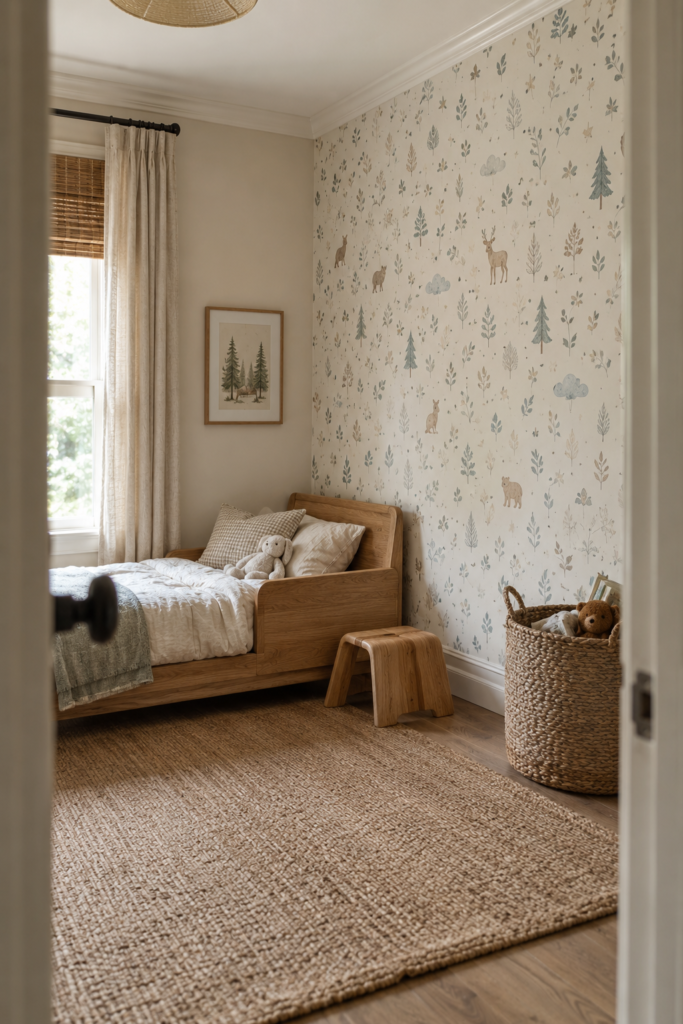
Removable wallpaper or decals can create a strong focal point without committing to a permanent theme. Try soft woodland illustrations, tiny stars, clouds, botanical shapes, or a subtle geometric pattern on one wall. Keeping the other walls relatively simple prevents the room from becoming visually overwhelming. It also makes future updates much easier as your toddler’s preferences change.
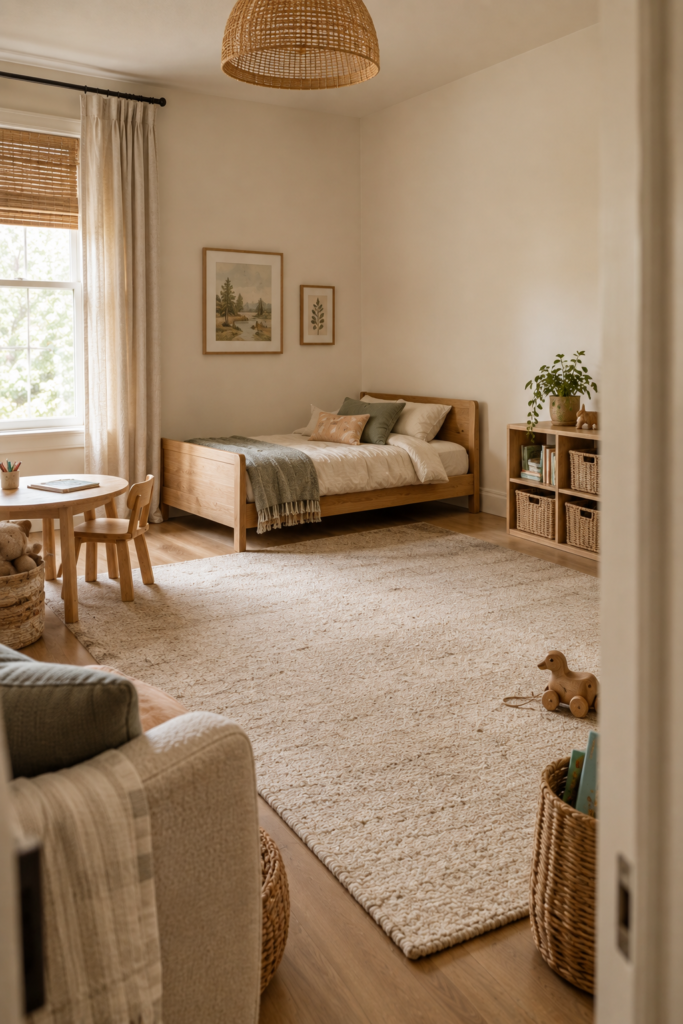
Toddlers need open space to move, play, and explore, so avoid pushing too much furniture into the room. Position the bed, storage, and play areas so there is a clear pathway through the space. Choose pieces that can serve more than one purpose, such as storage benches or tables with built-in compartments. Flexible layouts are particularly useful because the room’s needs can change quickly as the child grows.
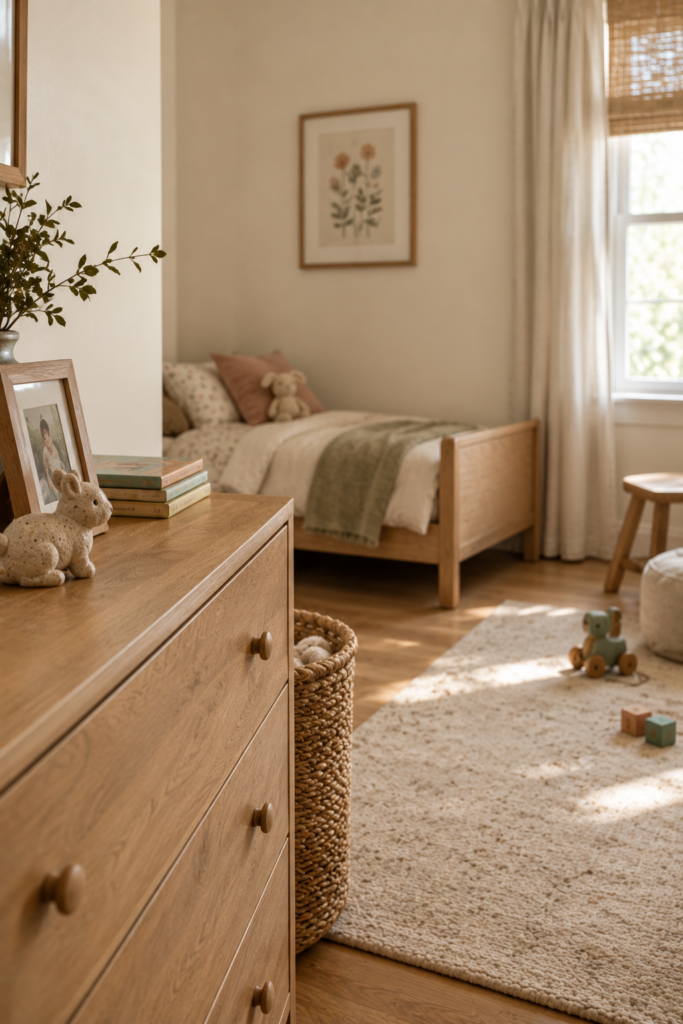
A few meaningful details can make a toddler room feel much more personal than a collection of generic children’s accessories. Display a favorite piece of artwork, a handmade toy, a family photograph, or a small collection of treasured books. Keep decorative objects limited and prioritize pieces that are appropriate for the child’s age and environment. A slightly imperfect, lived-in room often feels warmer than one filled with perfectly coordinated decorations.
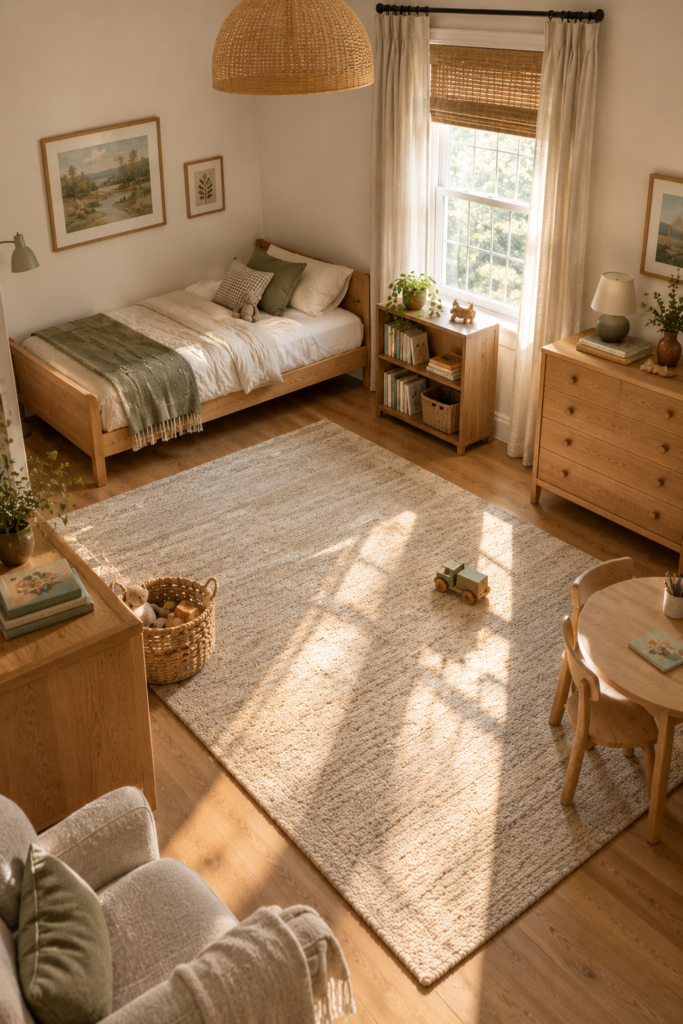
The most practical toddler rooms are designed with the next few years in mind. Instead of investing heavily in furniture that only works for a very short stage, choose adaptable pieces, timeless colors, and easily replaceable decorative elements. Keep themes mainly in artwork, wallpaper, bedding, and accessories so they can be changed without redesigning the entire room. A flexible foundation allows the bedroom to evolve naturally from toddlerhood into early childhood.
A beautiful toddler room should balance safety, comfort, play, and personality rather than focusing only on appearance. Soft colors, accessible storage, open play space, cozy textiles, and playful artwork can create a room that feels special while still working for everyday family life.
Start with the room’s basic layout and safety needs, then build the design around sleep, play, and storage. By keeping the larger pieces timeless and adding personality through easily changed details, you can create a toddler bedroom that feels charming now and continues to work as your child grows.
10 Small Bedroom Decor Ideas to Make the Most of Your Space