Address
304 North Cardinal St.
Dorchester Center, MA 02124
Work Hours
Monday to Friday: 7AM - 7PM
Weekend: 10AM - 5PM

Address
304 North Cardinal St.
Dorchester Center, MA 02124
Work Hours
Monday to Friday: 7AM - 7PM
Weekend: 10AM - 5PM

This post contains affiliate links. We may earn a small commission at no extra cost to you.
The right living room paint color can completely change how a space feels, from making a small room appear brighter to giving a large space a cozy, sophisticated atmosphere. Whether you prefer timeless neutrals, earthy greens, moody shades, or subtle color, the best choice should work naturally with your furniture, lighting, flooring, and overall decor style. These living room paint color ideas offer a range of beautiful options for creating a polished and inviting home.
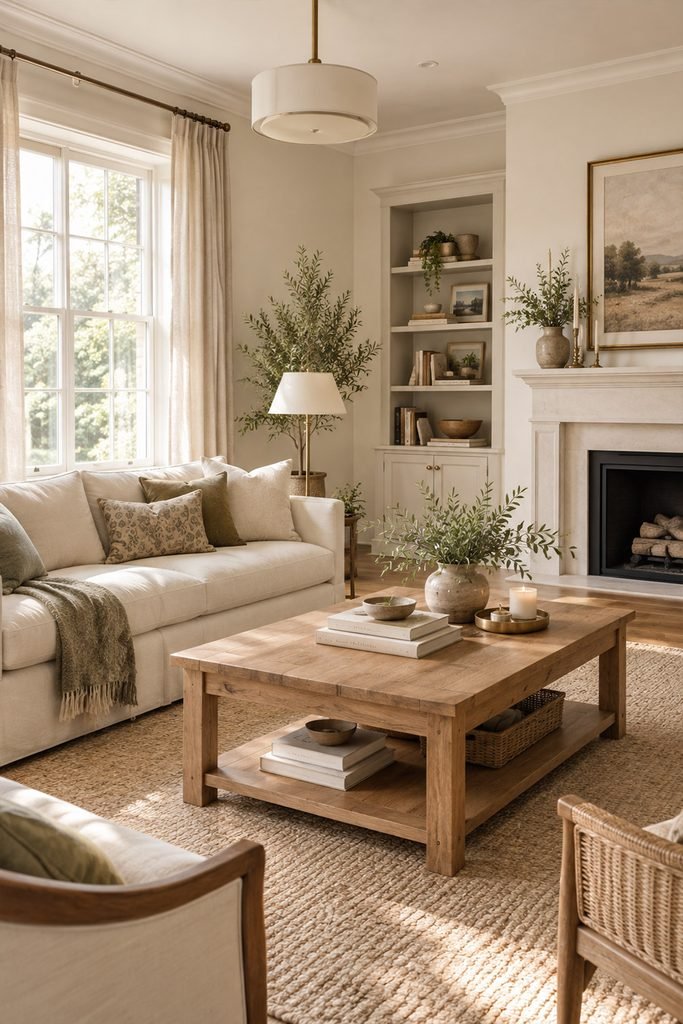
Warm soft white is a timeless choice for a living room, especially when you want the space to feel bright without looking cold or stark. Unlike crisp blue-based whites, warmer whites pair beautifully with natural wood, beige upholstery, woven textures, and brass accents. Use the color across the walls and trim for a seamless look, then introduce contrast through artwork, pillows, rugs, and darker furniture. This approach works particularly well in both traditional and modern American interiors.
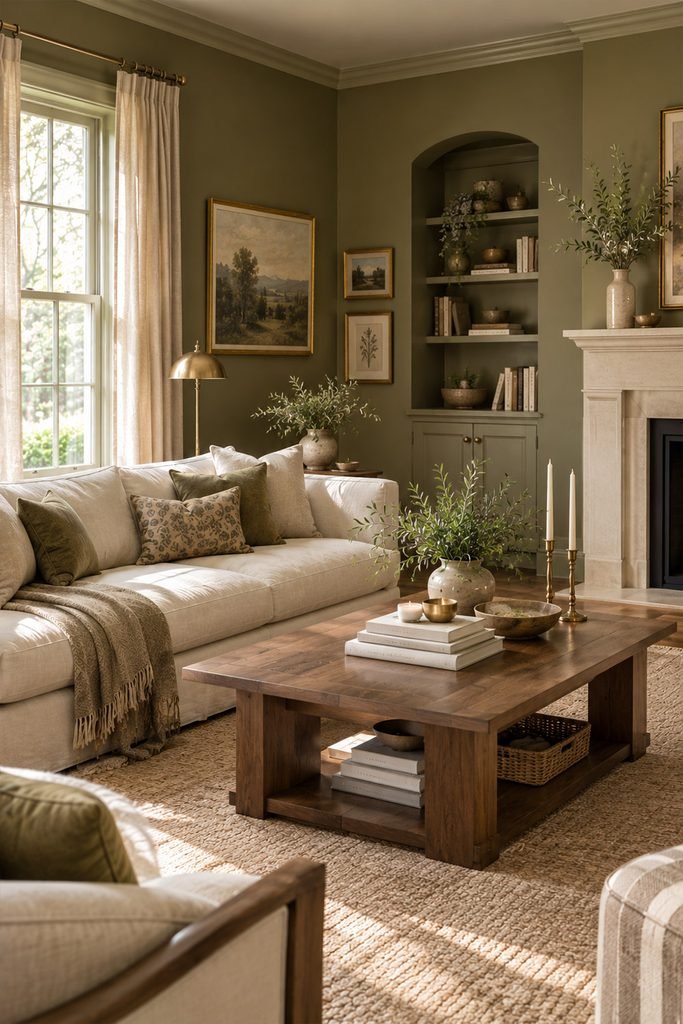
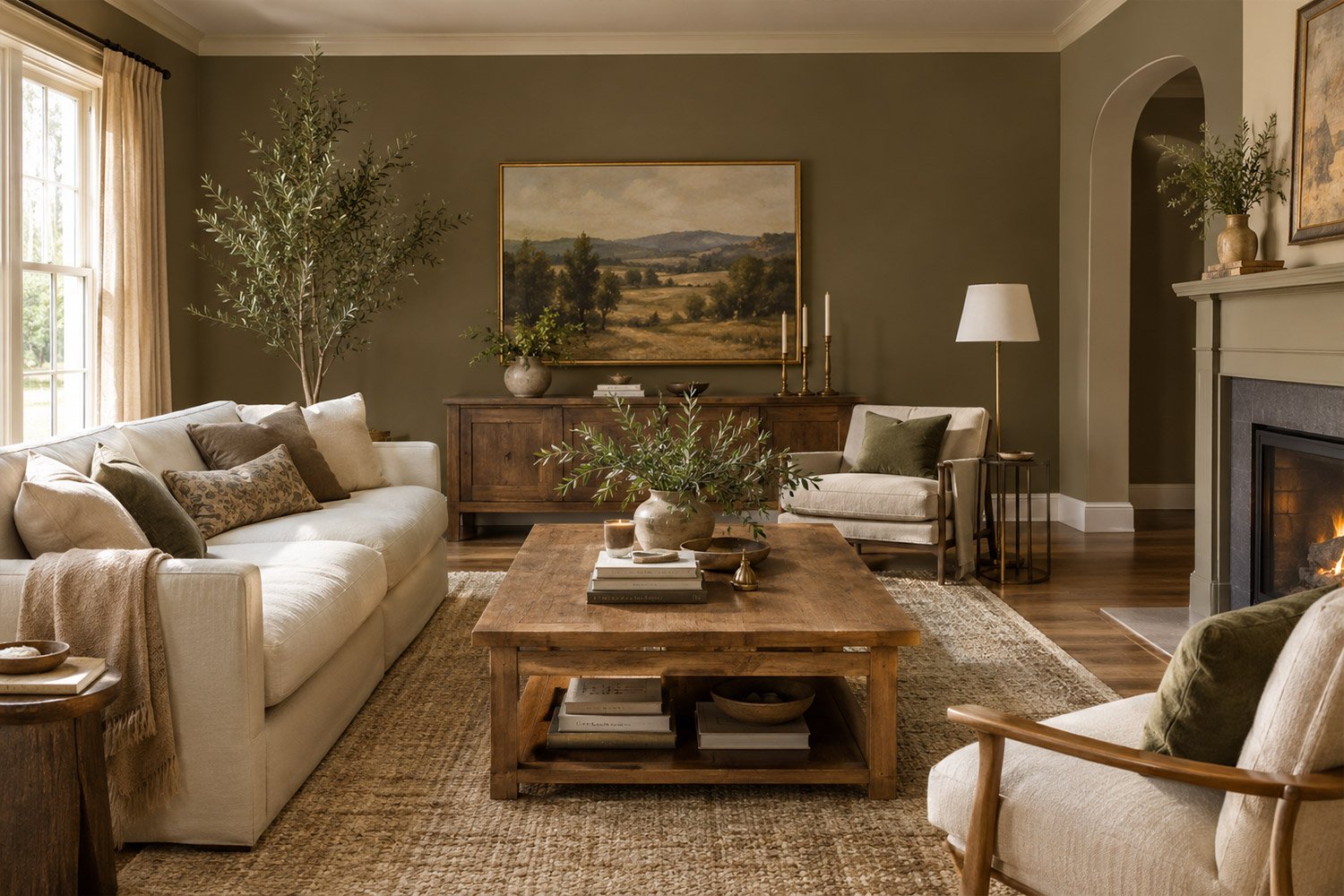
Muted olive green brings an earthy, sophisticated quality to the living room without overwhelming the space. Its natural undertones work beautifully with cream sofas, walnut furniture, linen fabrics, and aged brass details. For a refined look, keep the rest of the palette relatively quiet and allow the wall color to become the room’s defining feature. Olive is especially effective in rooms with plenty of natural light, where its subtle variations become more noticeable throughout the day.
👉 [ Shop High-quality interior wall paint supplies on Amazon ]
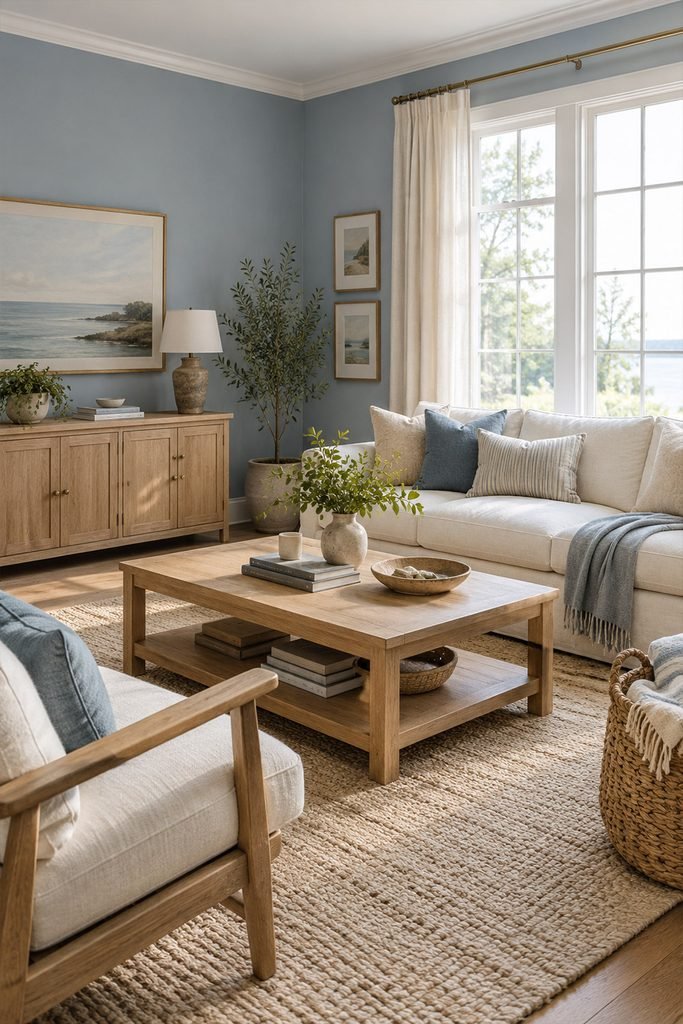
Dusty blue creates a relaxed and elegant atmosphere while adding more personality than a traditional neutral. A muted version works particularly well because it doesn’t feel overly bright or childish. Pair dusty blue walls with warm white upholstery, natural oak, woven baskets, and soft neutral textiles for a balanced look. In a coastal-inspired room, introduce subtle blue accents throughout the decor, while in a more contemporary space, combine the walls with charcoal, black, or warm wood.
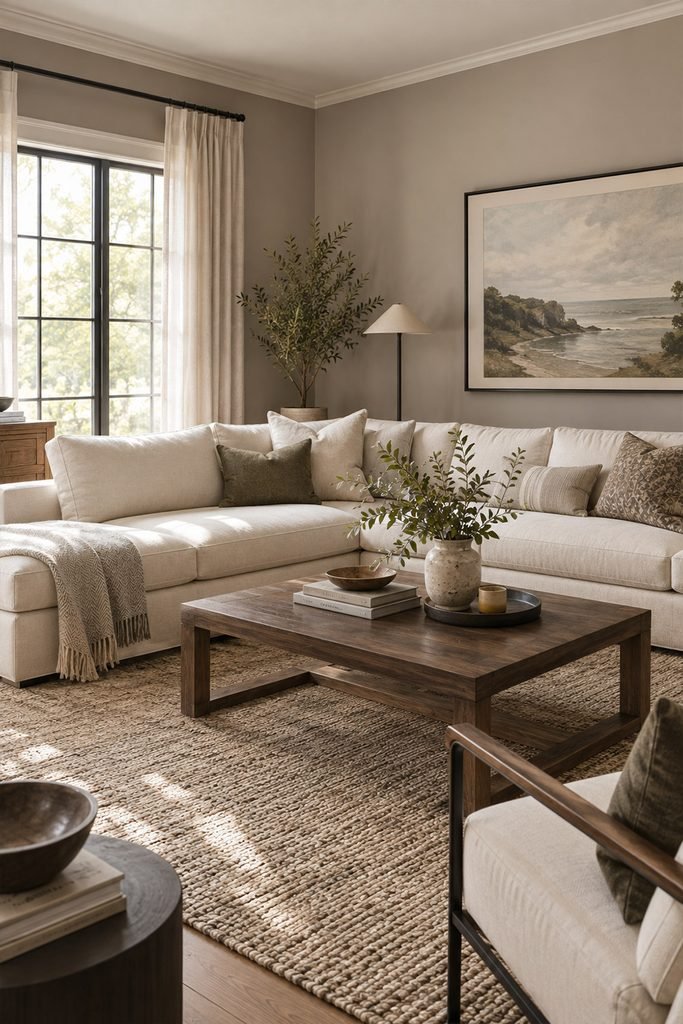
Greige combines the understated character of gray with the warmth of beige, making it one of the most versatile living room paint choices. It works especially well when you want a neutral backdrop that feels more dimensional than plain beige or white. Layer the room with cream textiles, natural wood, black accents, and muted artwork to create a sophisticated palette. Because greige can shift depending on lighting, test a sample on different walls before selecting the final shade.
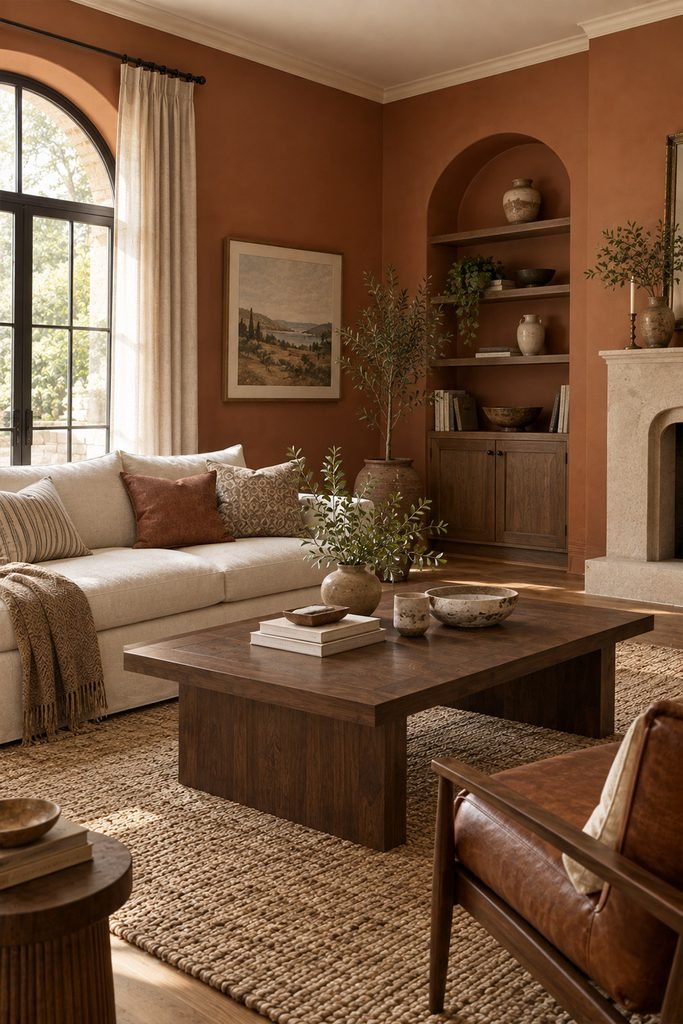
Terracotta is an excellent choice when you want your living room to feel warm, expressive, and connected to natural materials. A softened terracotta rather than an intensely orange shade can create a surprisingly sophisticated backdrop for cream furniture, dark wood, leather, and woven textures. It works particularly well with Mediterranean, Southwestern, earthy contemporary, and collected interior styles. Keep the remaining colors restrained so the walls provide the main dose of warmth.
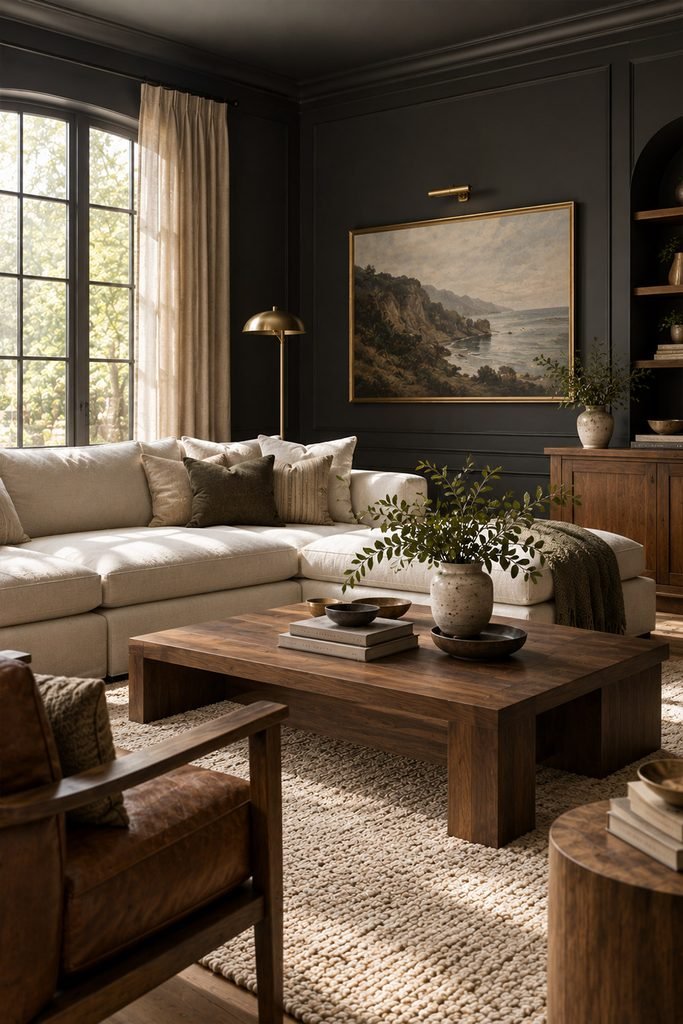
For a dramatic living room, deep charcoal can create a sophisticated and intimate atmosphere without the intensity of pure black. Use it on all four walls in a well-lit room or create a charcoal accent wall behind a fireplace, media console, or large artwork. Balance the darker walls with cream upholstery, warm wood, lighter rugs, and metallic accents. The result can feel moody and elegant rather than heavy when enough contrast is introduced through furniture and lighting.
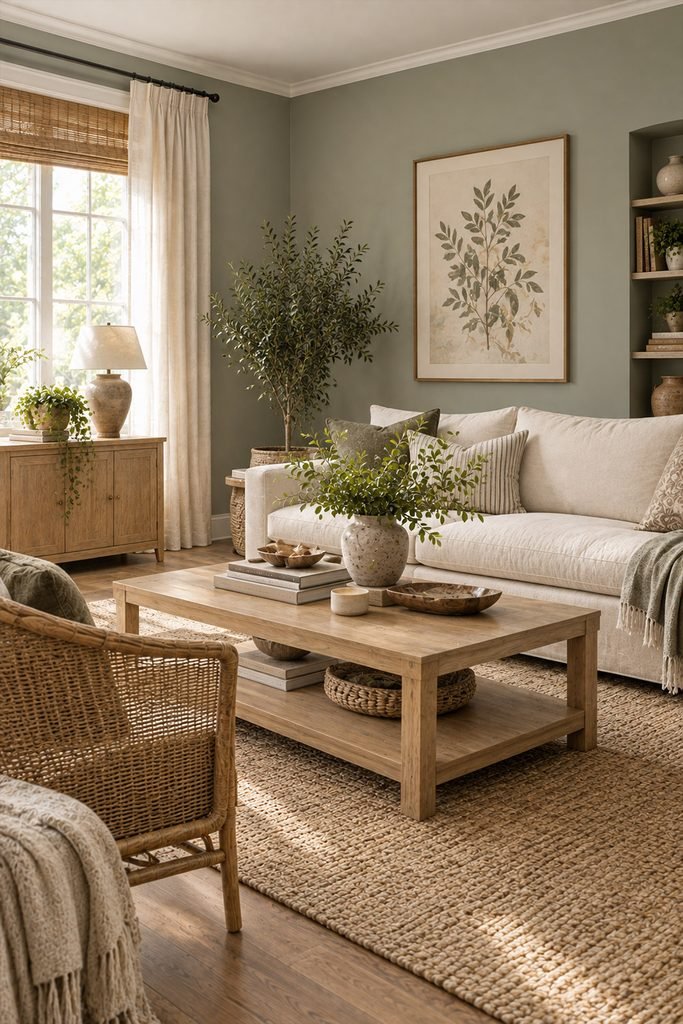
Pale sage green offers a softer alternative to deeper green shades and works beautifully in relaxed living rooms. Its subtle gray-green undertone pairs naturally with ivory, light oak, rattan, linen, and muted botanical patterns. This color is particularly useful when you want the room to feel fresh but still warm and sophisticated. Add a few deeper green accents through plants, pillows, or artwork to create gentle contrast without losing the calm character of the space.
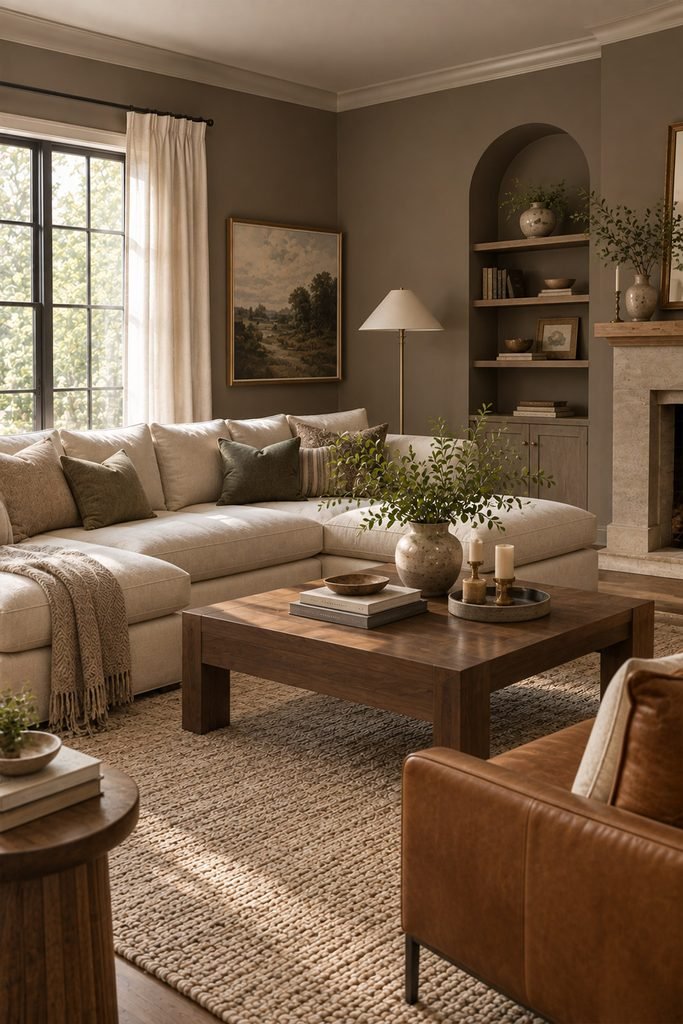
Warm taupe is a dependable choice for creating a cozy and elegant neutral living room. It has enough depth to make white trim and lighter furniture stand out while remaining versatile enough for changing decor styles. Layer taupe walls with cream, caramel, walnut, and muted olive for an inviting earthy palette. This color is especially effective in rooms where you want a more cocooning feeling without moving into a strongly dramatic paint color.
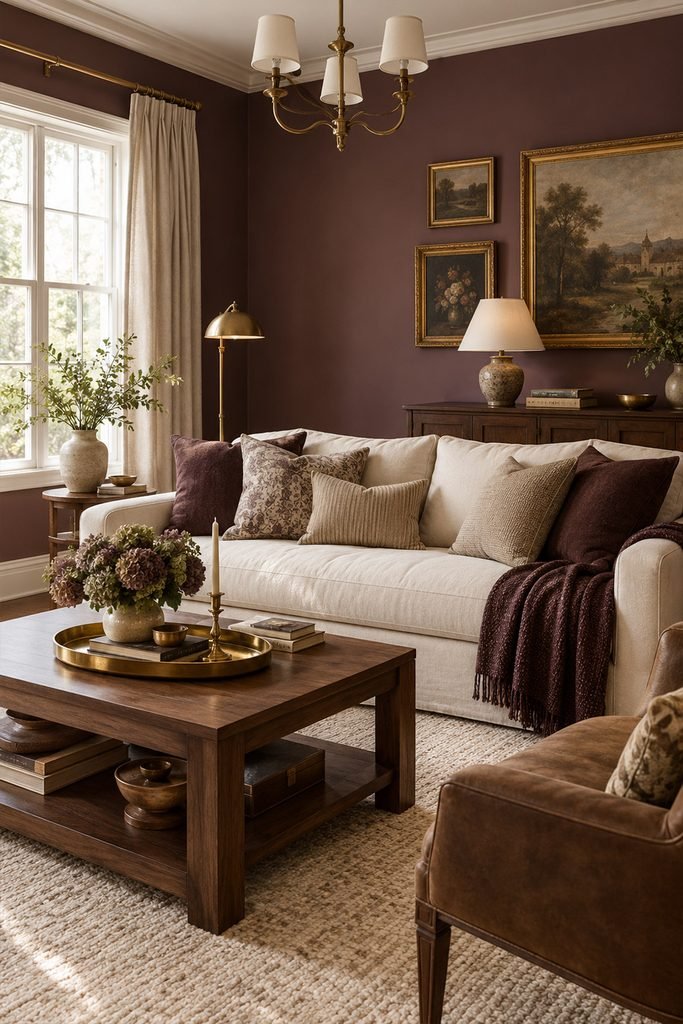
Muted plum can give a living room an unexpected sense of richness while remaining sophisticated when the shade is slightly softened with gray or brown undertones. Use it with warm ivory, walnut furniture, antique brass, and natural textiles to create a refined, cozy atmosphere. If painting every wall feels too bold, use plum behind a fireplace, bookshelf, or sofa to create a dramatic focal point while keeping the rest of the room lighter.
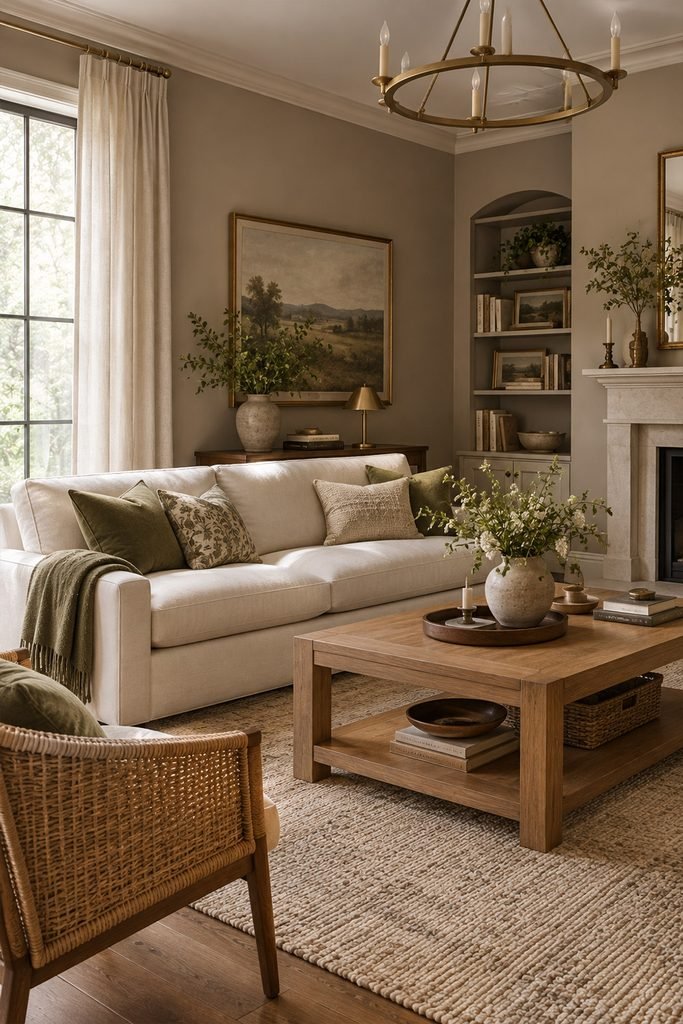
Soft mushroom is a beautiful middle ground between beige, taupe, and gray, giving the living room a subtle earthy character. It provides enough color to make a room feel finished while remaining neutral enough to work with changing furniture and accessories. Pair it with creamy whites, natural wood, woven textures, muted green, and aged metal finishes. This shade is particularly effective for creating a timeless living room that feels warm without relying on the typical all-beige palette.
The best living room paint color depends on more than simply choosing a shade you like. Consider how much natural light enters the room, the undertones of your flooring and furniture, and how the color will look throughout the day. If you’re unsure, test several samples directly on the wall before making your final decision. From calming sage and dusty blue to dramatic charcoal and rich plum, the right color can give your living room an entirely new character.
9 Cozy Living Room Ideas for a Warm, Comfortable & Inviting Home