Address
304 North Cardinal St.
Dorchester Center, MA 02124
Work Hours
Monday to Friday: 7AM - 7PM
Weekend: 10AM - 5PM

Address
304 North Cardinal St.
Dorchester Center, MA 02124
Work Hours
Monday to Friday: 7AM - 7PM
Weekend: 10AM - 5PM

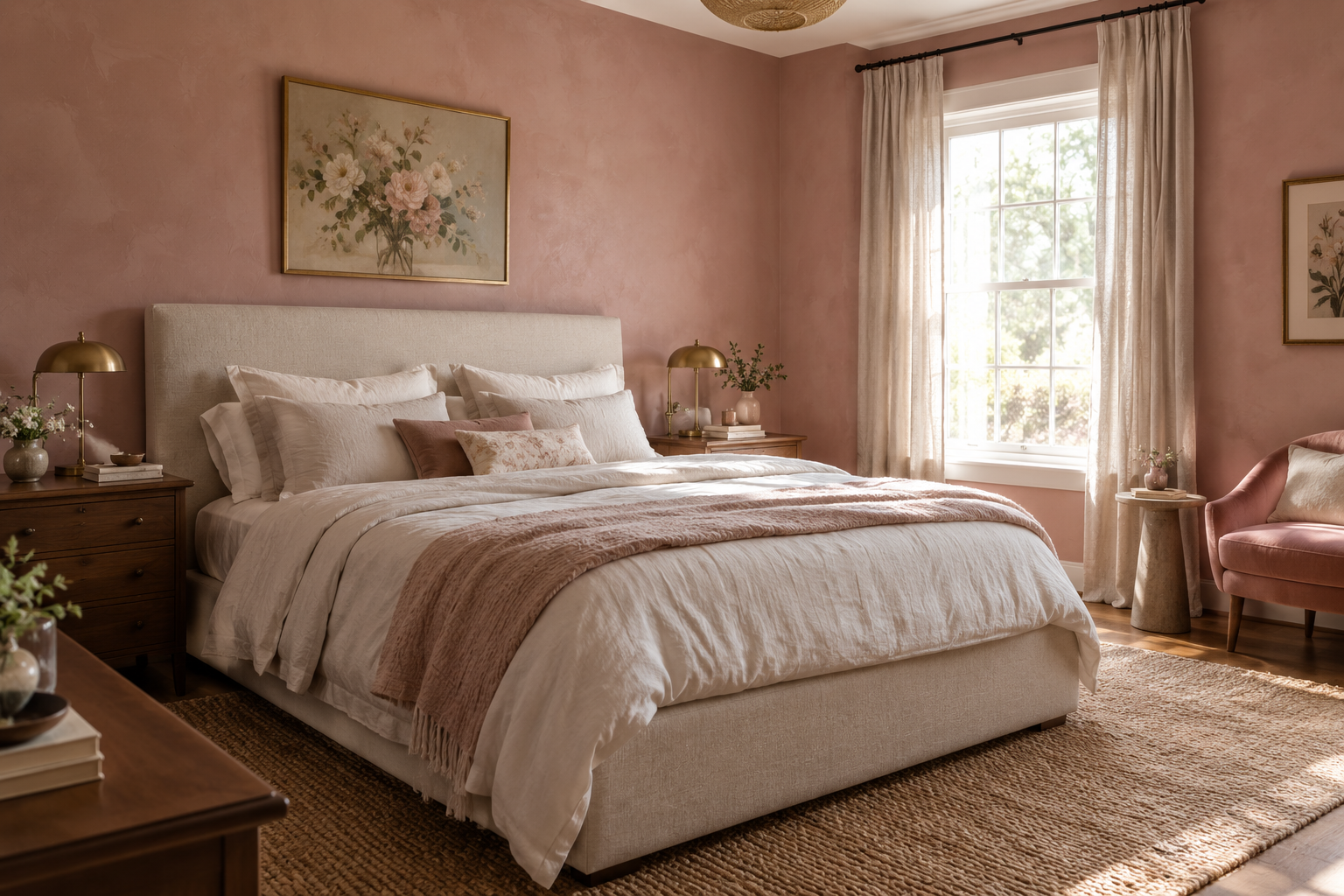
Pink can make a room feel warm, inviting, elegant, and full of personality without looking overly sweet. From soft blush and dusty rose to muted mauve and deeper berry shades, there are many ways to use pink while keeping the overall design sophisticated.
The key is choosing the right shade and balancing it with natural materials, neutral colors, warm lighting, and thoughtful furniture. These pink room ideas explore different ways to introduce the color through walls, furniture, textiles, artwork, and decorative accents.
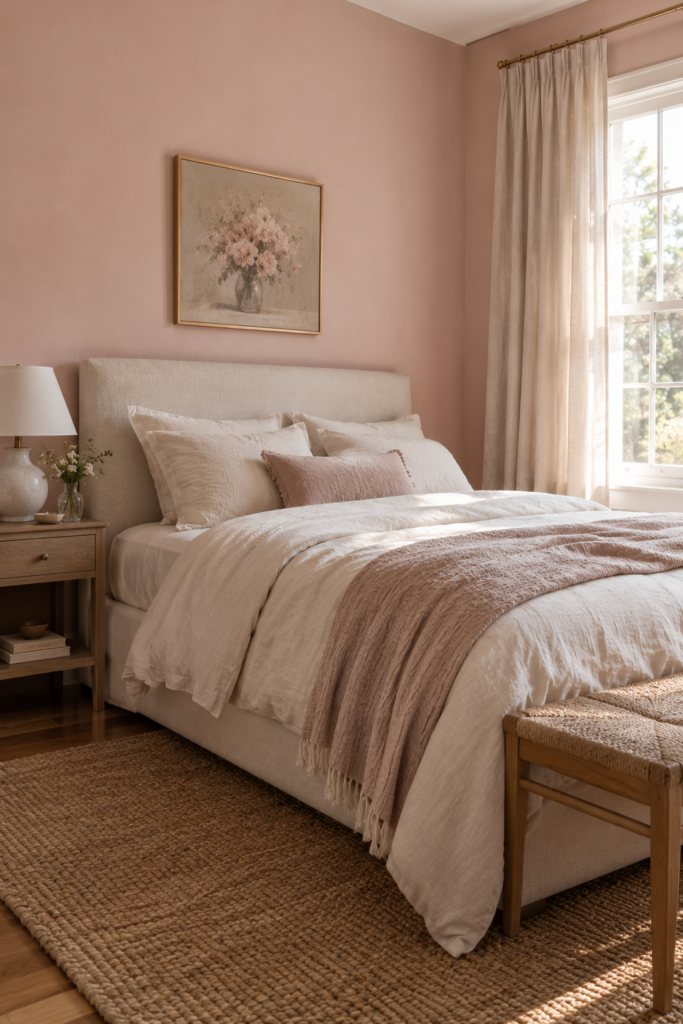
A soft blush pink bedroom can feel calm and relaxing when paired with warm neutrals and natural textures. Use blush on the walls or through bedding, then add cream linen, light wood furniture, and woven accents to keep the space airy. A warm bedside lamp and simple artwork can add softness without making the room feel overly decorated. This approach works particularly well in bedrooms where you want a peaceful atmosphere.
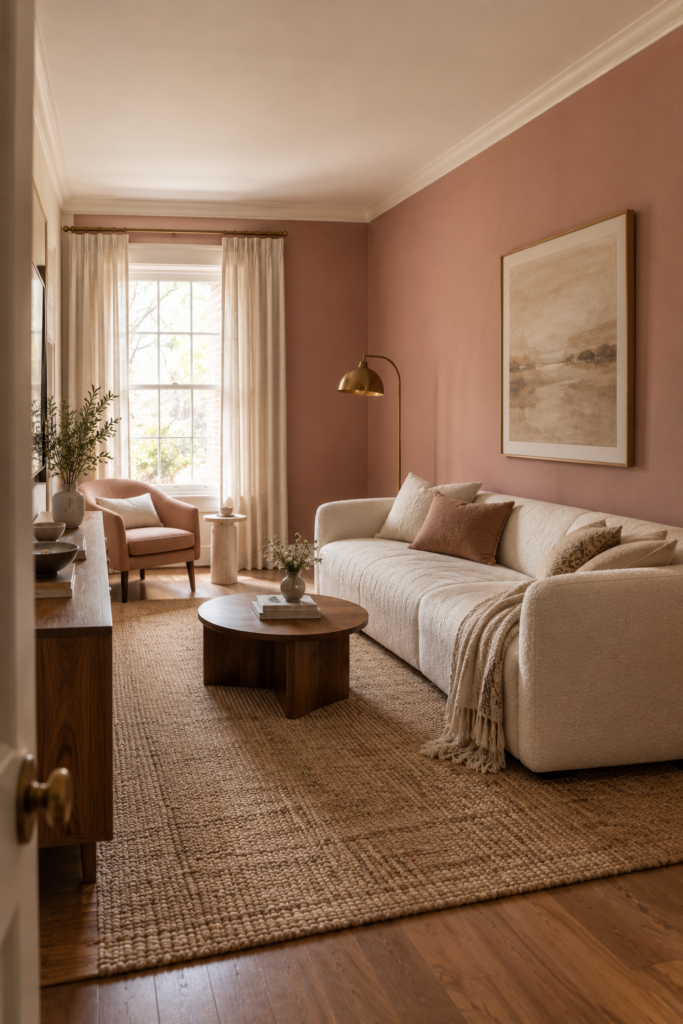
Dusty rose is a sophisticated alternative to brighter pink shades and works beautifully in living rooms, bedrooms, and home offices. The muted undertone gives the color a more mature appearance while still bringing warmth to the room. Pair it with cream upholstery, walnut furniture, aged brass, or natural oak for an elegant combination. Keeping the ceiling and larger architectural details neutral can also help the wall color feel balanced.
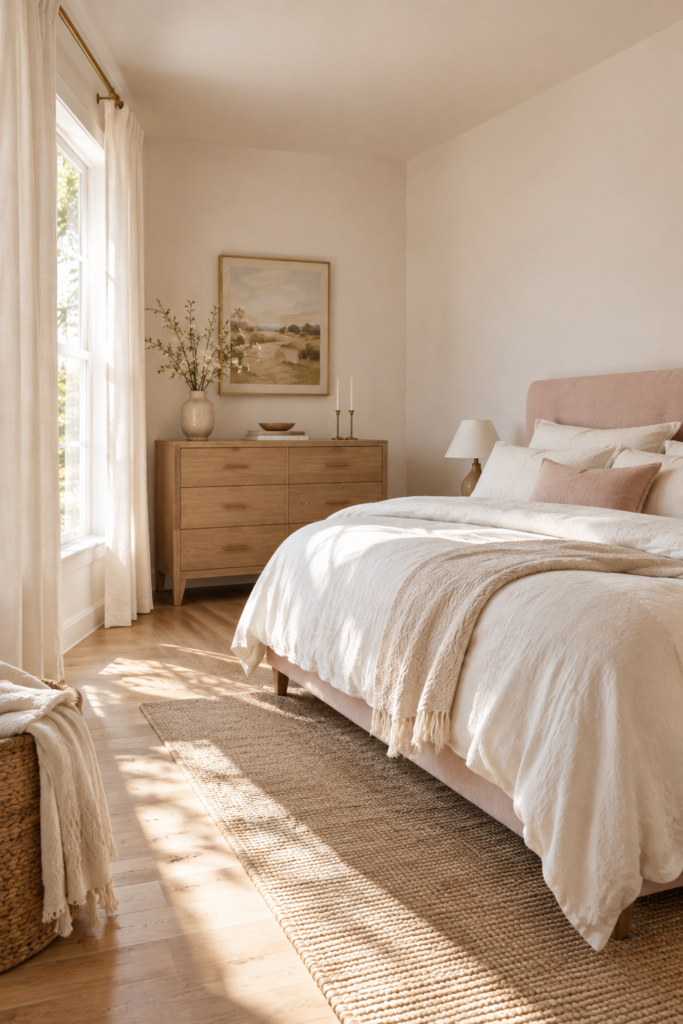
Pink and warm white create a simple combination that feels fresh without becoming stark. Use warm white for larger furniture, curtains, trim, or bedding while introducing pink through an accent wall, chair, pillows, or artwork. Natural wood can add another layer of warmth to the palette. The result is a room that feels bright, comfortable, and easy to live with.
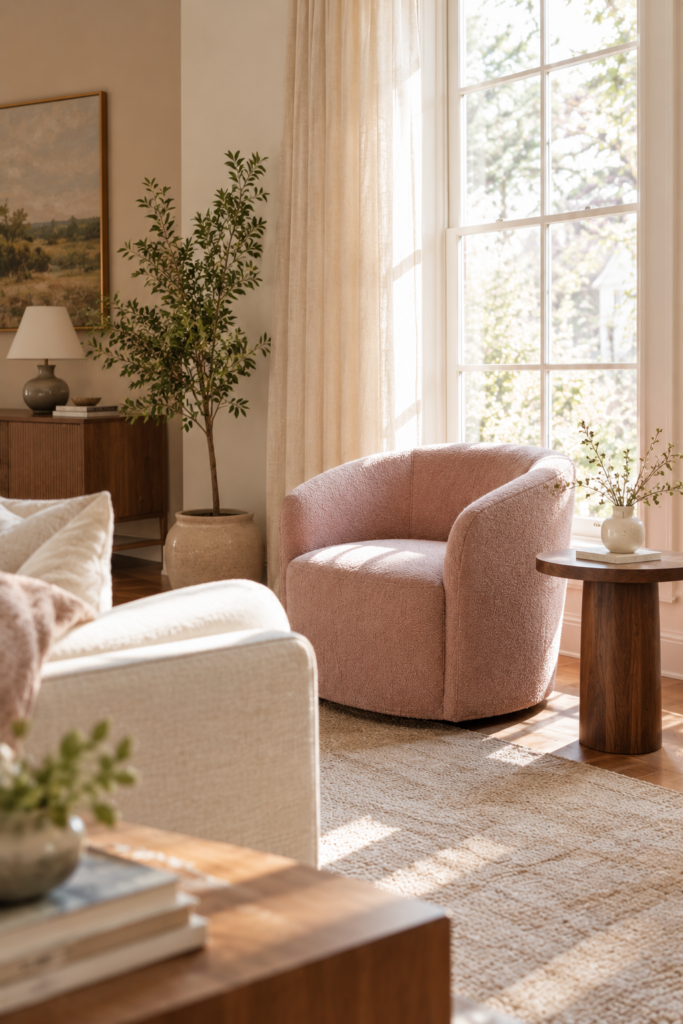
An upholstered pink chair can introduce color without requiring a permanent change to the room. Look for a curved chair in blush, dusty rose, mauve, or muted pink and place it near a window, reading corner, or empty living room wall. Pair it with a small wood side table and a warm lamp to create a functional little zone. This is also a practical option for renters who want to experiment with pink.
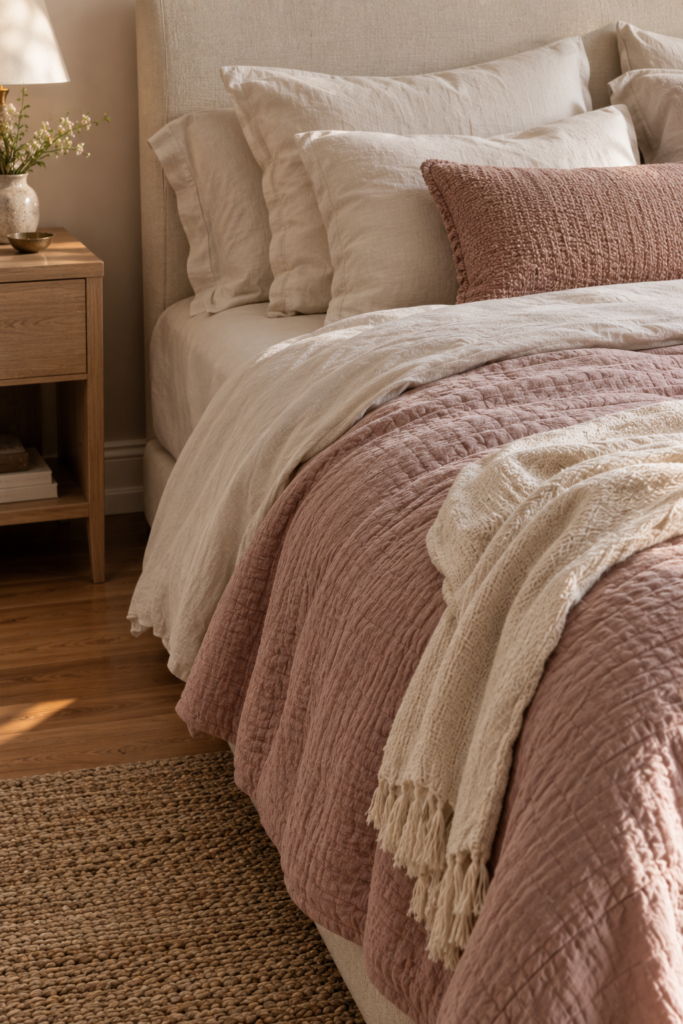
Pink bedding is one of the easiest ways to change the mood of a bedroom. Layer blush sheets, a dusty rose quilt, or a muted pink throw with cream and ivory pillows for a relaxed appearance. Mixing linen, cotton, velvet, and knitted textures keeps the bedding from looking flat. Because the textiles can easily be changed, this approach allows you to experiment with different shades throughout the year.
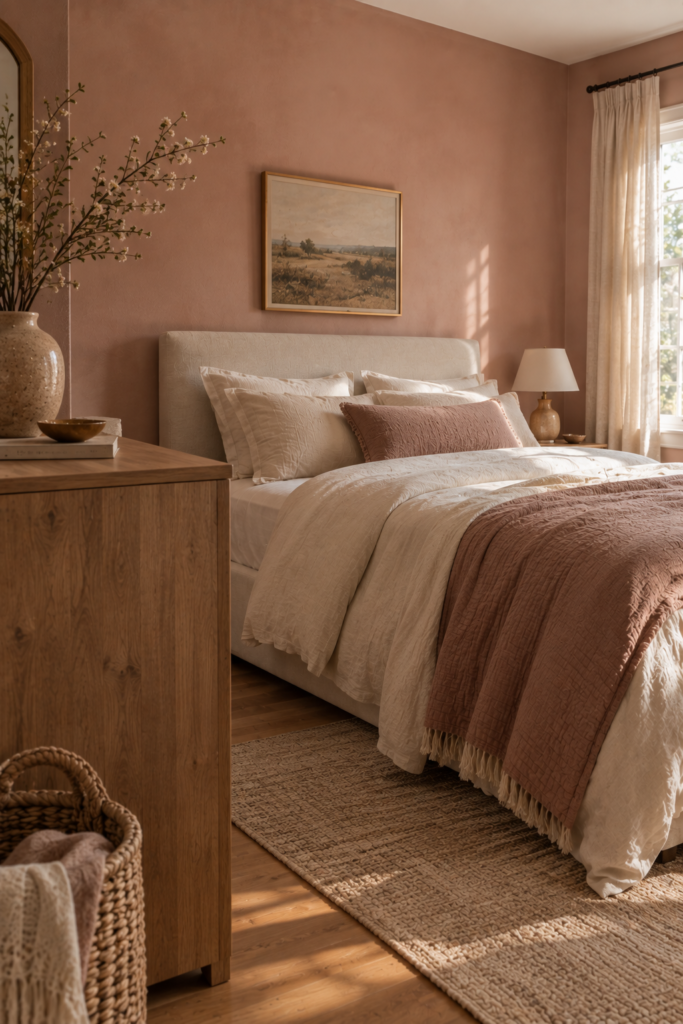
Natural wood helps ground pink and prevents it from feeling too delicate or artificial. Add an oak nightstand, walnut dresser, wooden coffee table, or rattan furniture to a room with pink walls or textiles. The warmth of the wood works especially well with dusty rose, muted blush, terracotta pink, and mauve. A few ceramic and woven accessories can complete the organic look.
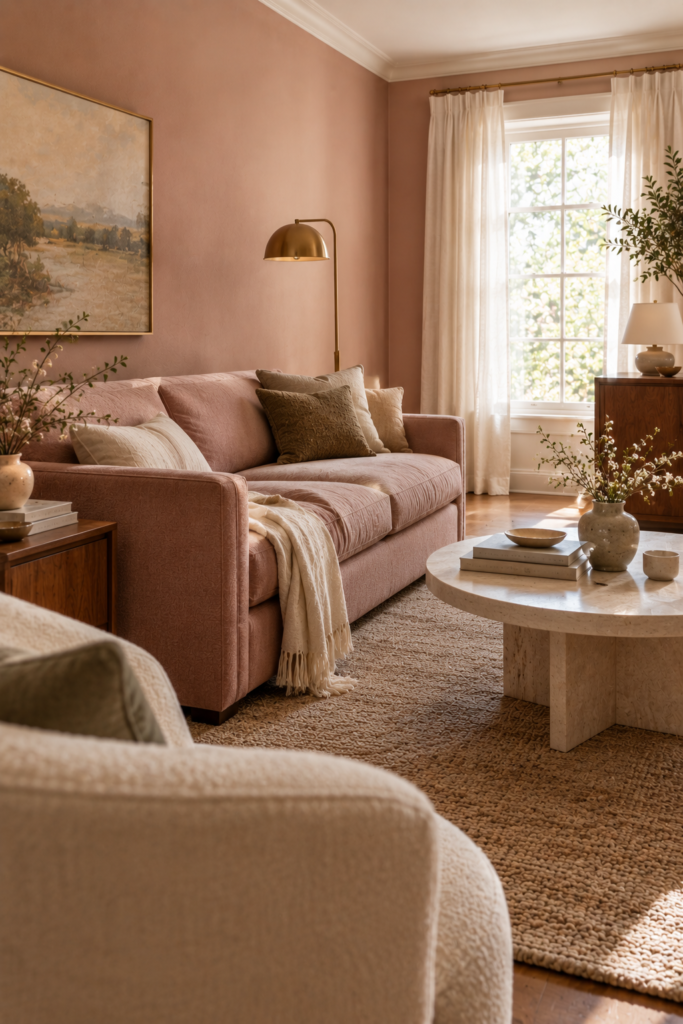
A pink living room does not have to look overly feminine or colorful. Choose a muted pink wall or a blush sofa and combine it with cream upholstery, natural wood, neutral rugs, and understated artwork. Brass or aged bronze lighting can add a subtle sophisticated detail. Keeping the remaining colors restrained allows pink to become the defining feature without overwhelming the room.
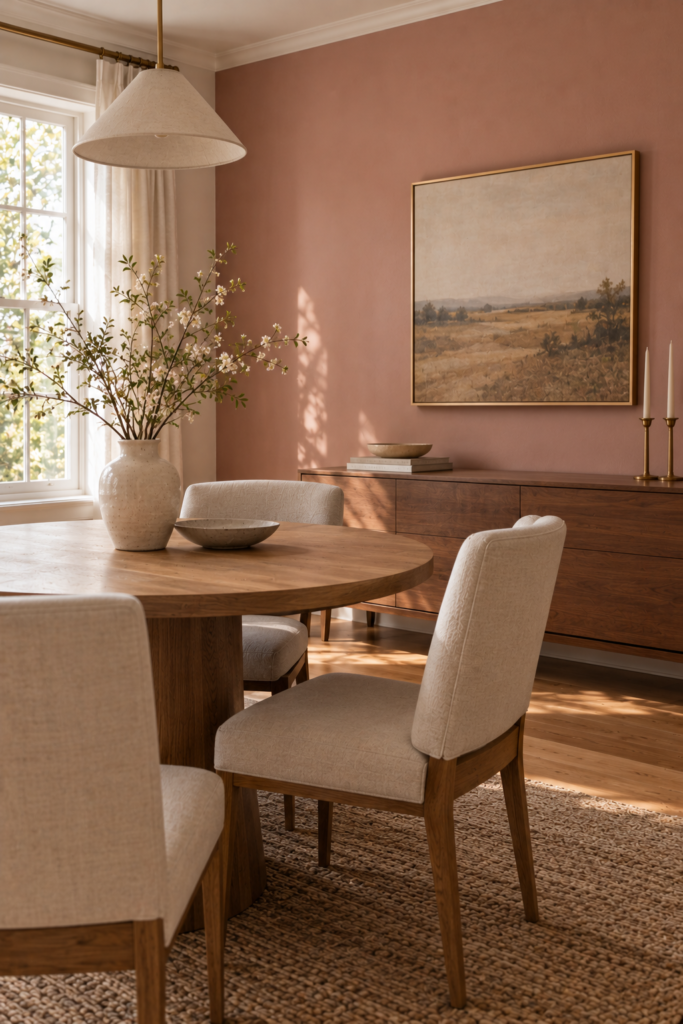
If you love pink but do not want to commit to painting the entire room, create one accent wall instead. A muted blush, dusty rose, or soft terracotta-pink wall can become a beautiful backdrop for a bed, sofa, desk, or console. Add artwork and furniture that repeat small touches of the same color throughout the room. This creates a more connected look than simply placing one bright wall against unrelated decor.
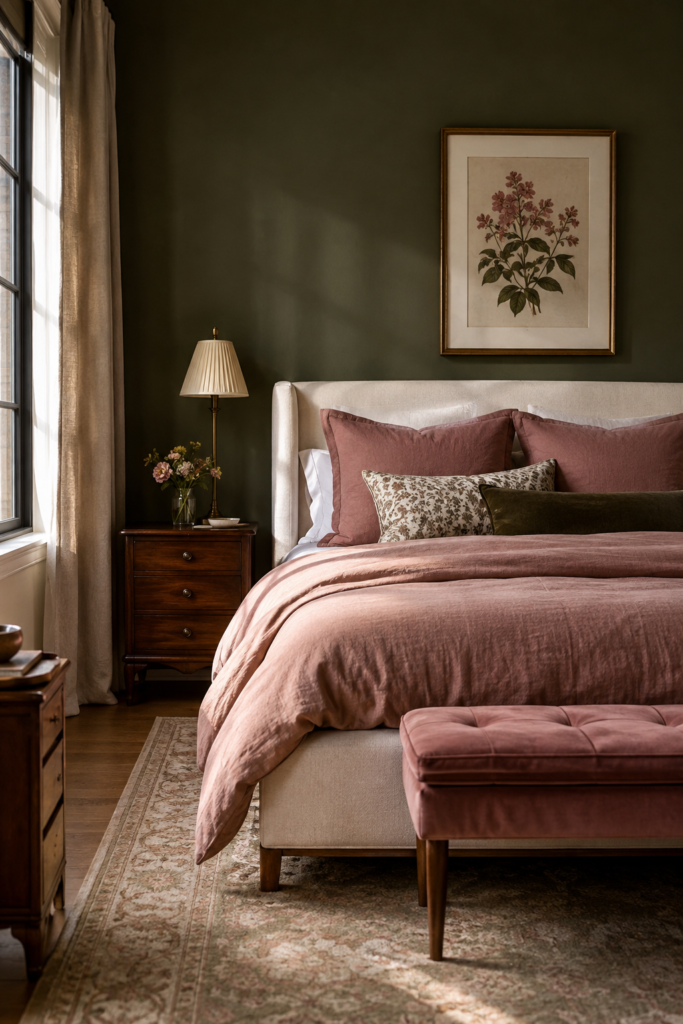
Pink and deep green create a rich, nature-inspired color combination. Try dusty rose walls with olive furniture, or introduce muted pink pillows and artwork into a room with a deep green wall. Natural wood, botanical prints, and woven textures can help connect the two colors. Keep both shades slightly muted for a sophisticated look rather than choosing highly saturated versions.
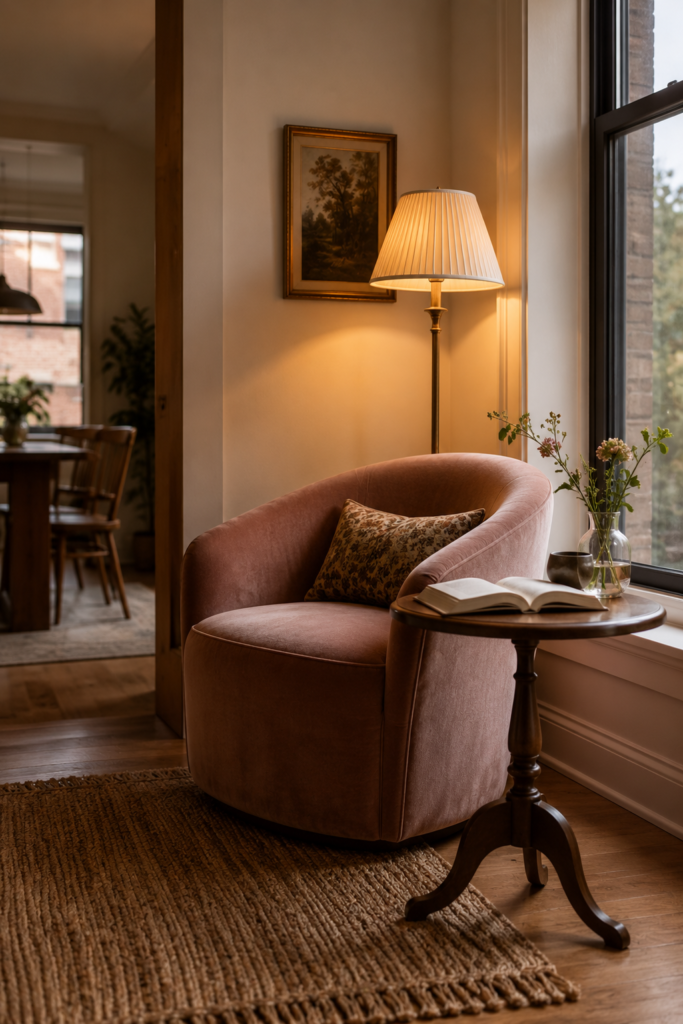
A small reading corner can become a beautiful place to introduce pink without changing the entire room. Choose a comfortable blush or dusty rose armchair, then add a small wood table, warm floor lamp, and soft throw. Place the chair near a window when possible to take advantage of natural light. A small plant or vase of flowers can add a natural finishing touch.
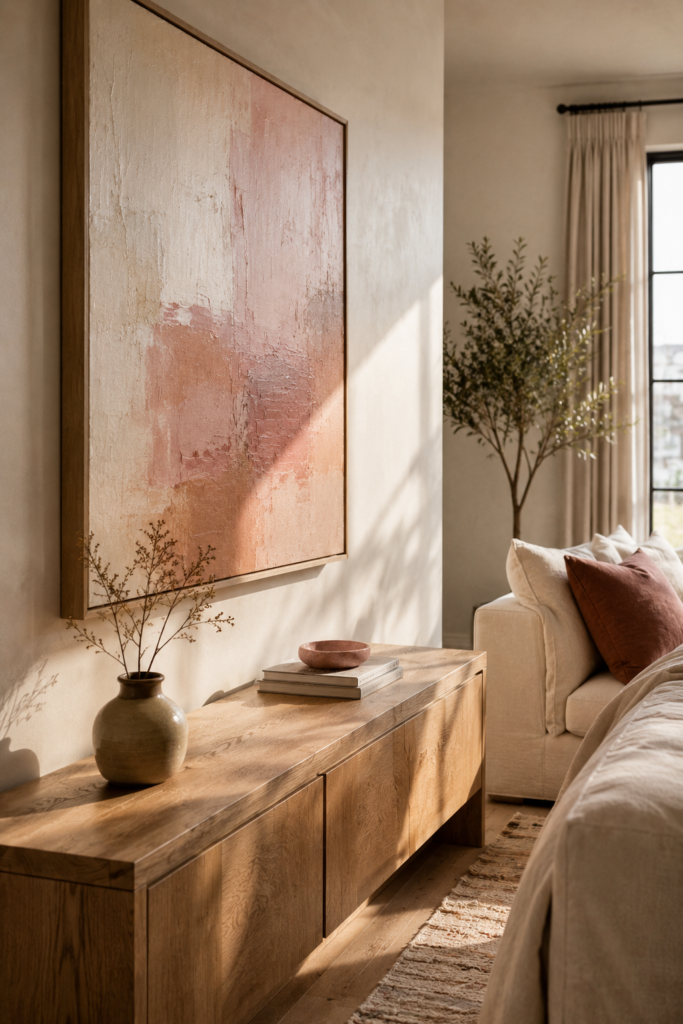
Artwork is a flexible way to bring pink into a room without making it the dominant color. Choose abstract paintings, botanical prints, vintage-inspired artwork, or photography that includes subtle blush and rose tones. Repeat those colors through a few cushions, ceramics, or decorative objects. This technique works particularly well when you already have a neutral room and simply want more personality.
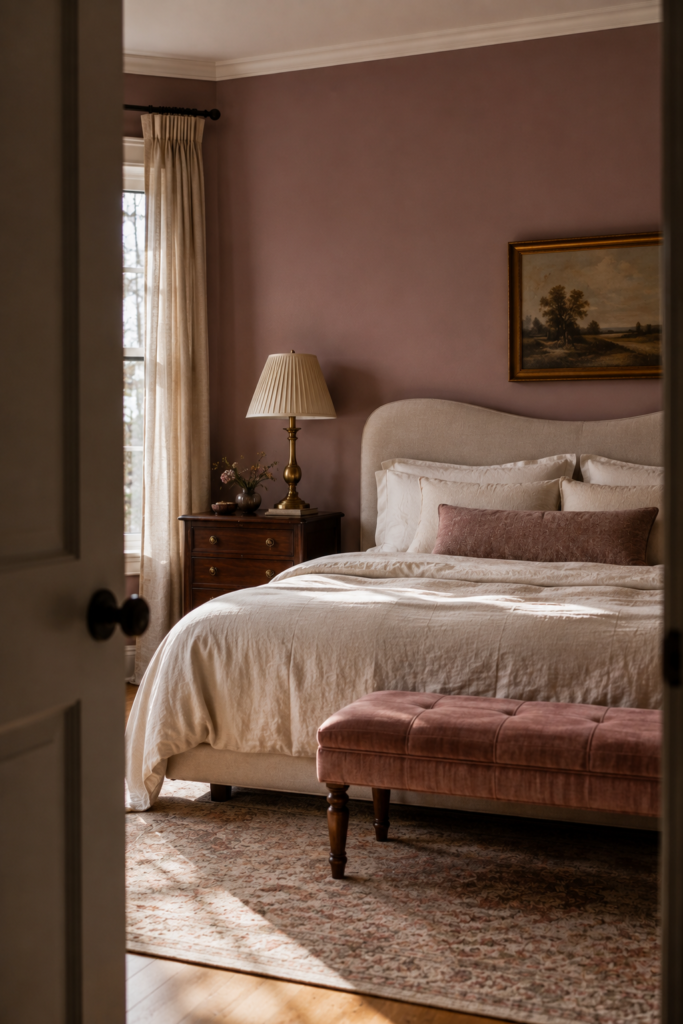
Mauve creates a deeper and more romantic interpretation of a pink bedroom. Pair muted mauve walls with cream bedding, warm walnut furniture, vintage-style lamps, and soft textiles. Add a few brass details or floral artwork to reinforce the elegant atmosphere. Layered lighting becomes especially important when using a deeper shade because it helps the room remain warm and inviting.
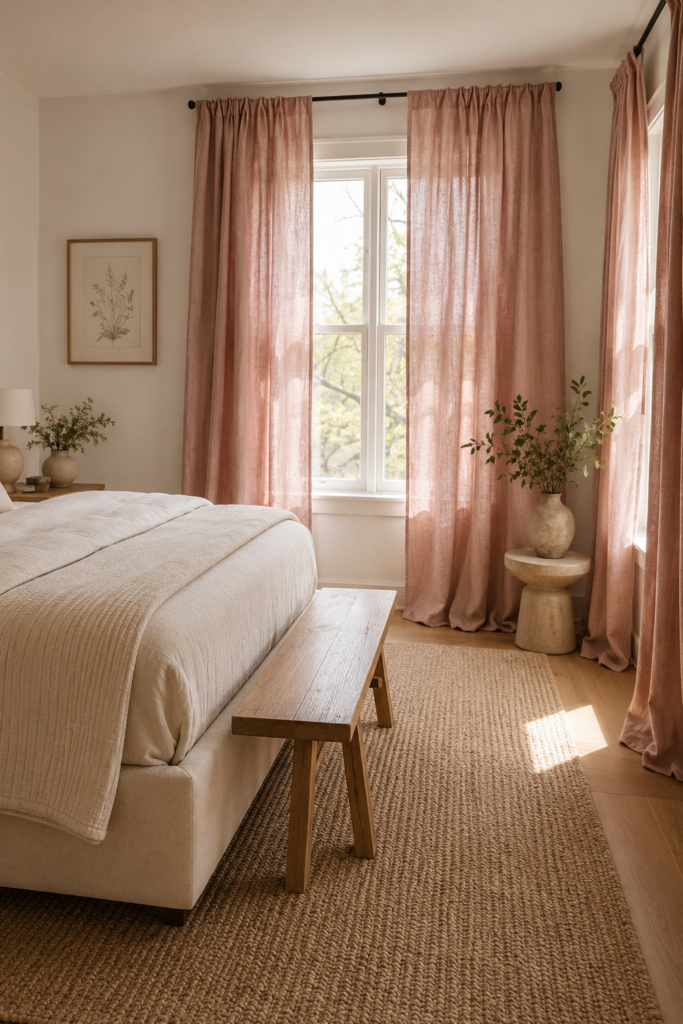
Pink curtains can add color while also making the room feel softer and more finished. Choose lightweight linen or cotton curtains in blush, dusty rose, or muted mauve rather than shiny synthetic fabrics. Pair them with neutral walls and natural furniture so the windows become a subtle feature rather than the entire focus. Soft daylight passing through the fabric can also create a beautiful warm glow.
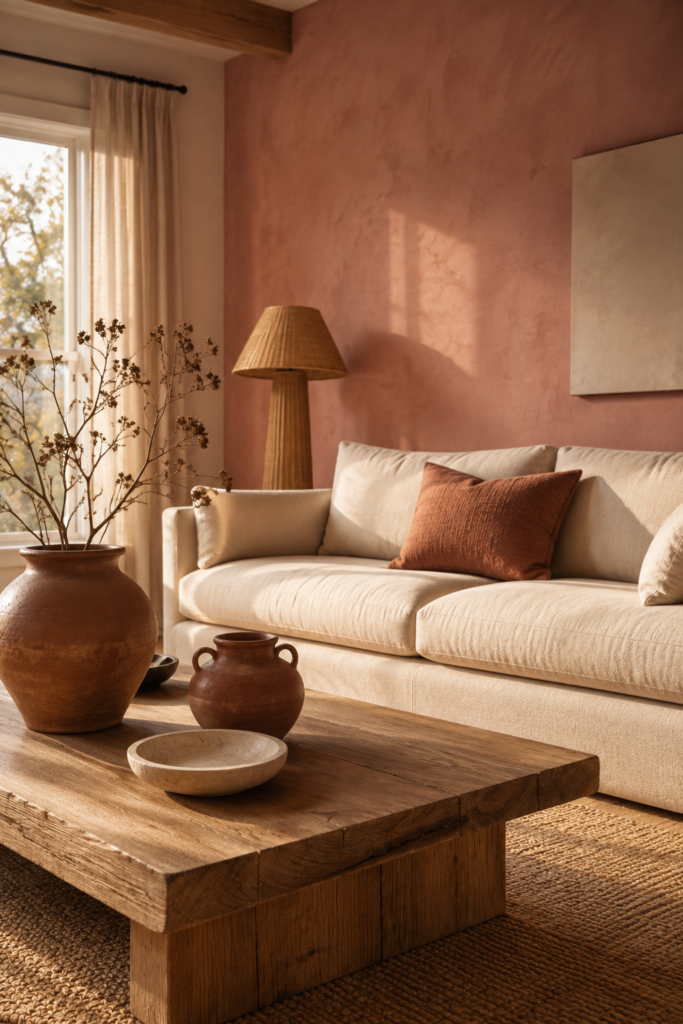
For a warm earthy interpretation of pink, combine it with terracotta, cream, beige, and natural wood. A dusty pink wall can work beautifully with terracotta ceramics, cream upholstery, and oak furniture. Add woven baskets and handmade-looking pottery for additional texture. This palette feels especially welcoming because it uses pink as part of a broader collection of warm natural colors.
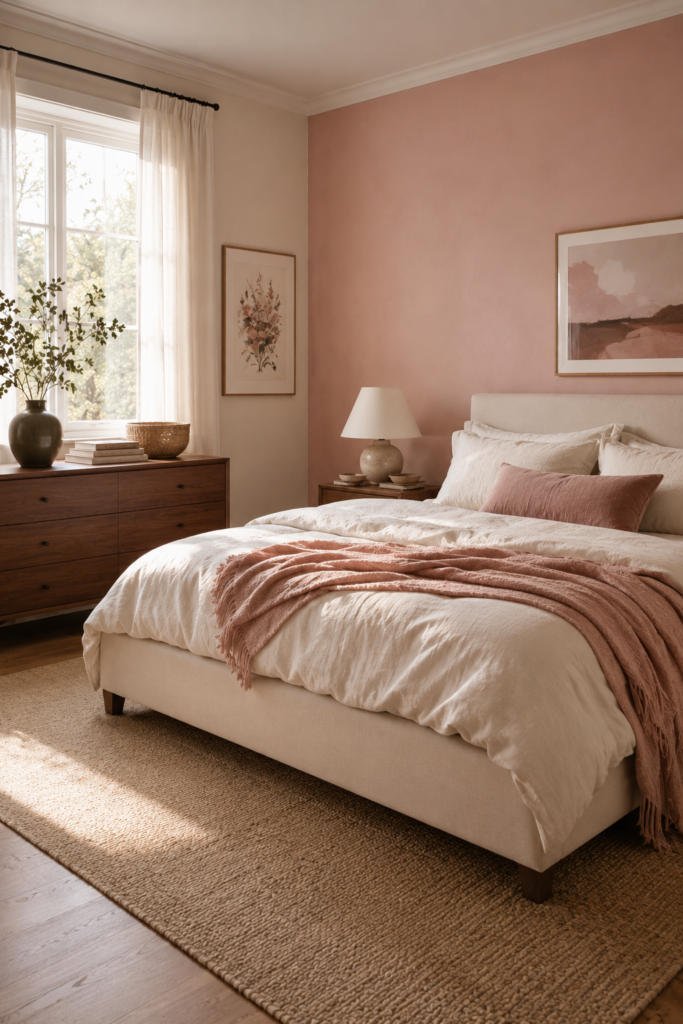
The most successful pink rooms usually use contrast and restraint rather than covering every surface in the same shade. Balance pink with cream, warm white, beige, wood, muted green, or soft brown depending on the atmosphere you want. Use different textures and subtle variations in pink rather than relying on one exact color everywhere. A thoughtful combination of color, natural materials, lighting, and open space can make a pink room feel stylish and timeless.
Pink can work beautifully in almost any room when the shade and surrounding materials are chosen carefully. Soft blush creates an airy feeling, dusty rose adds sophistication, mauve brings depth, and warmer pink tones can create a cozy earthy atmosphere.
Start with one element you love, such as a painted wall, upholstered chair, bedding, curtains, or artwork, and build the rest of the room around it. By balancing pink with natural wood, warm neutrals, layered textures, and comfortable lighting, you can create a space that feels beautiful without becoming overwhelming.
12 Romantic Bedroom Ideas for a Cozy and Beautiful Retreat