Address
304 North Cardinal St.
Dorchester Center, MA 02124
Work Hours
Monday to Friday: 7AM - 7PM
Weekend: 10AM - 5PM

Address
304 North Cardinal St.
Dorchester Center, MA 02124
Work Hours
Monday to Friday: 7AM - 7PM
Weekend: 10AM - 5PM

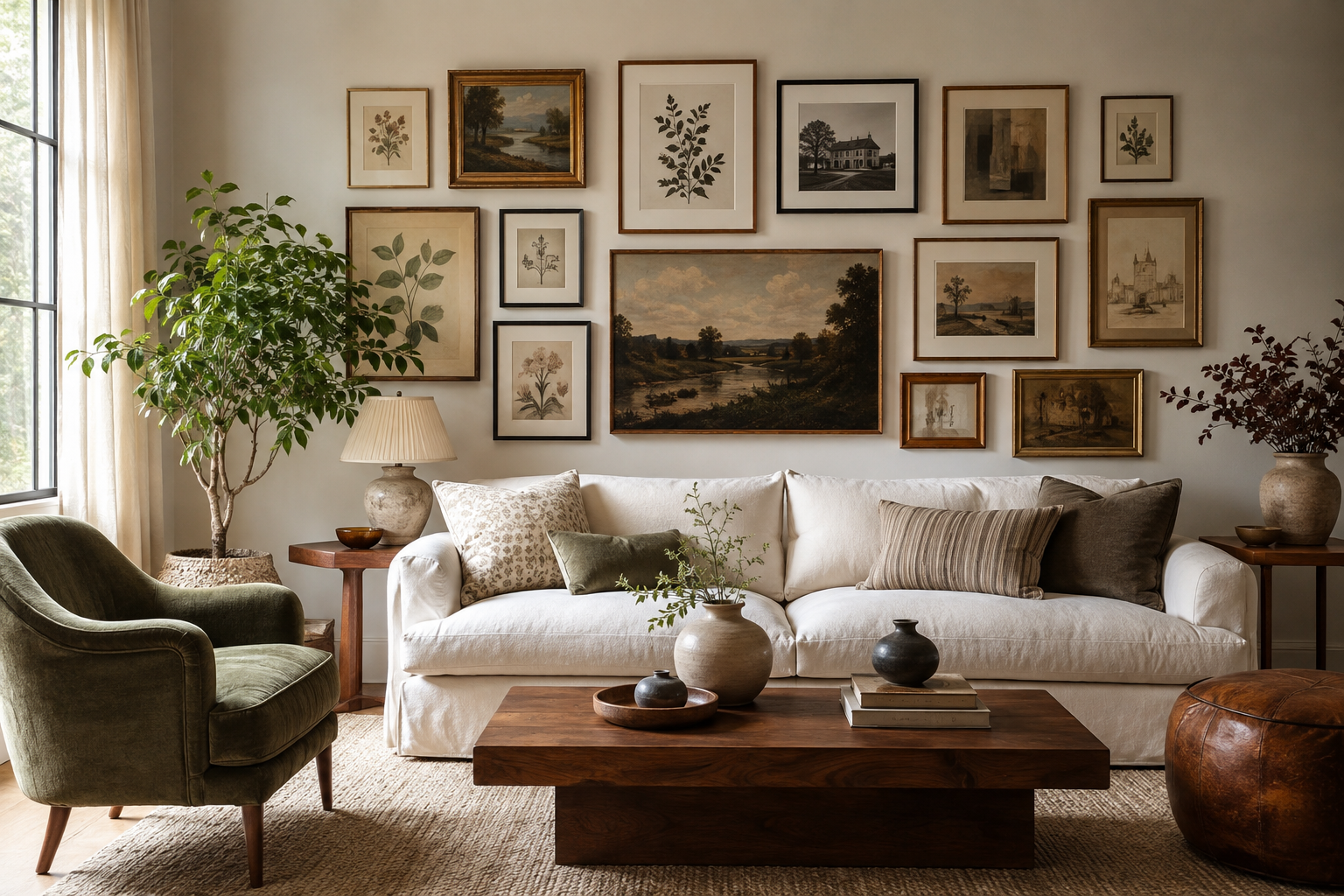
A gallery wall can do much more than fill an empty wall. When the artwork, frames, spacing, and surrounding furniture are chosen thoughtfully, it can become one of the strongest visual features in a room while still feeling personal and collected.
The trick is to create enough structure that the arrangement feels intentional without making every piece look perfectly matched. Whether you’re decorating a small apartment, refreshing a living room, or adding character to a bedroom, these gallery wall ideas can help you create a display that feels considered rather than cluttered.
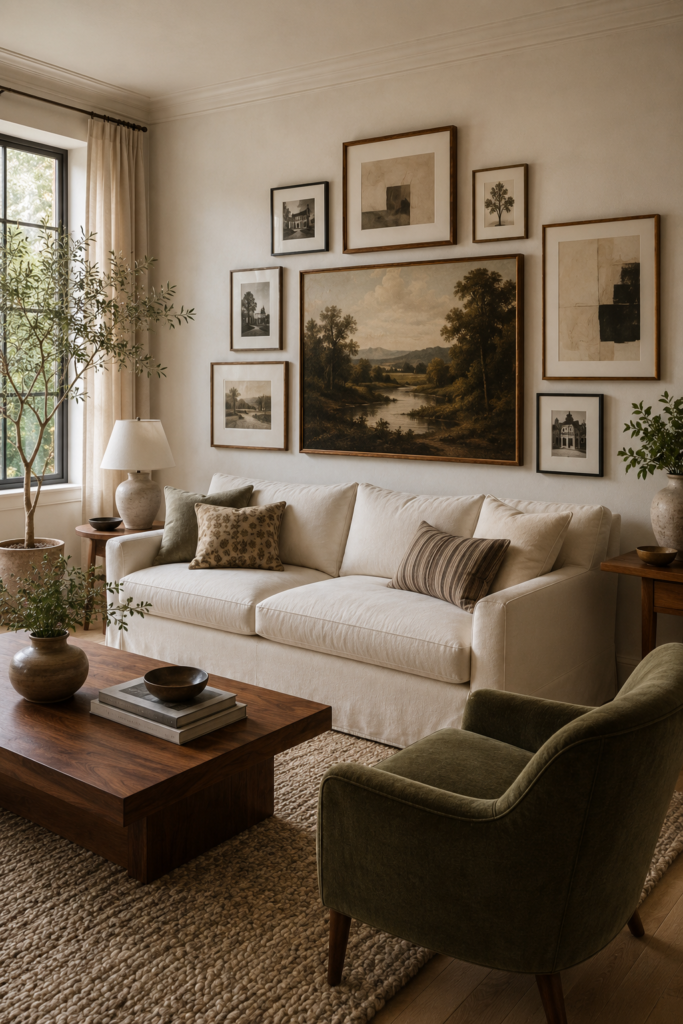
Before choosing artwork, look at the wall as part of the entire room rather than as an isolated surface. A gallery wall above a sofa, console, or bed should relate to the width and visual weight of the furniture underneath it. For smaller spaces, a compact vertical arrangement can work better than an oversized horizontal display that overwhelms the room.
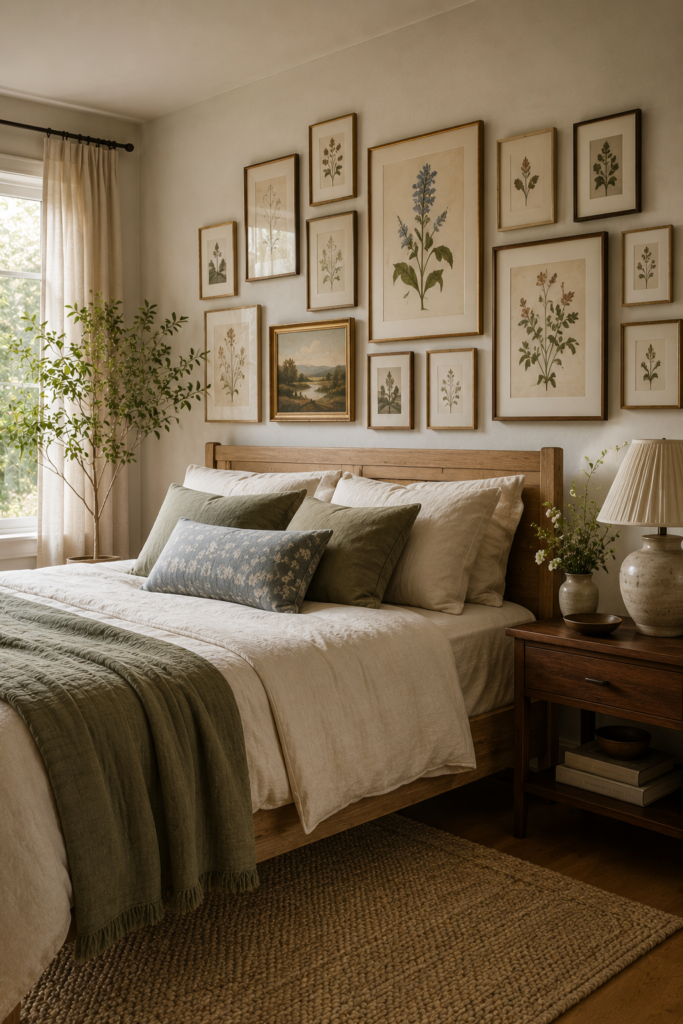
Your artwork doesn’t need to match, but it should have something connecting the collection. You might use botanical prints, vintage photography, landscapes, abstract artwork, architectural sketches, or a combination of personal photographs. Repeating one or two colors throughout the pieces can make a diverse collection feel cohesive without looking overly coordinated.
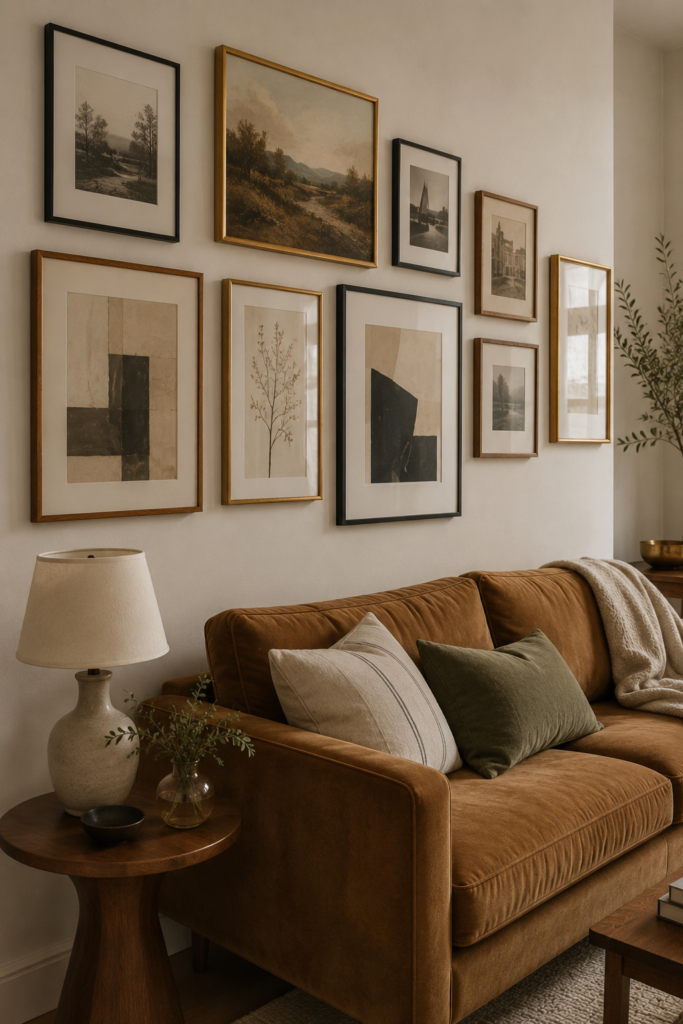
Using identical frames creates a clean, modern look, while mixing frames produces a more collected appearance. Try combining natural wood, thin black, aged brass, or antique-style frames, but limit the finishes to a small group. Too many unrelated frame colors can make the wall feel visually chaotic, particularly in a small room.
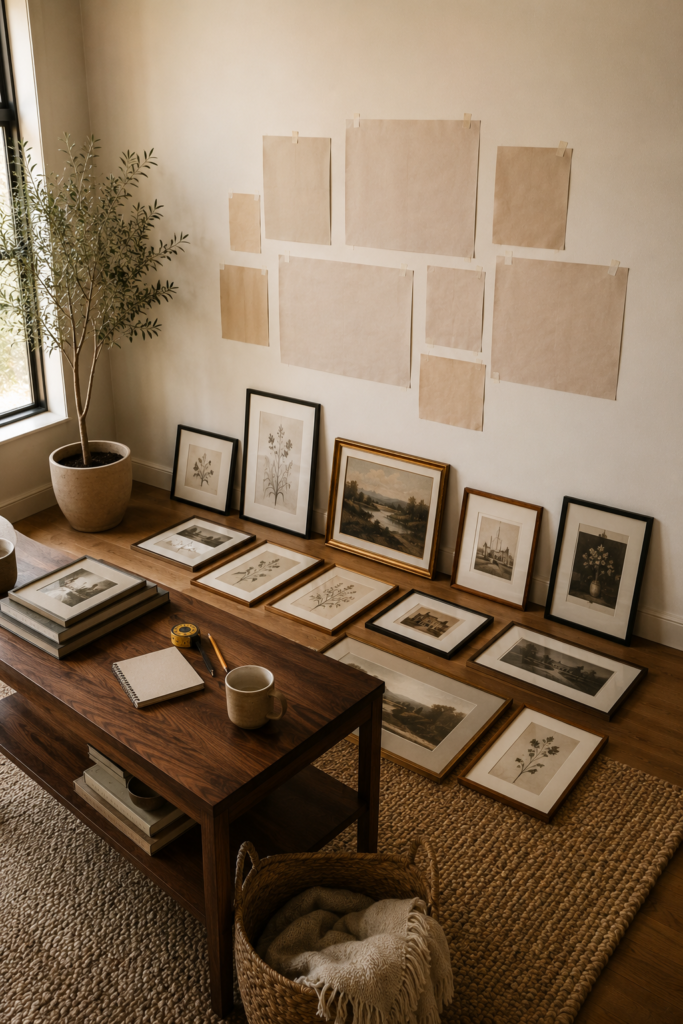
One of the easiest ways to avoid unnecessary holes in the wall is to plan the arrangement first. Lay the frames on the floor and experiment with different positions until the overall shape feels balanced. You can also cut paper templates the size of each frame and temporarily arrange them on the wall, making it much easier to adjust spacing before committing.
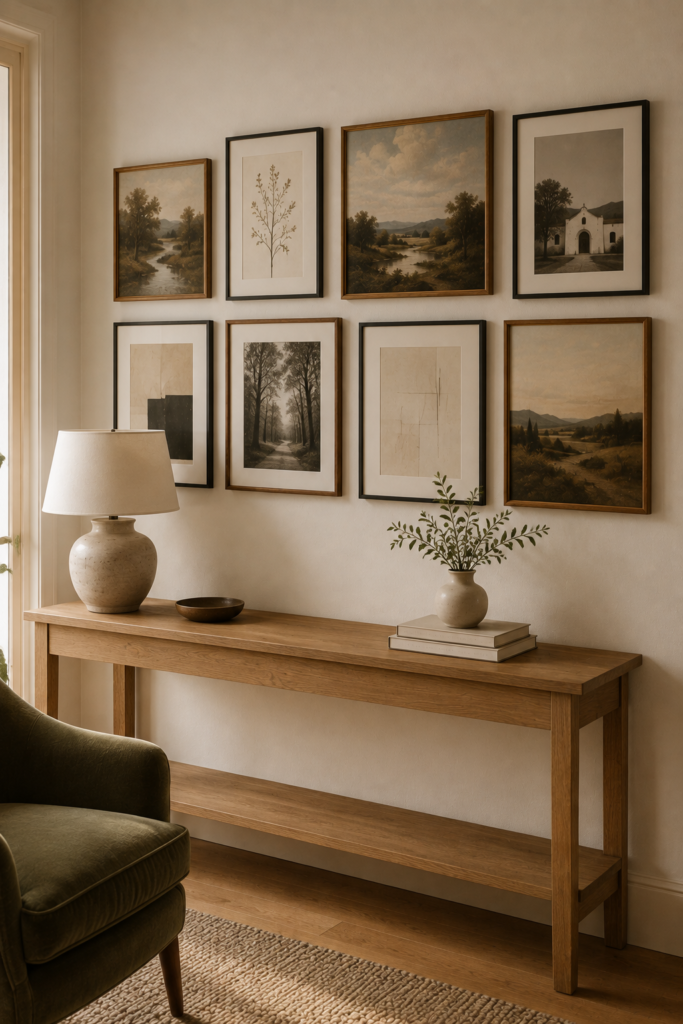
Spacing has a surprisingly large effect on whether a gallery wall looks polished. You don’t need perfectly identical measurements, but the gaps between neighboring pieces should generally feel intentional. A tighter arrangement can feel collected and substantial, while wider spacing creates a lighter, more contemporary appearance.
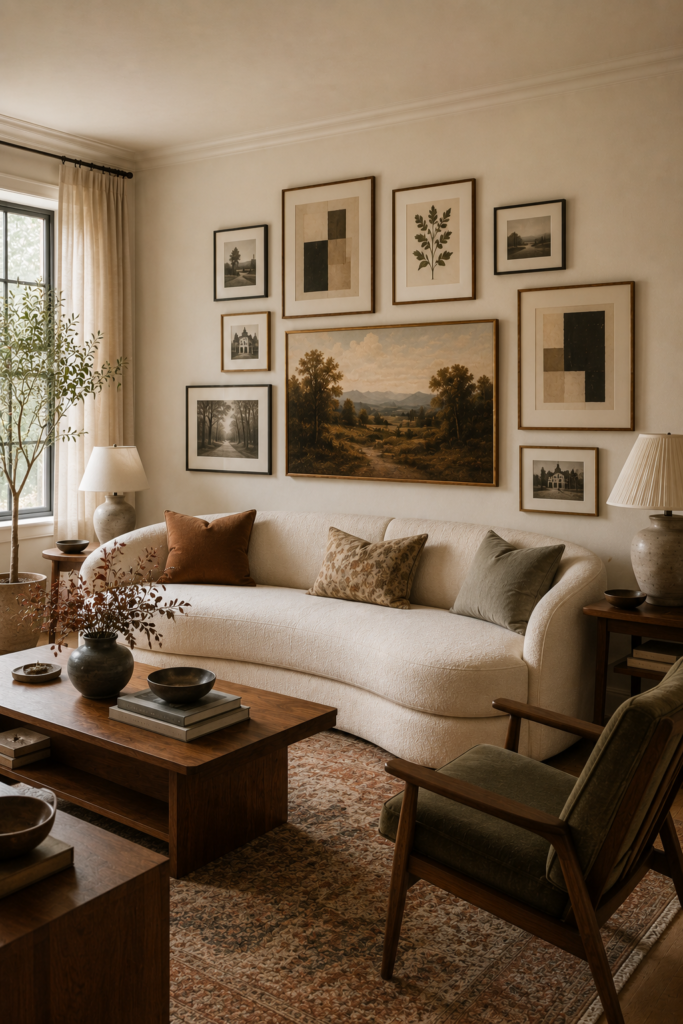
A gallery wall becomes more interesting when the artwork isn’t arranged in a rigid grid of identical rectangles. Combine larger anchor pieces with medium prints and a few smaller works to create visual hierarchy. Start with the largest pieces first, then fill the surrounding areas with smaller artwork while maintaining a balanced overall silhouette.
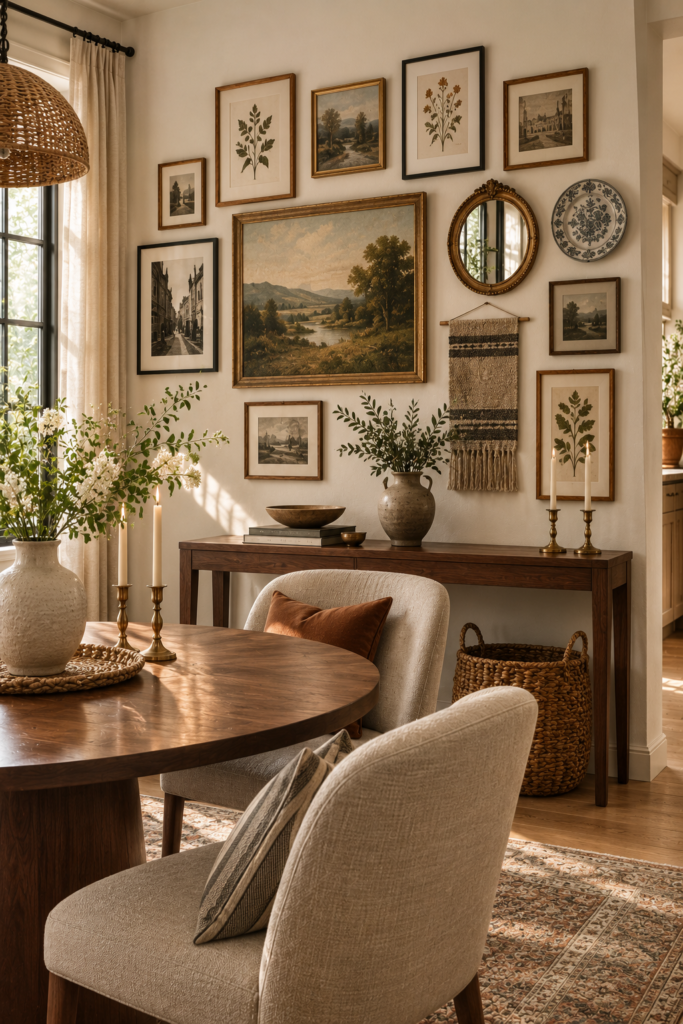
A gallery wall doesn’t have to consist entirely of traditional artwork. Consider adding a small woven piece, a decorative plate, a textile, a vintage mirror, or another shallow-dimensional object. These additions introduce texture and can make the display feel more collected, but they should be used sparingly so the arrangement remains visually cohesive.
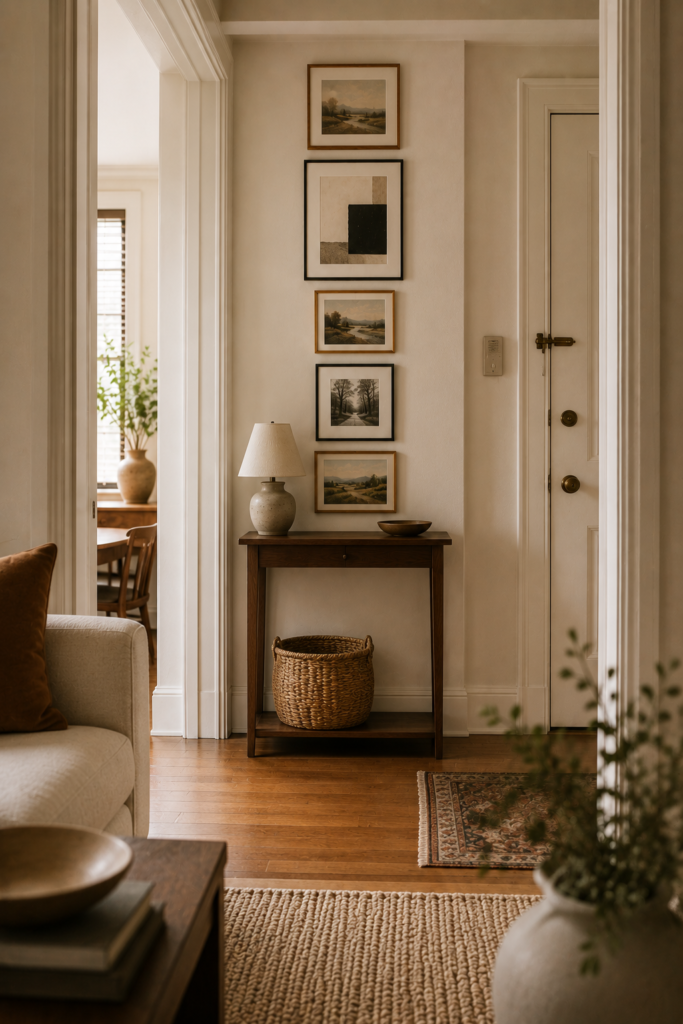
Gallery walls can be especially useful in apartments and smaller homes because they add personality without consuming floor space. A narrow wall beside a doorway, a small section above a desk, or the wall at the end of a hallway can become an intentional display area. For compact rooms, keep the artwork scale proportional and avoid extending the arrangement too far into surrounding architectural features.
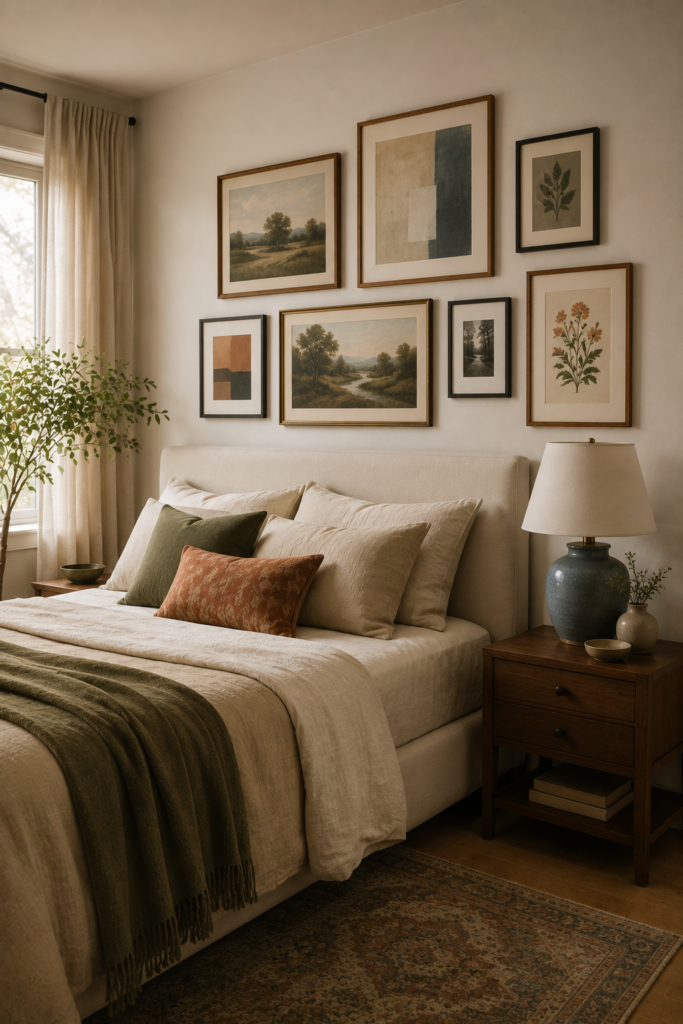
Color can unify artwork that comes from completely different styles or periods. If your room has olive cushions, walnut furniture, and terracotta accessories, for example, look for artwork that subtly repeats those tones. The colors don’t need to match exactly; small recurring accents are often enough to make the collection feel connected to the rest of the room.
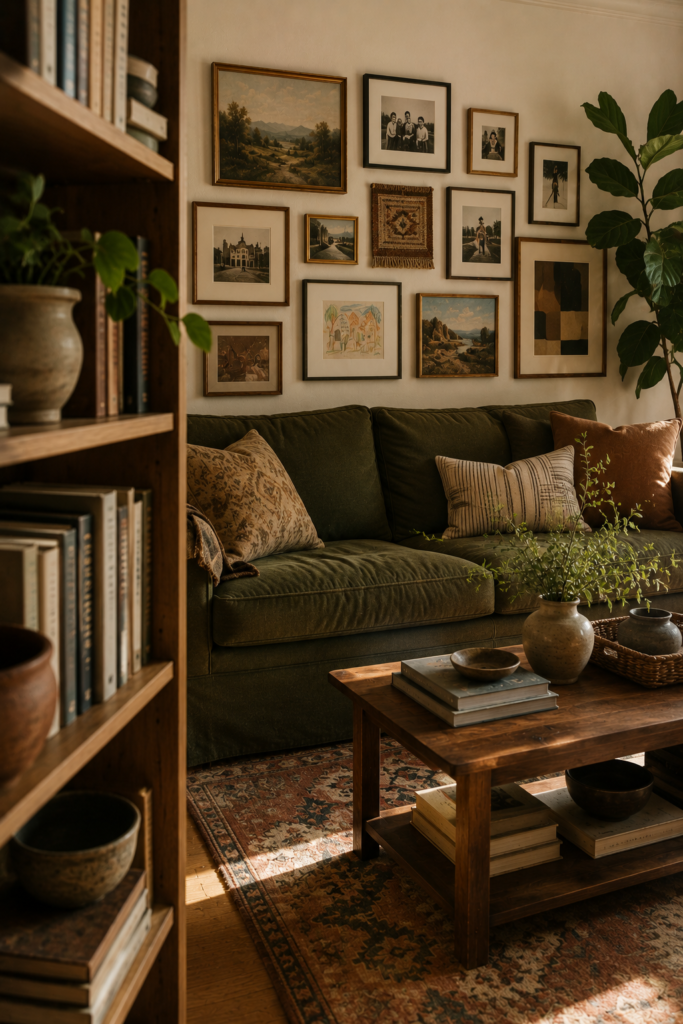
A gallery wall doesn’t have to be finished forever. Some of the most interesting arrangements develop gradually as you find new artwork, photographs, or objects that have meaning to you. Leave enough flexibility in the arrangement to replace or add pieces over time, creating a wall that reflects your home and experiences rather than looking like a single coordinated purchase.
A successful gallery wall combines planning with personality. Start by considering the wall, furniture, and room proportions, then build the collection around a loose visual theme, balanced frame choices, thoughtful spacing, and varied artwork sizes. Once the basic structure is right, allow the display to become personal—because the best gallery walls look collected, not manufactured.
DIY Home Decor Ideas That Make a Big Impact Without a Full Makeover