Address
304 North Cardinal St.
Dorchester Center, MA 02124
Work Hours
Monday to Friday: 7AM - 7PM
Weekend: 10AM - 5PM

Address
304 North Cardinal St.
Dorchester Center, MA 02124
Work Hours
Monday to Friday: 7AM - 7PM
Weekend: 10AM - 5PM

This post contains affiliate links. We may earn a small commission at no extra cost to you.
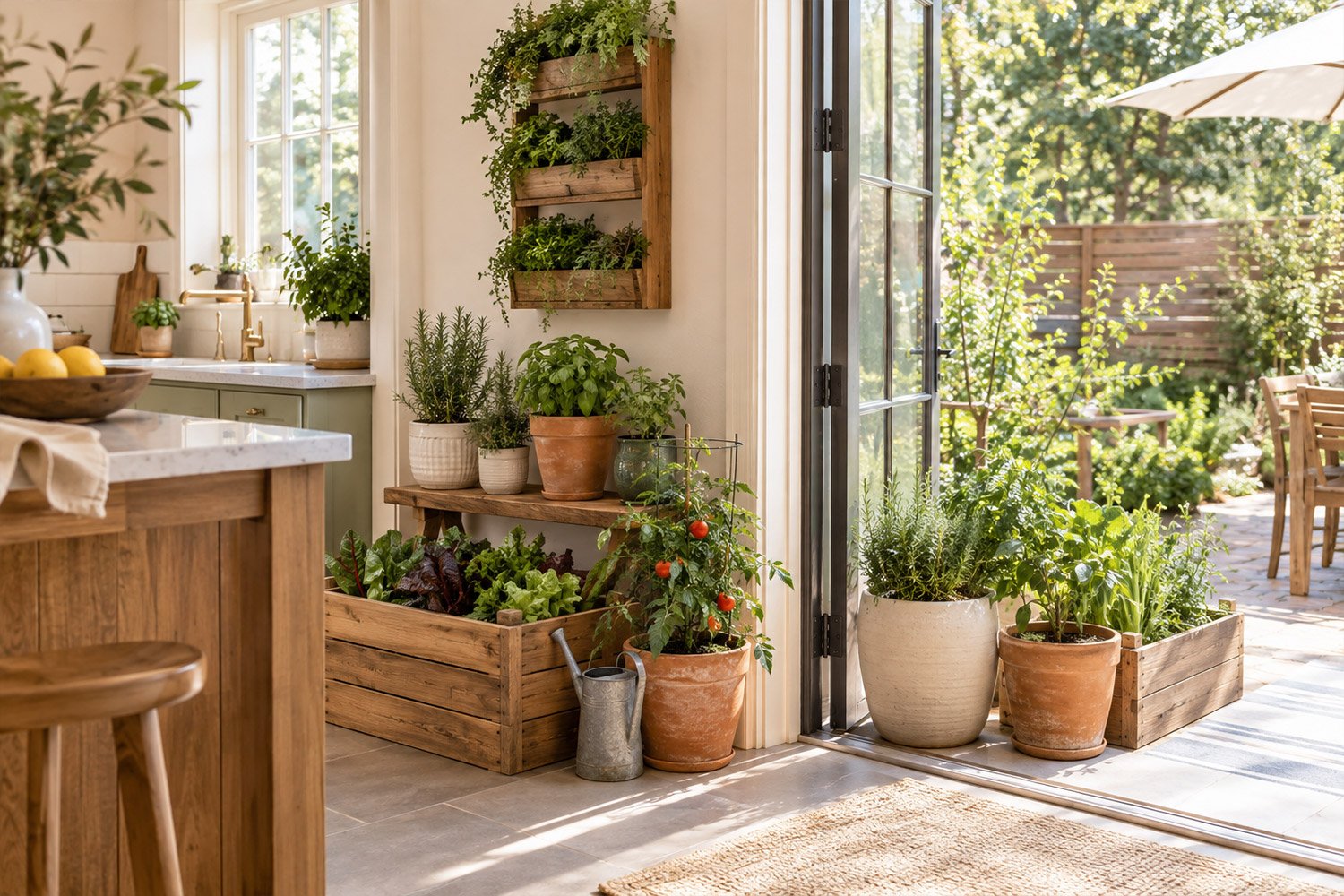
Growing herbs, vegetables, and a few edible plants at home doesn’t require a large backyard. A kitchen garden can be created with containers, reclaimed materials, vertical space, or a small sunny corner. These DIY kitchen garden ideas make it easier to grow useful plants while adding a practical, fresh touch to your home.
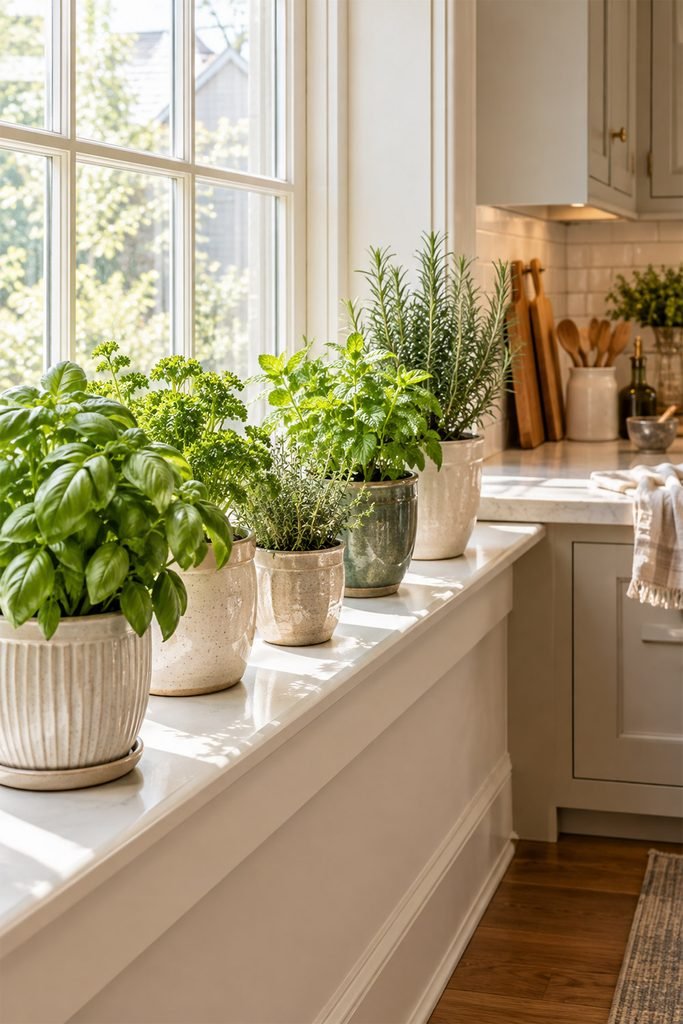
A sunny kitchen windowsill can become a simple herb garden for basil, mint, parsley, cilantro, thyme, or rosemary. Use a row of small matching pots or narrow planters that fit comfortably along the sill, and label each herb for an organized look. This setup works especially well for apartments because it uses space that would otherwise remain unused while keeping frequently used herbs within easy reach.
👉 [ Shop Ceramic Plant Pots on Amazon ]
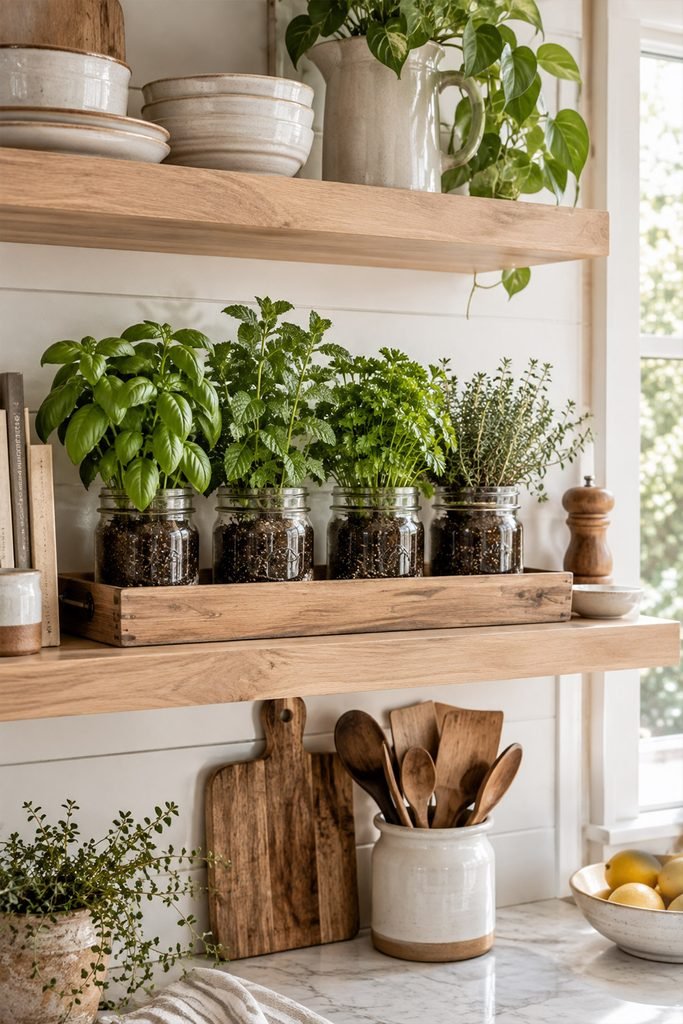
Repurpose glass mason jars into compact herb planters for a charming DIY kitchen garden. Add a drainage layer where appropriate, fill the jars with suitable potting mix, and grow smaller herbs that don’t require much space. Arrange several jars together on a wooden tray or narrow shelf to create a neat little indoor garden that works particularly well in rustic, farmhouse, or casual kitchen spaces.
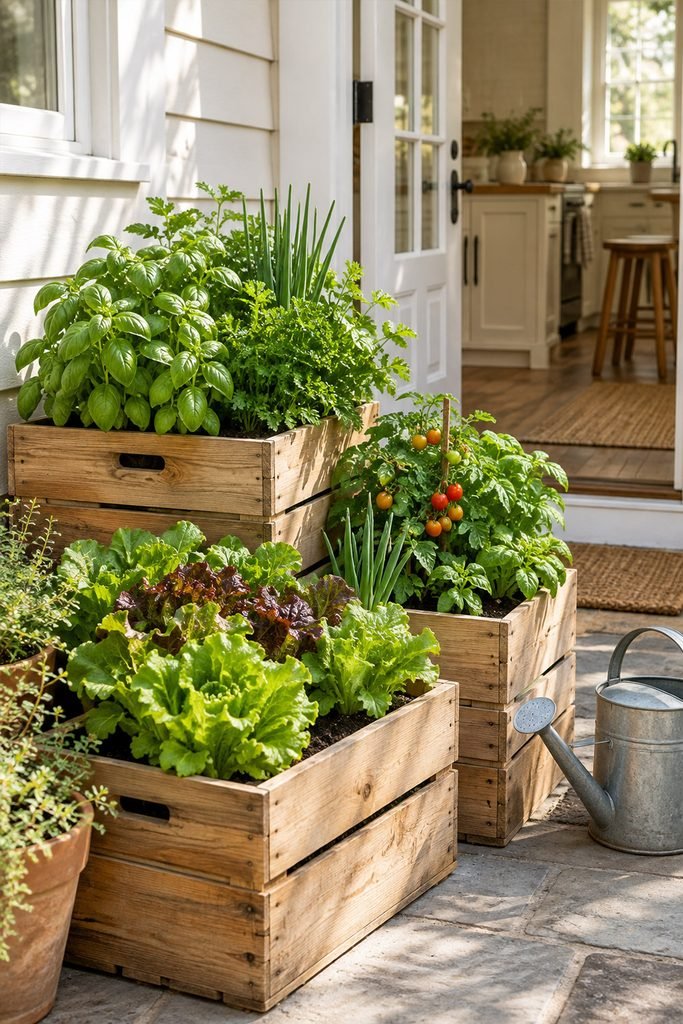
Old wooden crates can be transformed into attractive planters for herbs, lettuce, spinach, and other compact vegetables. Line the inside appropriately, provide drainage, and position the crates near a sunny outdoor area, balcony, patio, or kitchen entrance. Stacking or arranging several crates at different heights can also make the garden more visually interesting while giving you separate growing areas for different plants.
👉 [ Shop Wooden Crates on Amazon ]
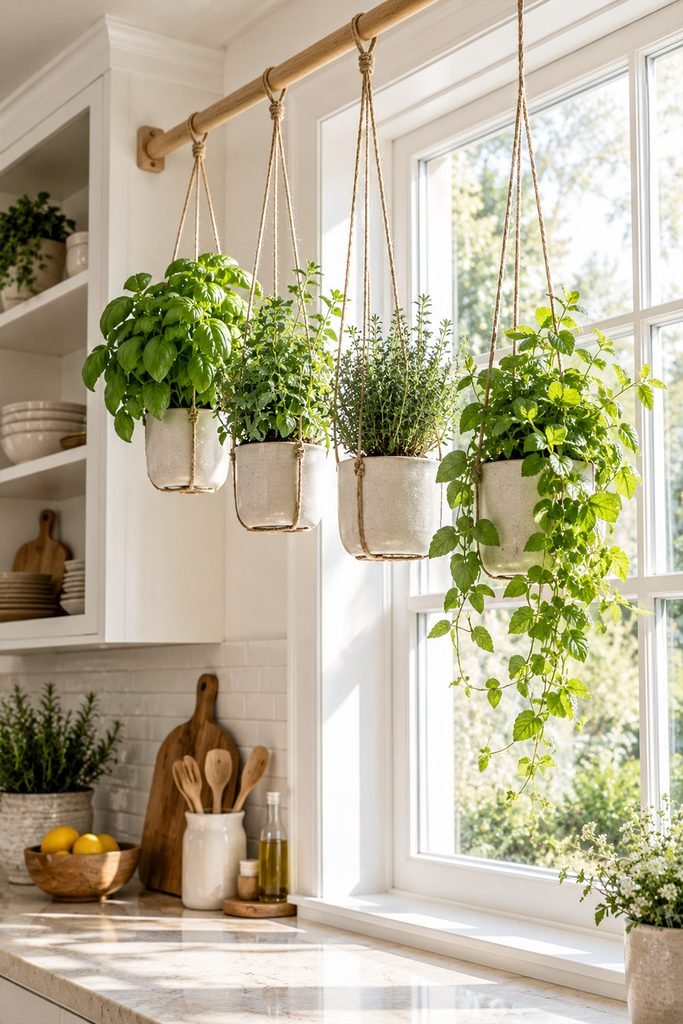
When counter and floor space are limited, take the garden upward with a hanging herb planter. Small pots can be suspended from a simple wooden rail, wall-mounted structure, or ceiling-safe hanging system. Keep the arrangement close to a bright window and choose lightweight containers that are easy to water and maintain. This creates a practical garden without taking up valuable counter or floor space.
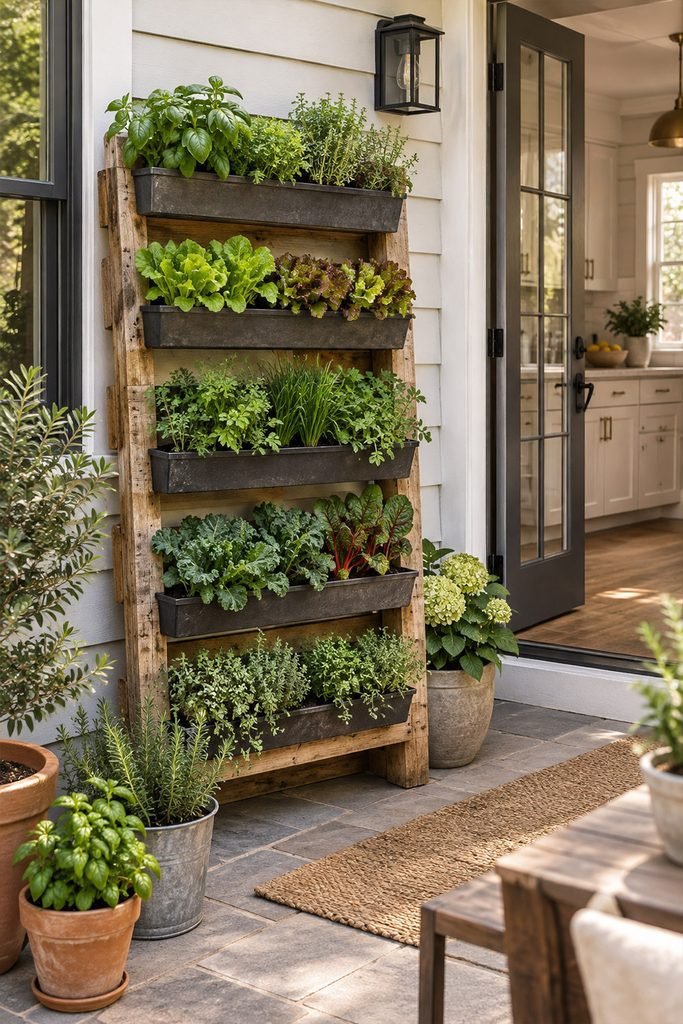
Turn a suitable wooden pallet into a vertical growing structure for herbs and compact vegetables. Secure appropriate planting containers to the pallet, arrange plants according to their sunlight requirements, and lean or mount the structure securely in a sunny location. The vertical arrangement makes good use of limited space and can create a distinctive garden feature on a balcony, patio, or small outdoor wall.
👉 [ Shop Vertical Garden Planter on Amazon ]
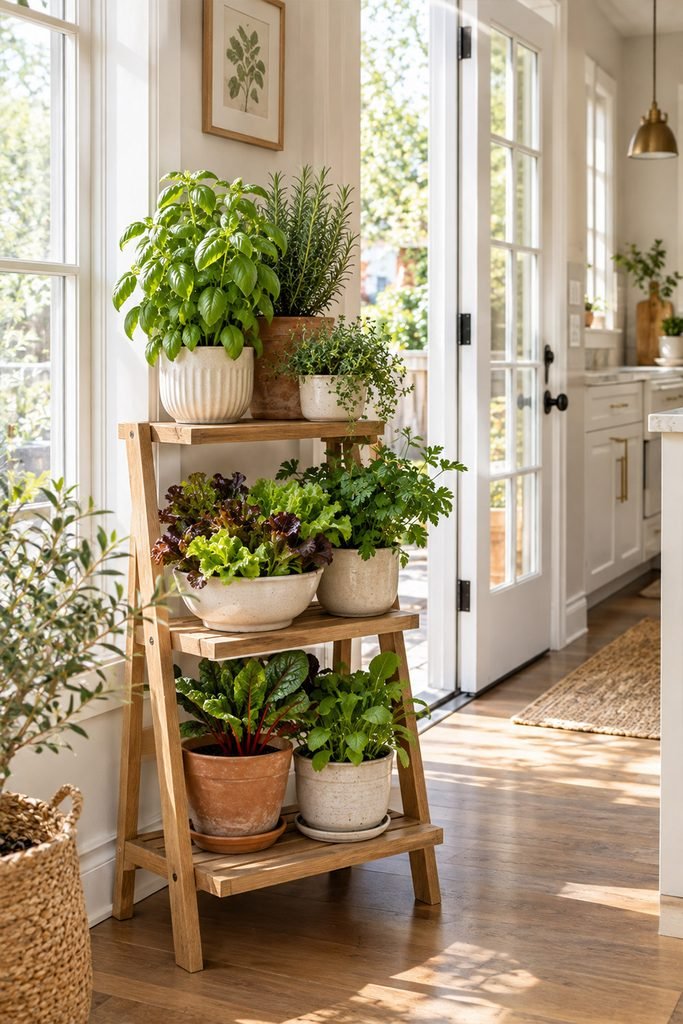
A tiered plant stand is an easy way to create several growing levels in one compact footprint. Place sun-loving herbs and smaller vegetables across the different shelves, making sure each plant receives enough light and airflow. A three-tier wooden or metal stand can fit neatly beside a kitchen door, on a balcony, or in a sunny corner and can be moved when necessary.
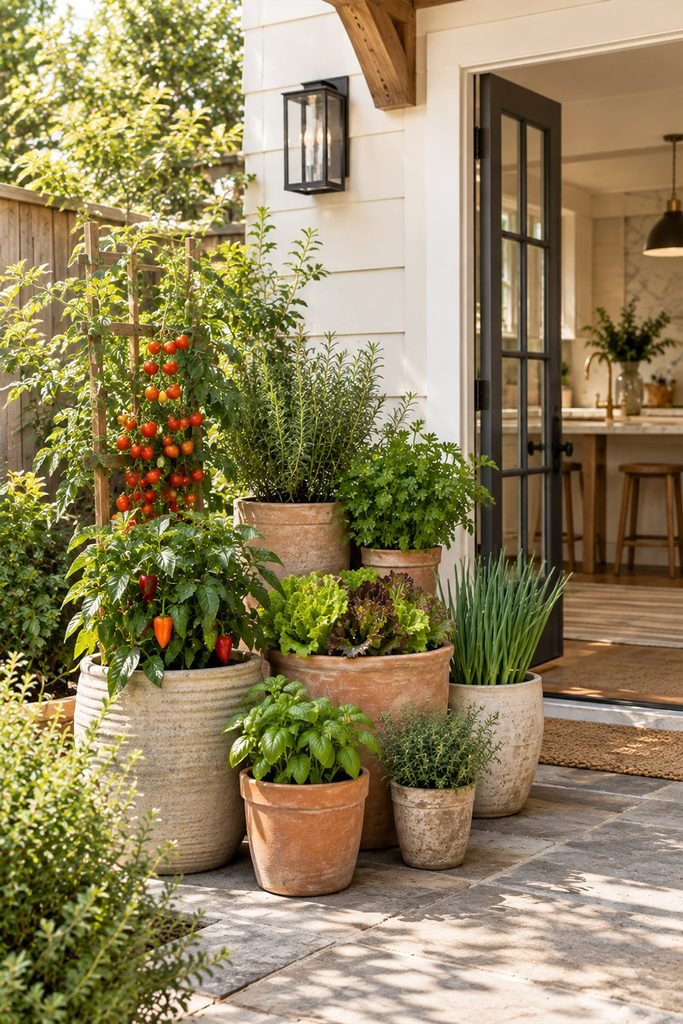
You can grow more than herbs by turning larger containers into a small vegetable garden. Tomatoes, peppers, lettuce, green onions, radishes, and similar compact crops can work well when matched with appropriately sized containers. Group several pots together and use simple plant markers to keep the garden organized while giving each vegetable enough room to grow.
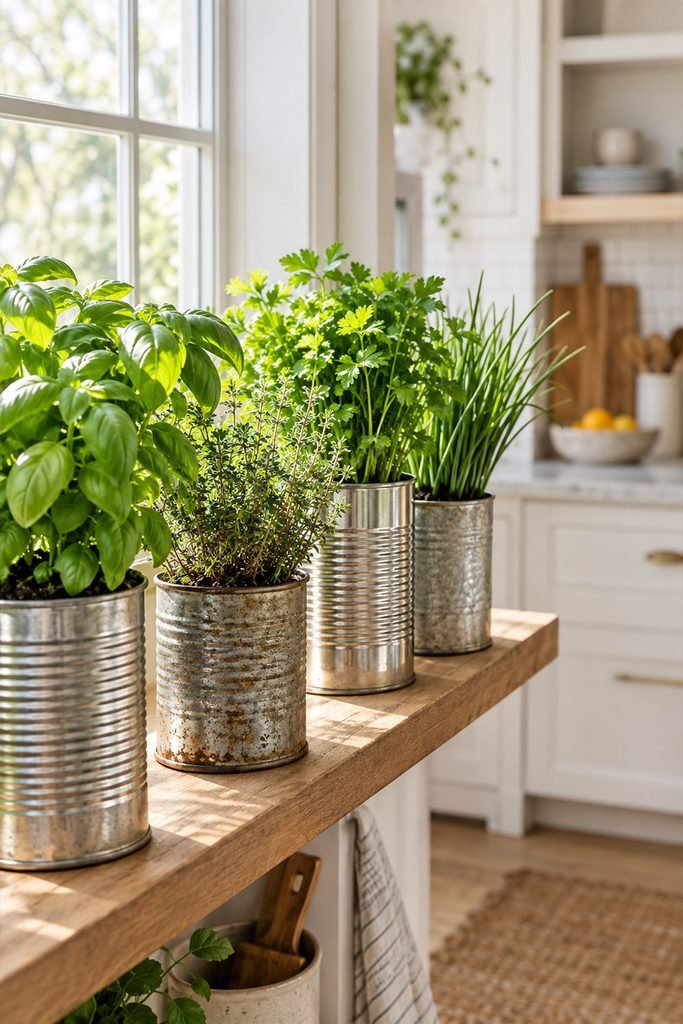
Clean food cans can be reused as inexpensive herb planters for a small DIY project. Paint or leave the containers in their natural metal finish, add drainage holes, and plant compact herbs inside. Arrange them along a sunny shelf, wooden board, or outdoor ledge for a simple upcycled garden that adds personality without requiring expensive planters.
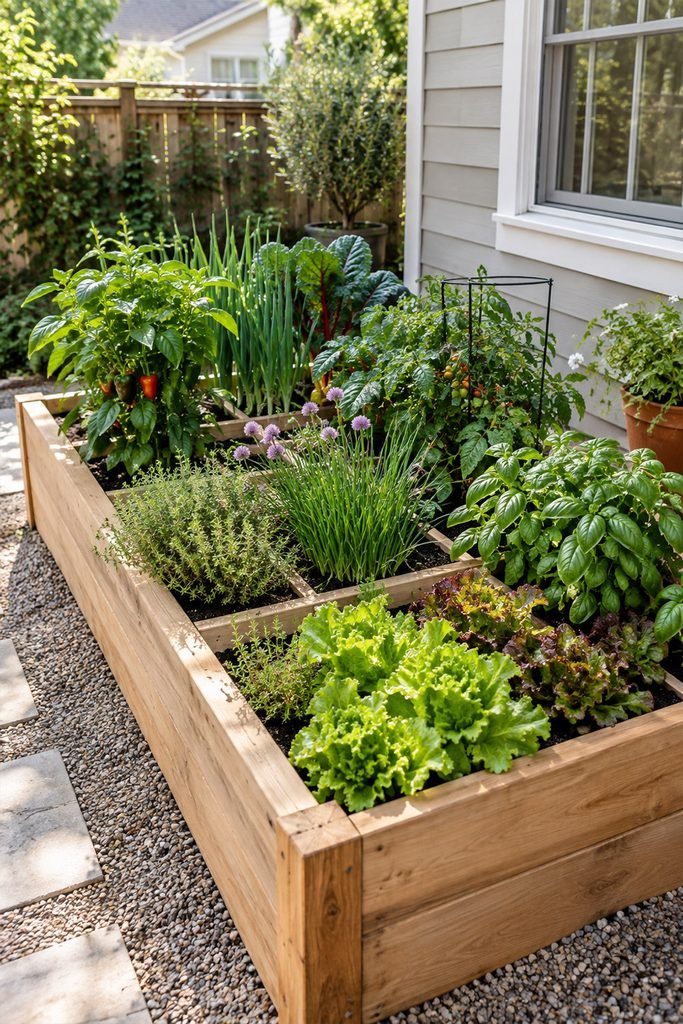
If you have a small outdoor area, build a compact raised garden bed for growing a wider selection of vegetables and herbs. Use untreated, garden-appropriate materials and divide the bed into sections so different crops can be organized efficiently. The raised design provides a defined growing area and can make watering, planting, and harvesting easier than managing plants directly in the ground.
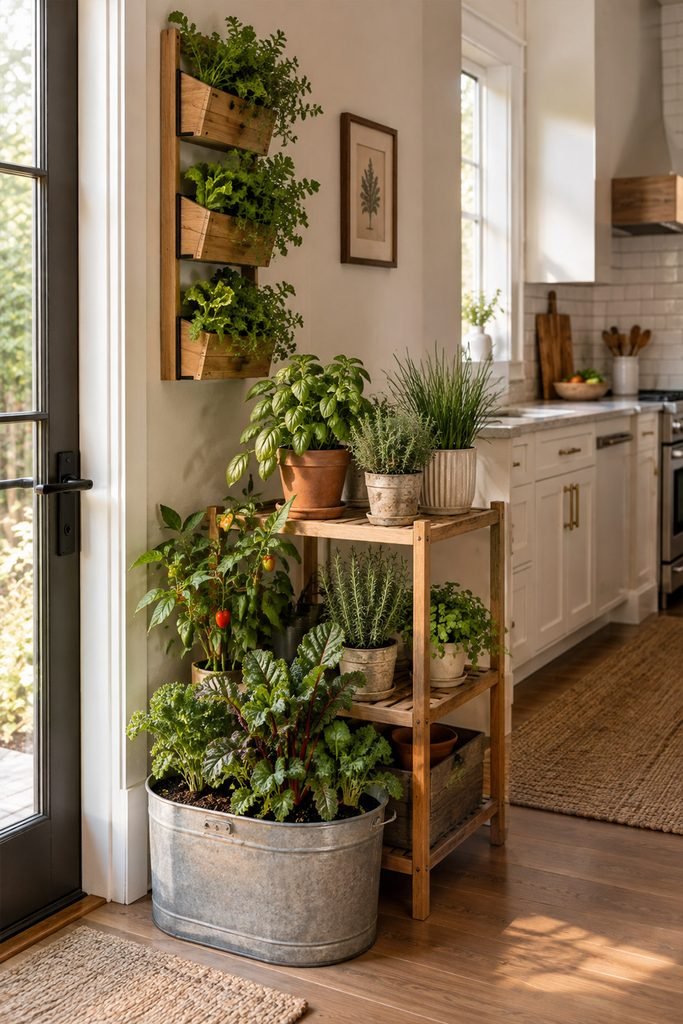
Create a dedicated kitchen garden corner by combining several of the ideas above into one organized growing station. Use a narrow shelf or plant stand for herbs, larger containers for vegetables, and a few vertical planters to maximize the available space. Keep the most frequently harvested plants closest to the kitchen while placing larger or less frequently used crops farther back. The result is a practical DIY garden that feels intentional rather than simply like a collection of individual pots.
A DIY kitchen garden can be as simple as a few herbs on a windowsill or as complete as a dedicated vegetable-growing corner. The key is to work with the sunlight and space you already have, choose containers that suit the plants you want to grow, and keep the arrangement easy to maintain. Starting small also makes it easier to learn what grows well in your particular space before expanding the garden.
10 Kitchen Decor Ideas to Make Your Kitchen Feel More Beautiful