Address
304 North Cardinal St.
Dorchester Center, MA 02124
Work Hours
Monday to Friday: 7AM - 7PM
Weekend: 10AM - 5PM

Address
304 North Cardinal St.
Dorchester Center, MA 02124
Work Hours
Monday to Friday: 7AM - 7PM
Weekend: 10AM - 5PM

This post contains affiliate links. We may earn a small commission at no extra cost to you.
A TV wall can be much more than a place to mount a television. With the right combination of materials, storage, lighting, and decorative elements, it can become one of the most intentional features in your living room while still keeping the television practical and easy to use.
Whether you prefer a warm modern interior, a minimalist space, or a more traditional home, there are plenty of ways to make a TV wall feel integrated rather than visually dominant. These ideas focus on realistic American living rooms and show how different finishes, furniture arrangements, and decorative details can create a polished result.
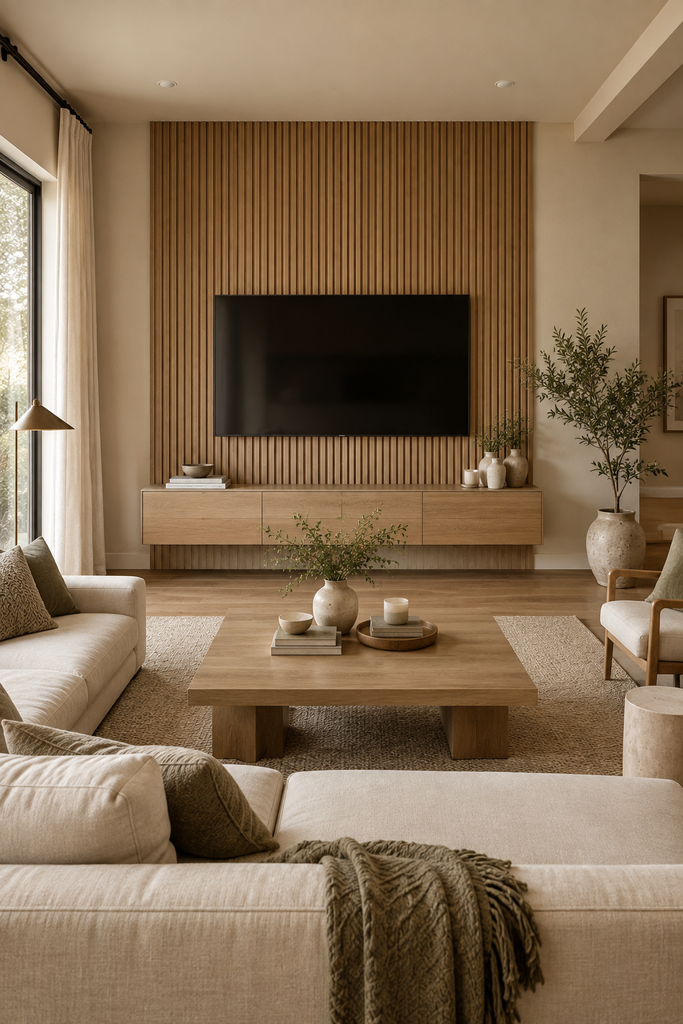
Vertical wood slats are an easy way to add architectural interest behind a wall-mounted television. Choose natural oak or walnut tones to introduce warmth against a neutral living room. Keep the slats limited to the TV zone so they create a defined focal point without overwhelming the room. A low-profile media console beneath the television can provide concealed storage while keeping the overall composition clean.
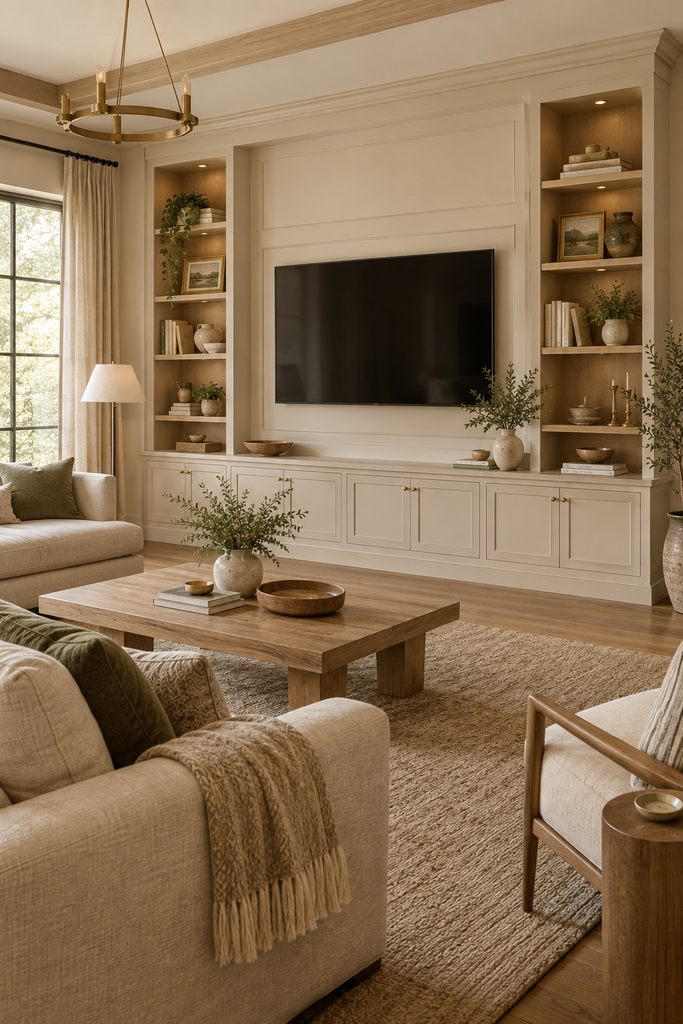
A built-in media wall can make the television feel like part of the architecture rather than an object attached to the wall. Surround the TV with closed cabinetry and a few carefully styled open shelves for books, ceramics, and artwork. Use warm white, cream, or natural wood cabinetry depending on the style of the room. This approach is especially useful when you need substantial storage while still wanting a sophisticated appearance.
👉 [ Shop Media Console on Amazon ]
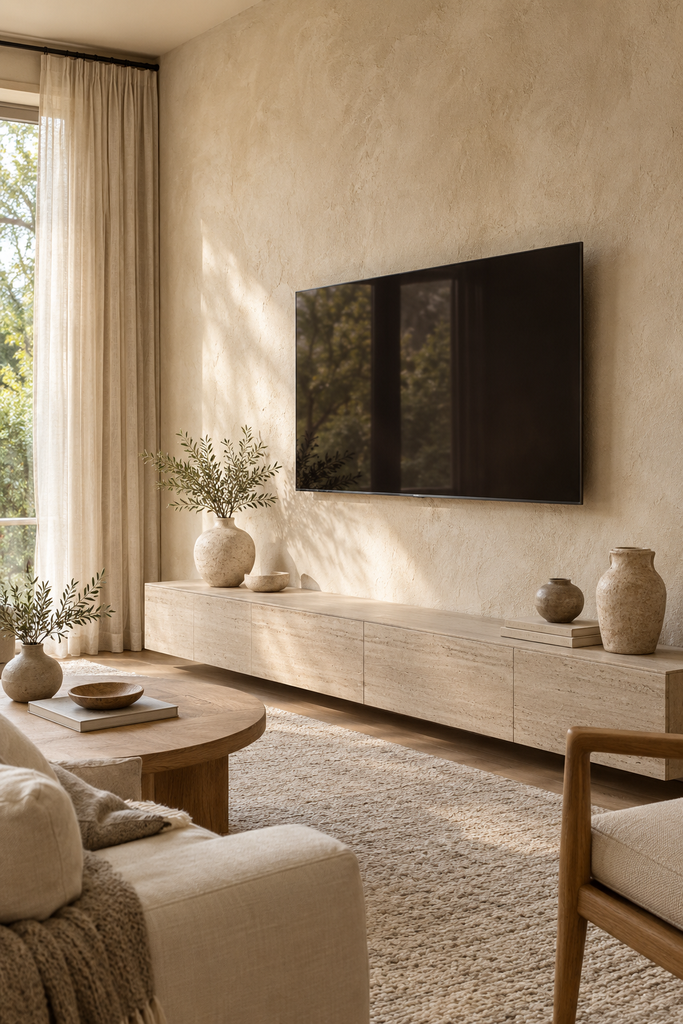
A softly textured plaster or limewash finish can give a TV wall subtle character without competing with the screen. Warm white, mushroom, taupe, or light greige finishes work particularly well in contemporary and organic interiors. Keep the surrounding decor restrained so the natural texture remains visible. The result is understated but much more interesting than a completely flat painted wall.
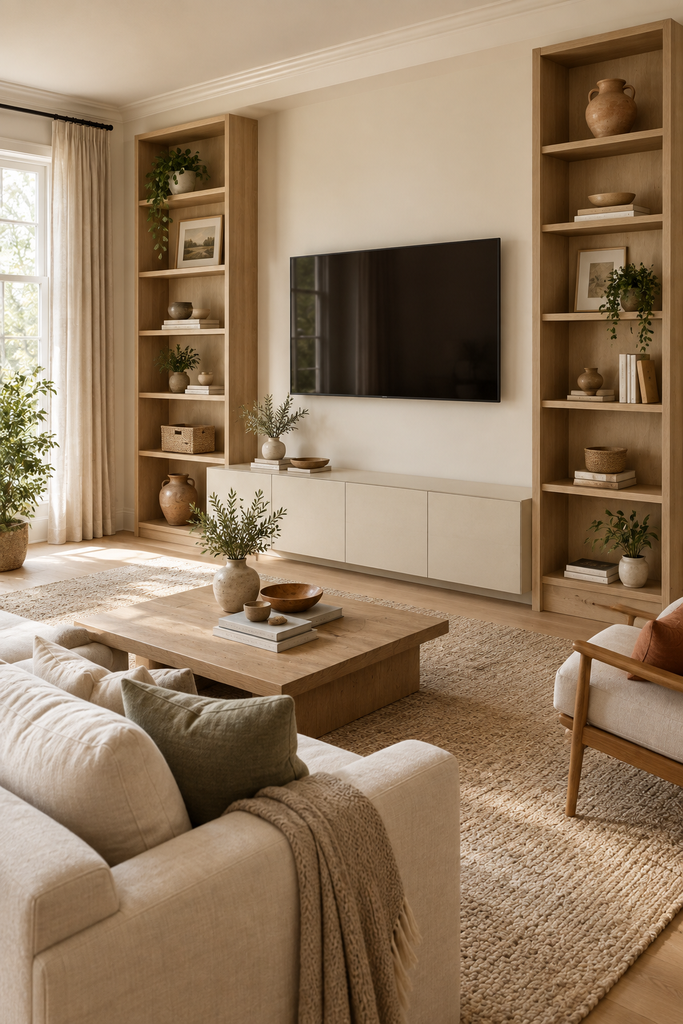
Open shelves on either side of a television can turn an otherwise plain wall into a balanced display. Style the shelves with books, ceramics, framed artwork, small plants, and a few personal objects while leaving enough empty space to prevent visual clutter. Natural wood shelving works beautifully with cream or white walls. Keep the television centered between the shelves so the composition feels intentional.
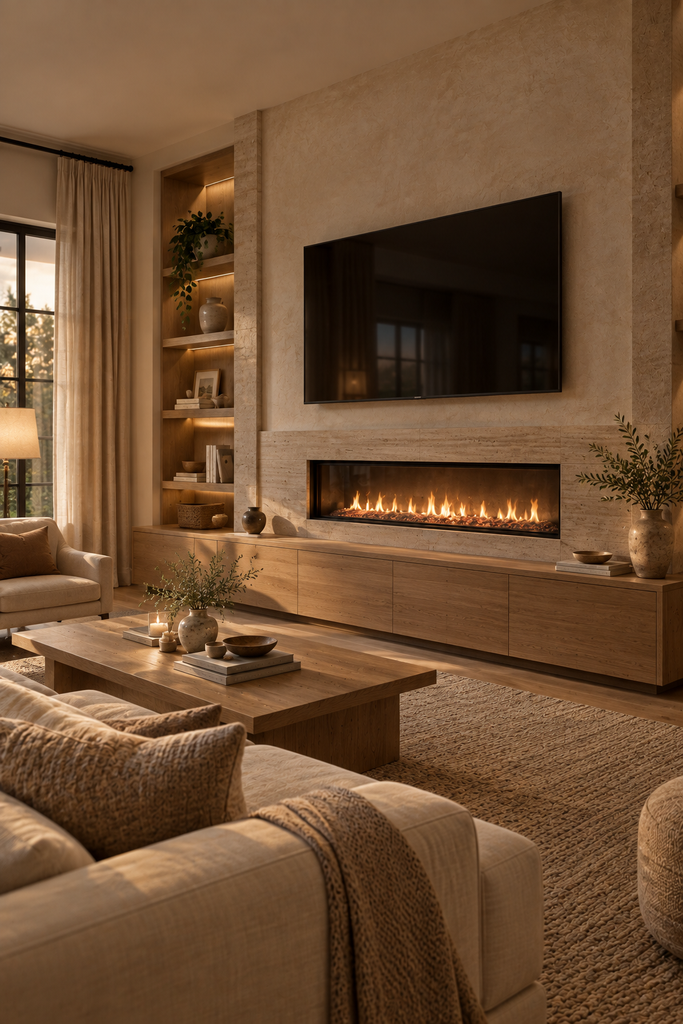
Combining a television with a fireplace can create a strong living-room focal wall when the proportions are carefully planned. A simple linear fireplace beneath the television works particularly well in modern homes, while a traditional mantel can suit more classic interiors. Use stone, plaster, or warm wood around the fireplace to connect the two features visually. Make sure the overall installation is appropriate for the specific TV and fireplace requirements.
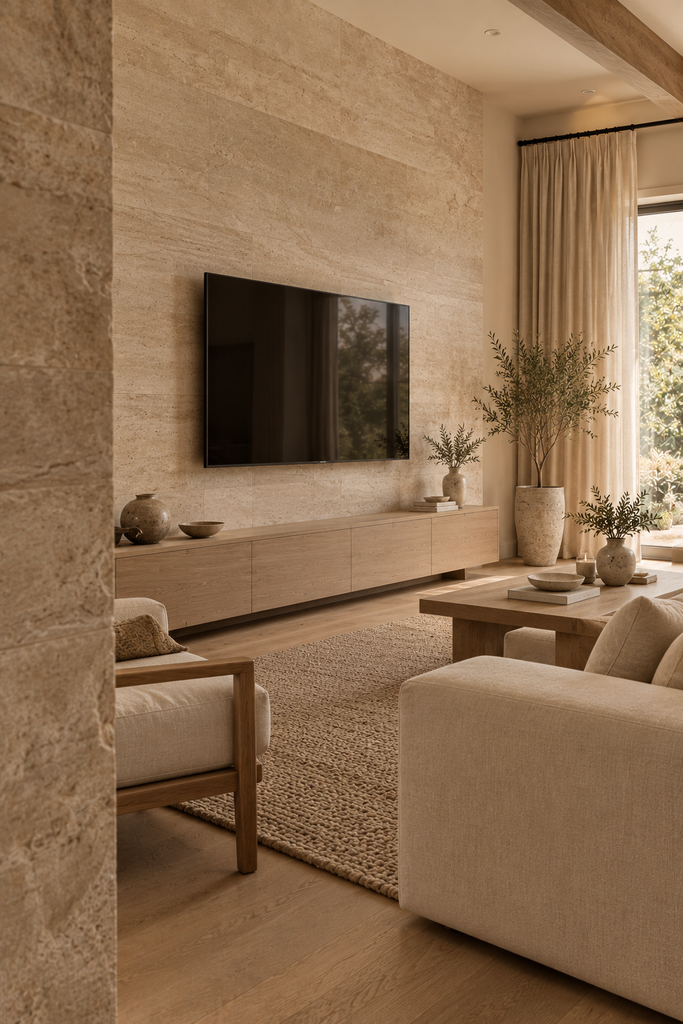
Natural stone or stone-look material can give a TV wall a substantial architectural presence. Light limestone, travertine, or warm textured stone works especially well with neutral sofas and natural wood furniture. Rather than covering every wall, use the material only behind the television to create a defined feature. Pair it with simple furniture so the stone remains the star.
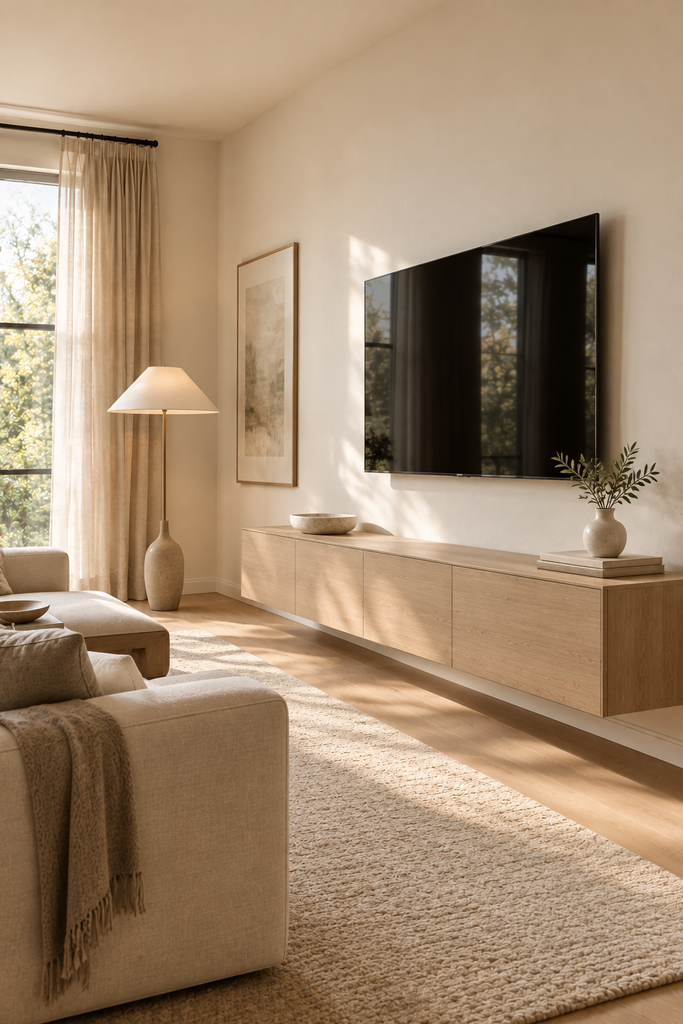
For a cleaner modern look, mount the television above a floating console with concealed storage. Keep cables hidden and choose a console with simple, handle-free fronts for a streamlined appearance. Add one or two carefully chosen decorative objects rather than filling the surface. This approach works particularly well in smaller living rooms where bulky furniture can make the space feel crowded.
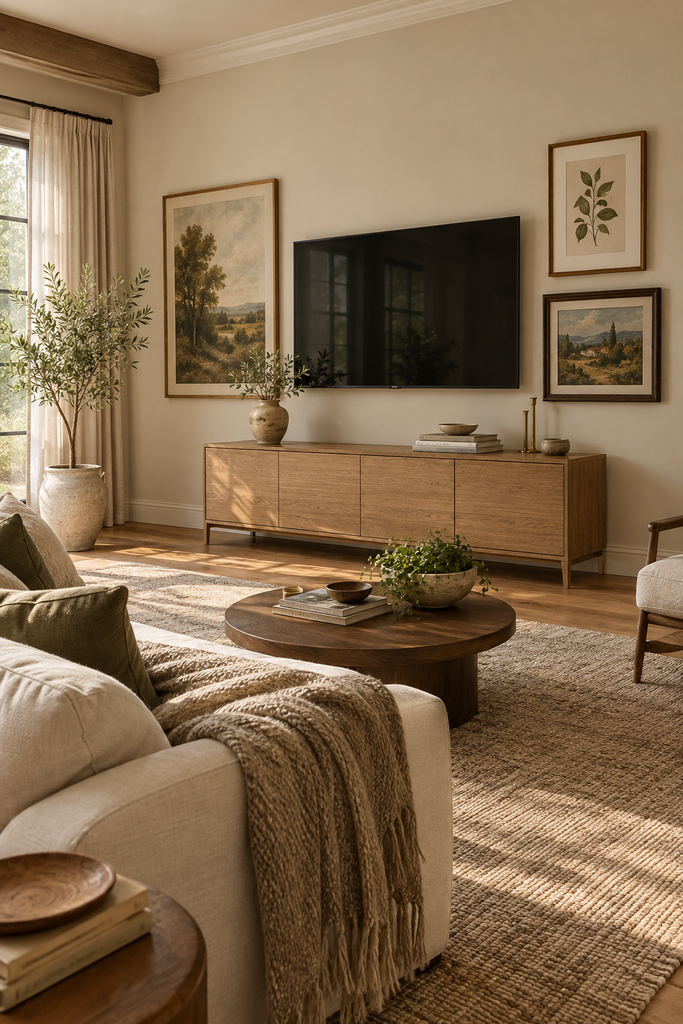
A television doesn’t have to be the only visual element on the wall. Place carefully selected artwork around it to create a more collected and personalized composition. Use frames in related materials such as natural wood, black, or aged brass so the arrangement feels cohesive. Keep the artwork large enough to balance the visual weight of the screen without creating a busy gallery-wall effect.
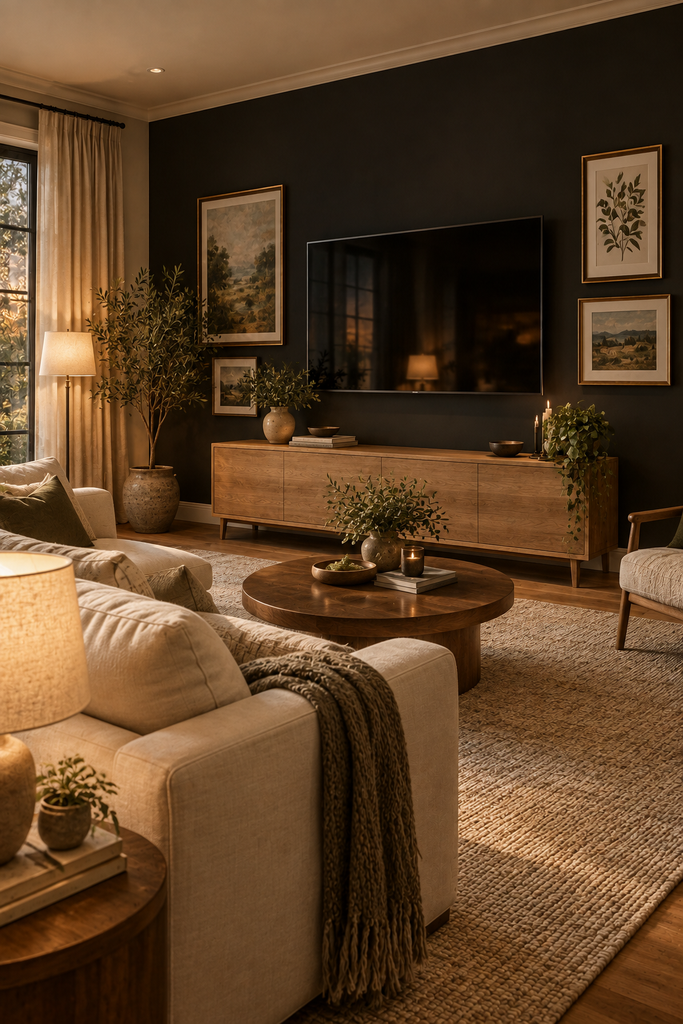
Painting the TV wall in a deeper shade can visually anchor the screen and create a dramatic focal point. Charcoal, deep olive, navy, warm brown, or even black can work beautifully depending on the rest of the room. Balance the darker wall with lighter upholstery, warm wood, and soft textiles. This is one of the simplest ways to transform a plain TV wall without adding major construction.
12 Accent Wall Ideas to Transform Your Living Room
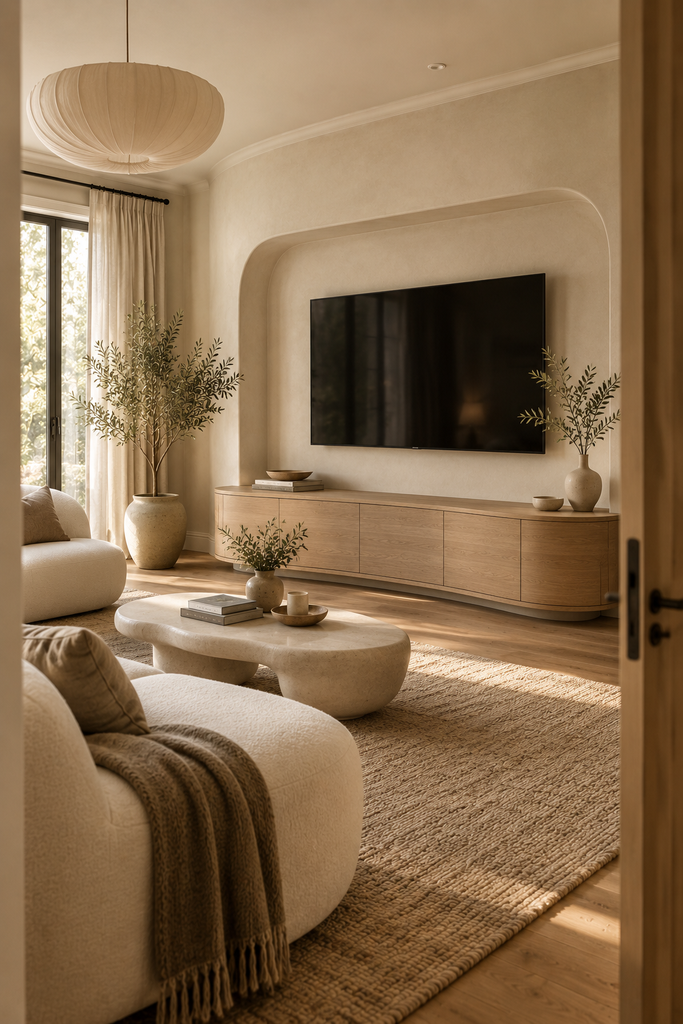
Curved architectural details can soften the hard rectangular shape of a television. Consider an arched niche, gently curved plaster surround, or rounded built-in cabinetry around the TV. Keep the curves subtle so the design remains timeless rather than overly trendy. Soft furnishings and rounded furniture elsewhere in the room can reinforce the shape.
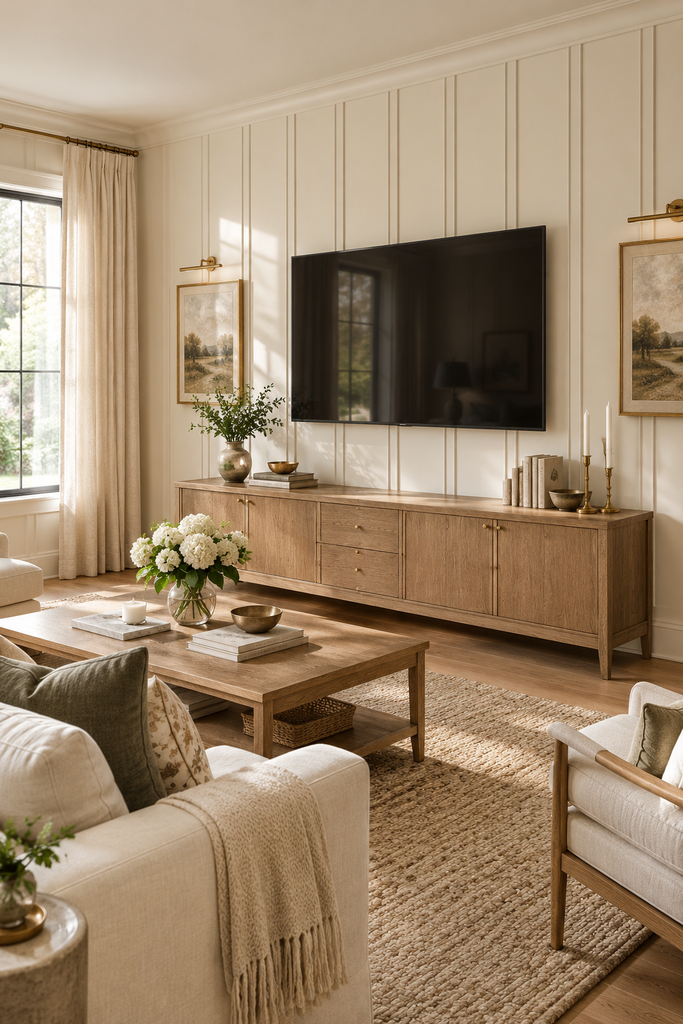
Wall paneling can introduce architectural detail while keeping the TV wall relatively simple. Try narrow vertical molding, traditional wall trim, or modern fluted panels depending on the home’s style. Paint the paneling in the same color as the wall for a subtle effect or use a contrasting tone for more drama. A simple wooden media console underneath can complete the arrangement.
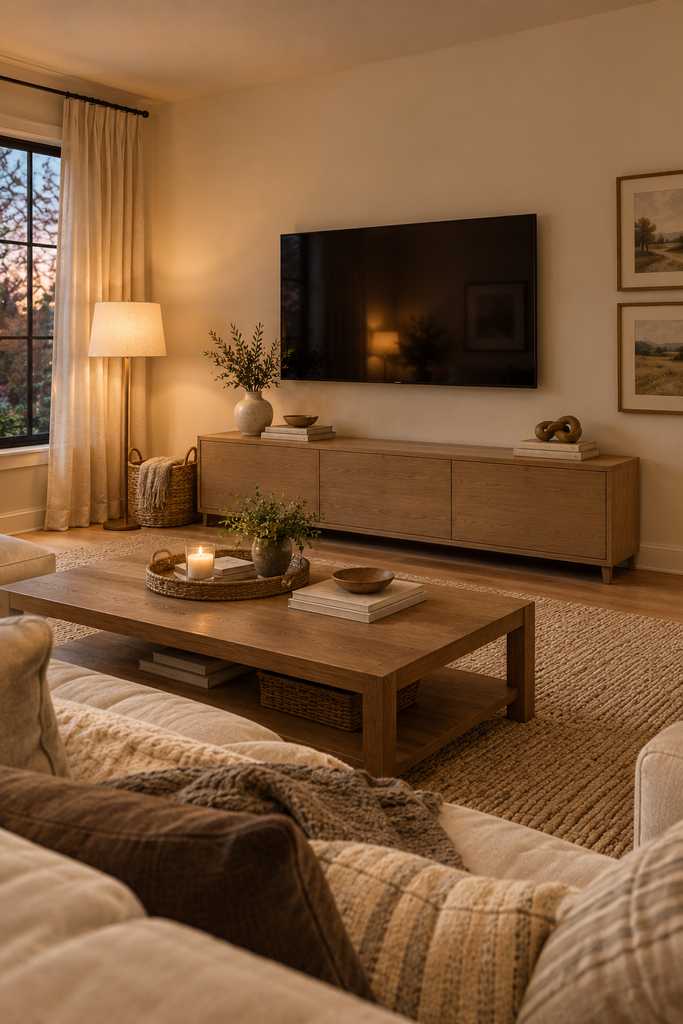
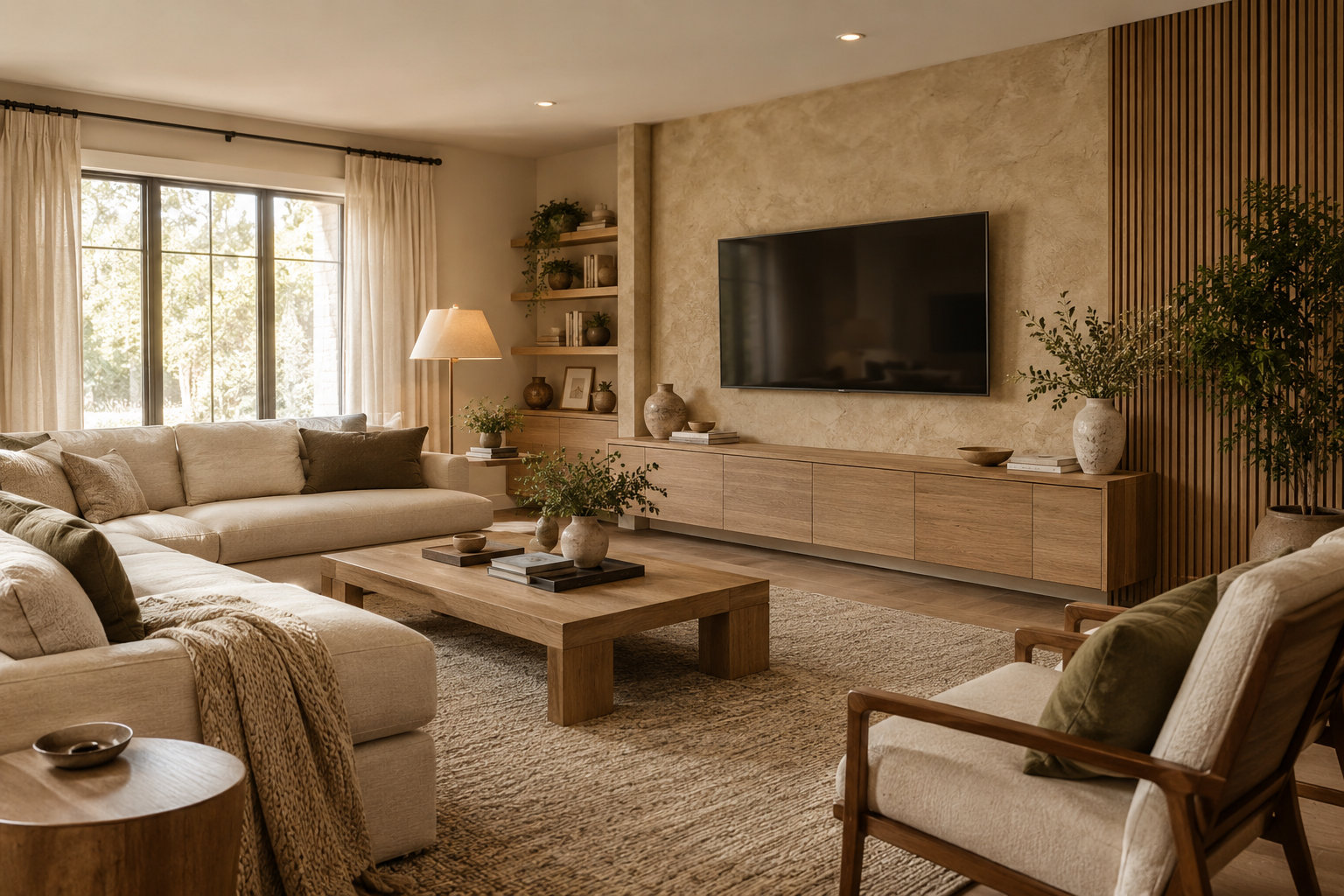
Sometimes the best TV wall is also the simplest. Mount the television at a comfortable height above a long low console and surround the arrangement with a few carefully selected decorative pieces. Add a large rug, comfortable sofa, warm lighting, and natural textures so the TV becomes part of a cozy seating environment rather than the entire focus. This approach is especially effective for relaxed family living rooms.
👉 [ Shop Floor Lamp on Amazon ]
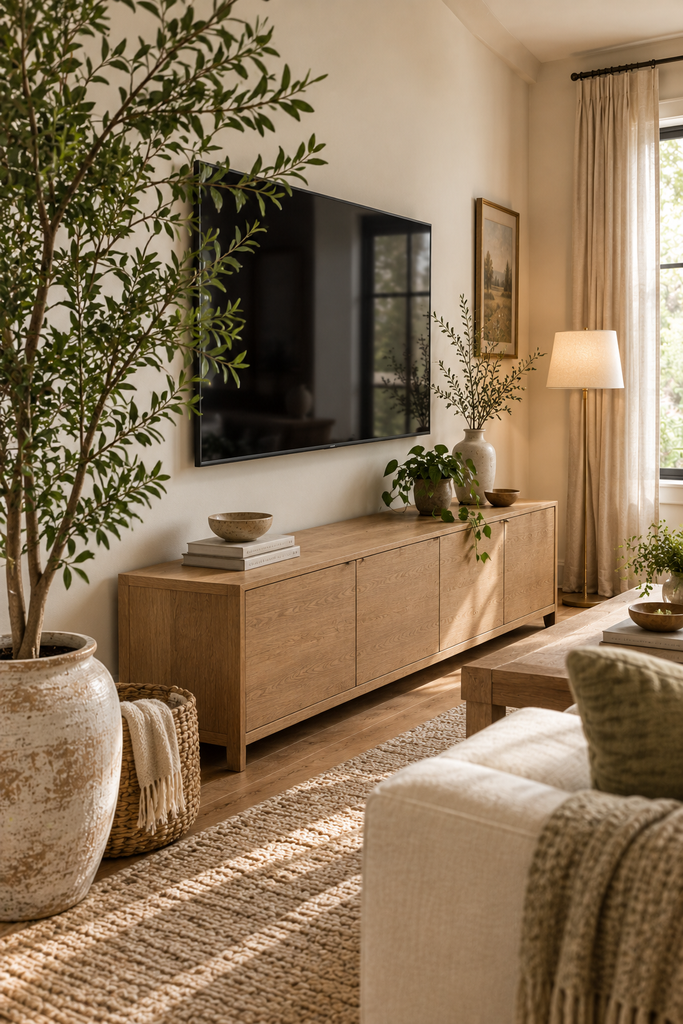
Plants can soften the technology-heavy appearance of a television wall. Place a tall indoor plant beside the console or use smaller plants on surrounding shelves. Choose planters in ceramic, stone, or woven materials to connect the greenery with the rest of the room. Keep plants away from equipment and ventilation areas while using their organic shapes to add visual balance.
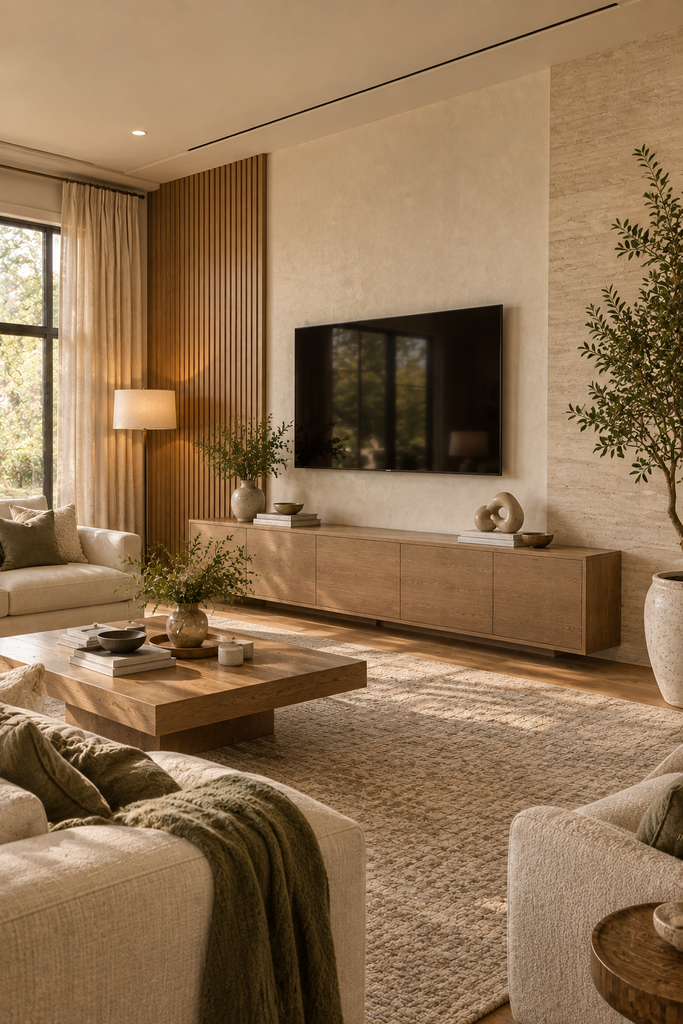
For a more sophisticated TV wall, combine two or three complementary materials instead of relying on a single finish. For example, pair warm oak paneling with creamy plaster and a stone console, or combine painted cabinetry with natural wood shelving and subtle brass details. The key is to repeat materials elsewhere in the room so the TV wall feels connected to the overall interior. Keep the palette restrained and allow negative space to prevent the design from becoming visually heavy.
👉 [ Shop Large Flower Vase on Amazon ]
A well-designed TV wall should balance technology with the character of the room. Whether you choose warm wood, built-ins, textured plaster, stone, paneling, or a simple floating console, the goal is to make the television feel naturally integrated into the living space.
Focus on the architecture first, then add furniture, lighting, storage, and decorative details in layers. With the right proportions and restrained styling, even a simple TV wall can become a polished focal point that feels both functional and beautiful.