Address
304 North Cardinal St.
Dorchester Center, MA 02124
Work Hours
Monday to Friday: 7AM - 7PM
Weekend: 10AM - 5PM

Address
304 North Cardinal St.
Dorchester Center, MA 02124
Work Hours
Monday to Friday: 7AM - 7PM
Weekend: 10AM - 5PM

This post contains affiliate links. We may earn a small commission at no extra cost to you.
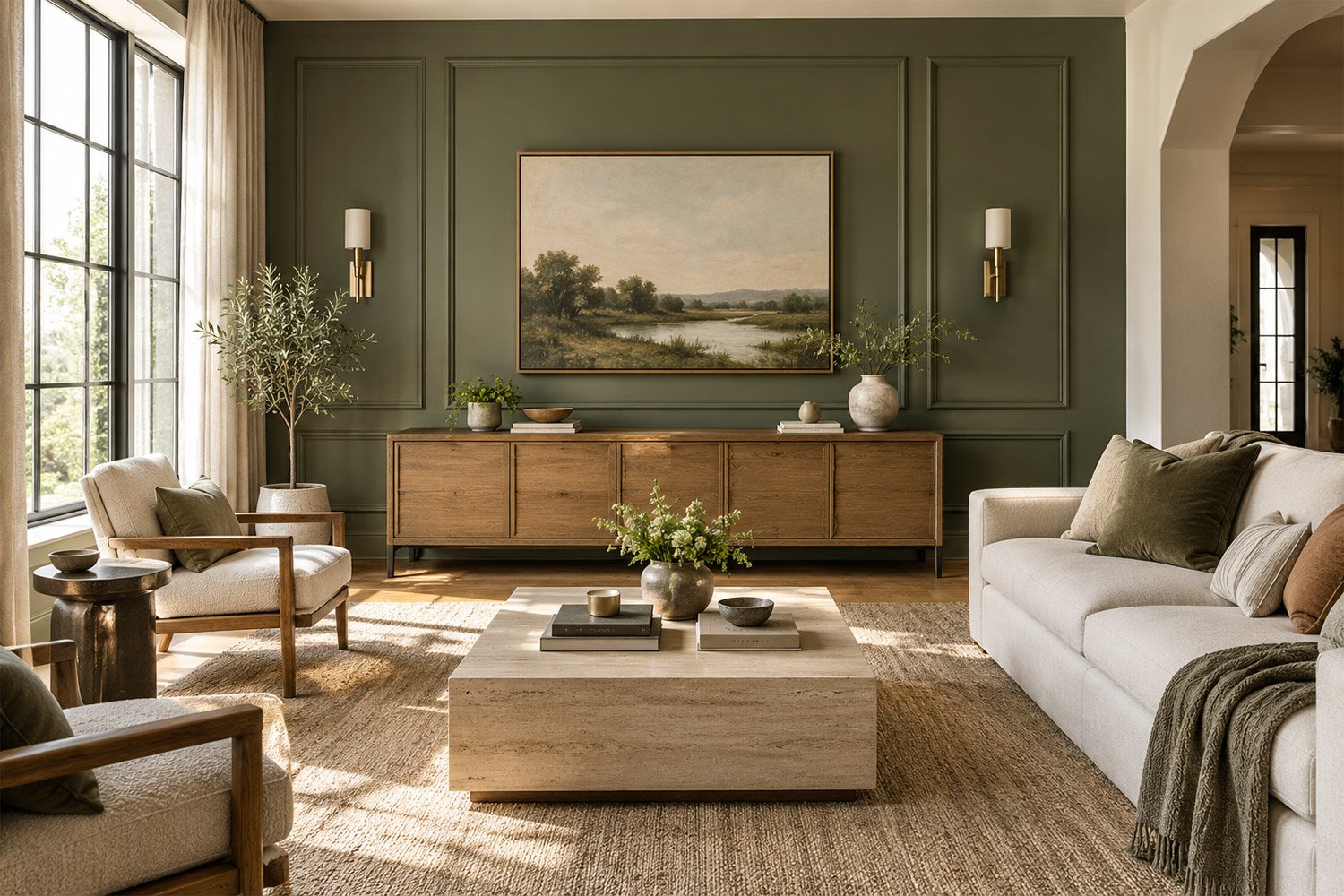
A feature wall is one of the easiest ways to give a room more character without redesigning the entire space. Instead of decorating every wall, you create one intentional focal point using color, wallpaper, wood, artwork, texture, or architectural details. The right feature wall can make a living room feel more sophisticated, give a bedroom a stronger sense of style, or add personality to an otherwise simple dining or entryway space. These feature wall ideas range from simple weekend updates to more substantial treatments, making it easier to find an approach that suits your home and budget.
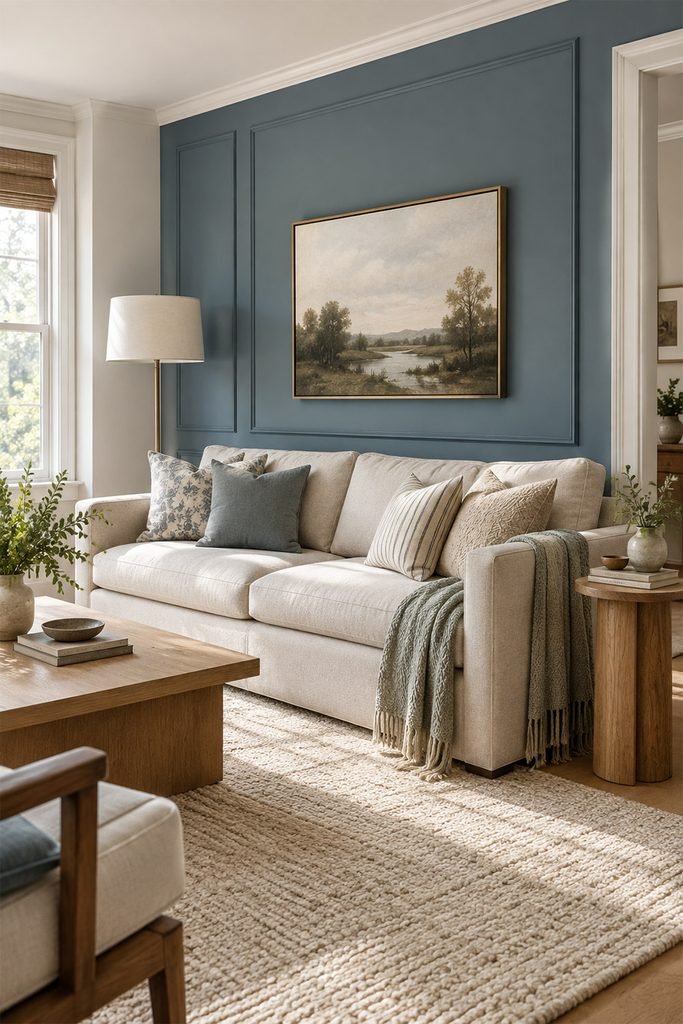
A carefully chosen paint color can completely change the atmosphere of a room. Instead of using another pale neutral, consider olive green, dusty blue, terracotta, charcoal, muted plum, or another color that complements your existing furniture. A darker shade works particularly well behind a sofa or bed because it naturally draws attention to the room’s main furniture. Keep the other walls relatively simple and repeat small touches of the accent color through cushions, artwork, or accessories to make the design feel cohesive rather than disconnected.
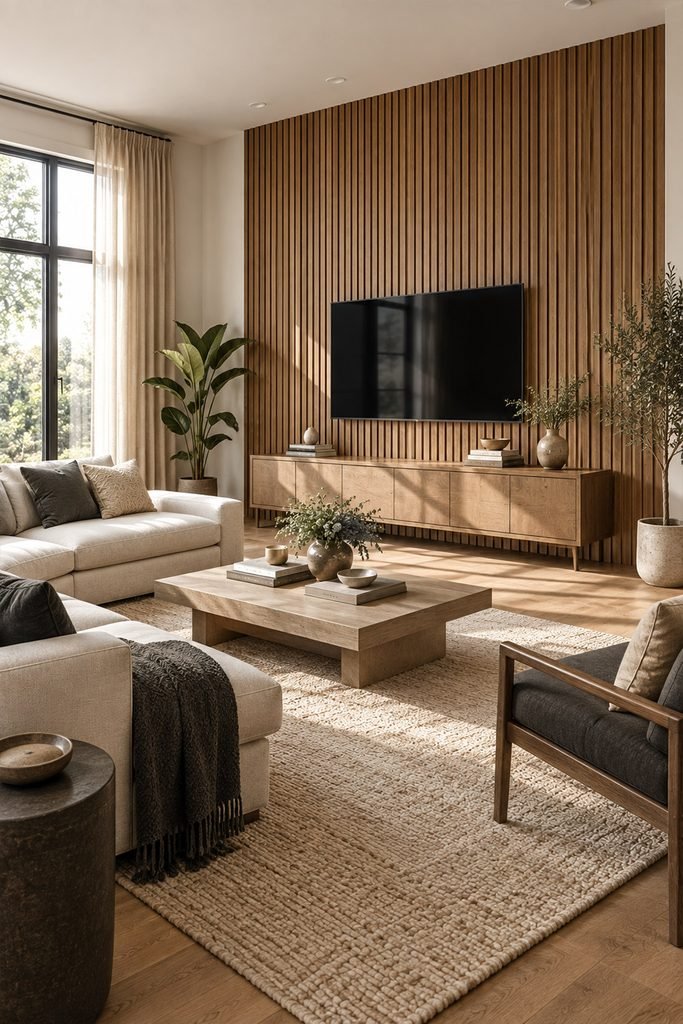
Wood slat walls bring texture and architectural interest to contemporary interiors while adding the warmth of natural wood. Vertical slats can make a wall feel taller and work especially well behind a television, sofa, dining area, or bed. Choose a wood tone that works with your existing flooring and furniture rather than trying to match every wooden element exactly. Natural oak, medium walnut, and lighter wood finishes can all create a sophisticated look when paired with simple furniture and uncluttered styling.
👉 [ Shop Acoustic wall panel on Amazon ]
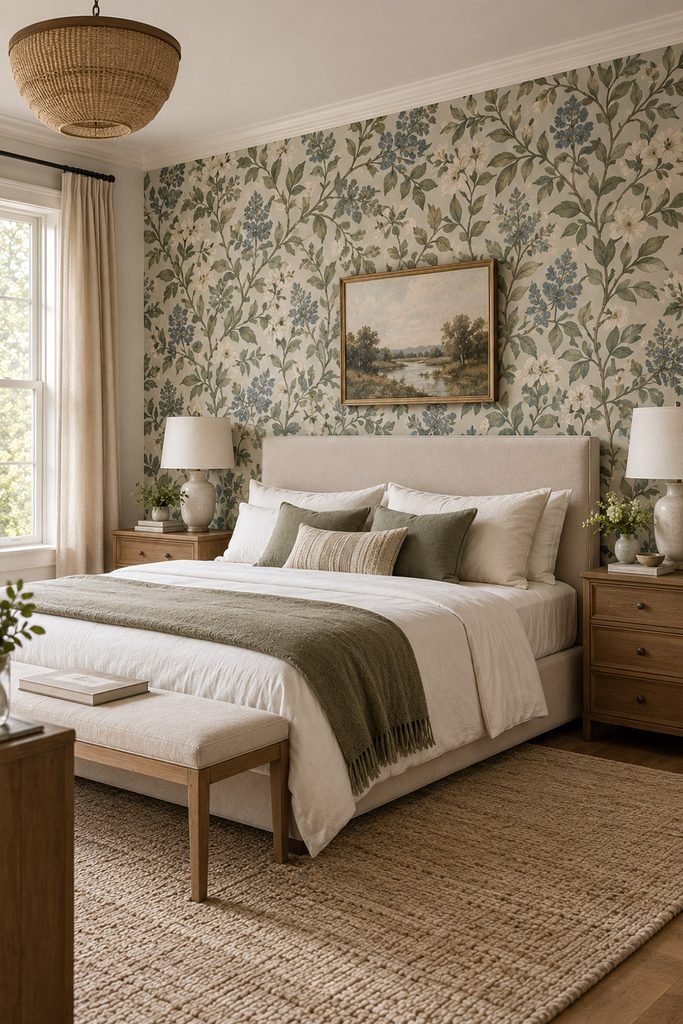
Wallpaper is an effective way to introduce pattern without filling the entire room with visual detail. Botanical prints, subtle geometric patterns, vintage-inspired designs, and textured neutral patterns can all work as feature walls. Place wallpaper behind a bed, sofa, dining table, or entryway console where it can naturally become the room’s backdrop. If you like changing your decor or live in a rental, peel-and-stick wallpaper is particularly useful because it can offer a dramatic transformation without the commitment of traditional wallpaper.
👉 [ Shop Peel-and-stick wallpaper collection on Amazon ]
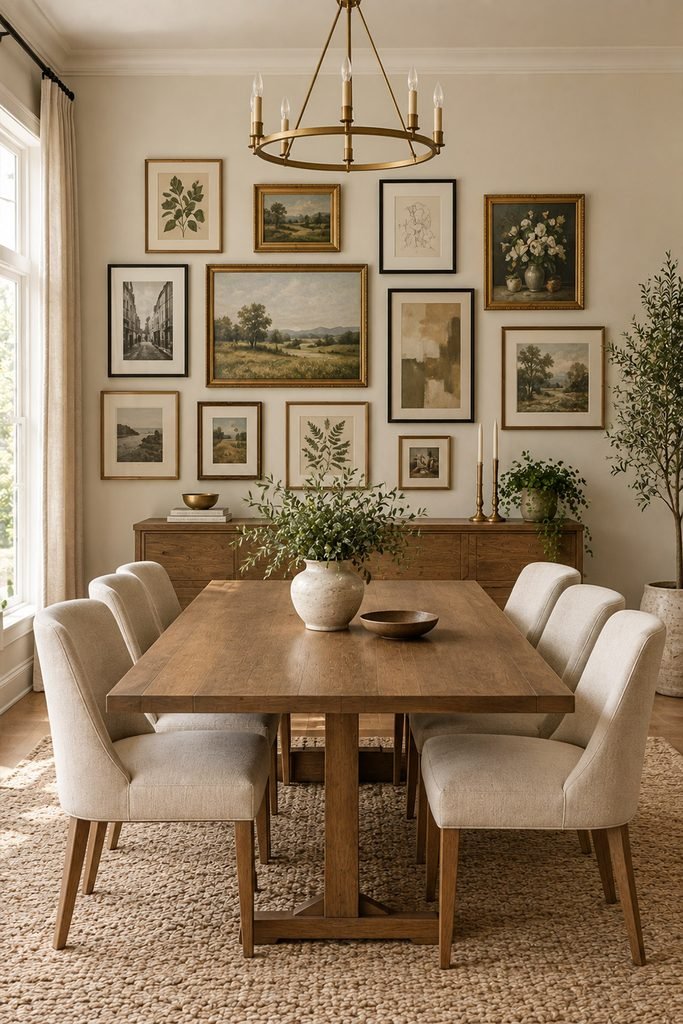
A gallery wall can turn a blank wall into a focal point while allowing you to display artwork, photographs, and prints that reflect your personality. For a more collected and sophisticated appearance, combine different artwork sizes rather than arranging identical pieces in a rigid grid. You can use black, natural wood, brass, or mixed frames as long as they share some visual connection. Before putting anything on the wall, arrange the pieces on the floor and experiment with spacing until the composition feels balanced.
👉 [ Shop Gallery wall frame set or coordinated picture frames on Amazon ]
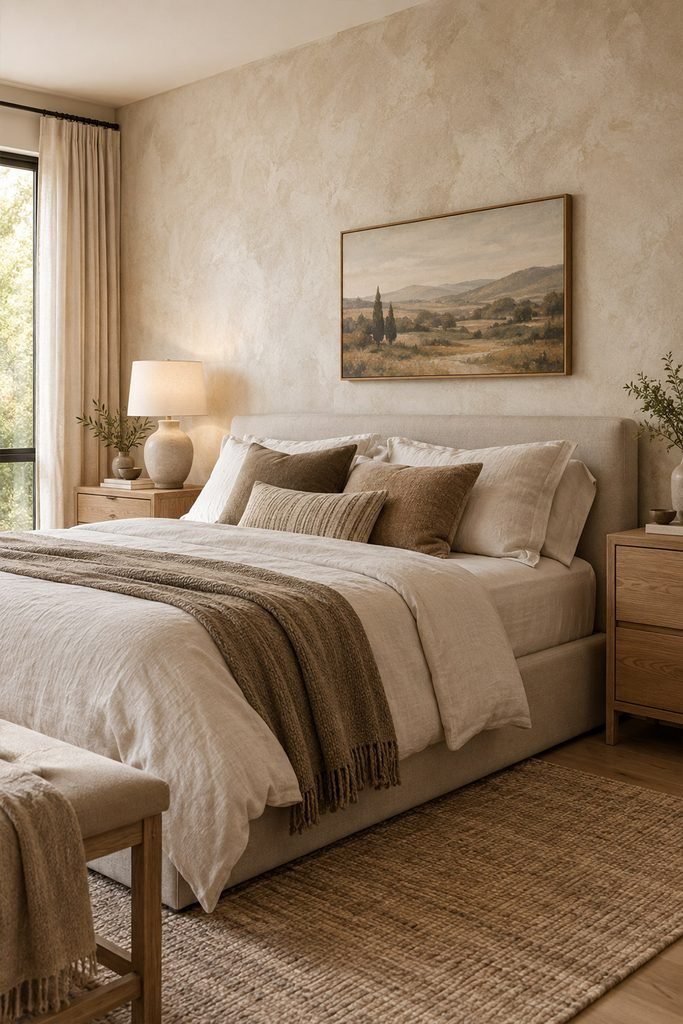
For a softer and more organic feature wall, consider a plaster-inspired finish. Limewash-style paint, Roman clay, and other textured finishes create gentle variations in tone that can make a wall feel more handcrafted and architectural. This approach works particularly well in living rooms and bedrooms where you want visual interest without a strong pattern. Earthy shades, muted whites, clay tones, and soft gray can complement natural wood, linen, stone, and other organic materials while keeping the room calm and sophisticated.
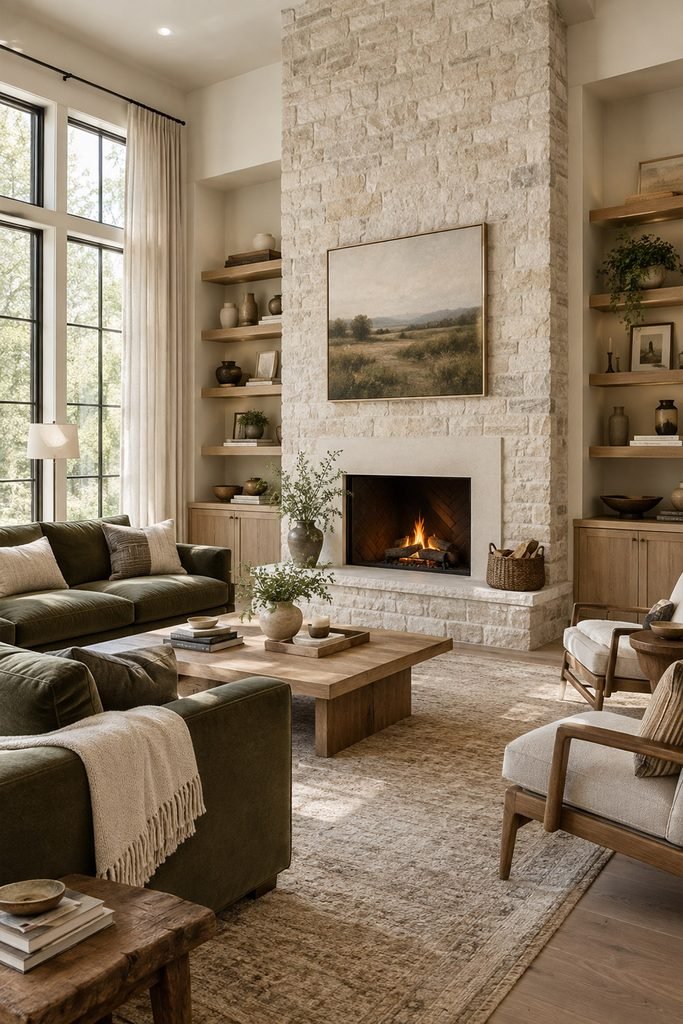
If your home has a fireplace, the surrounding wall is naturally suited to becoming a feature. Rather than treating the fireplace as an isolated element, consider designing the entire wall around it with stone, tile, paneling, plaster, or a carefully chosen paint color. The treatment should complement the fireplace rather than compete with it. Keep nearby furniture and accessories relatively restrained so the architectural wall remains the main visual anchor of the living room.
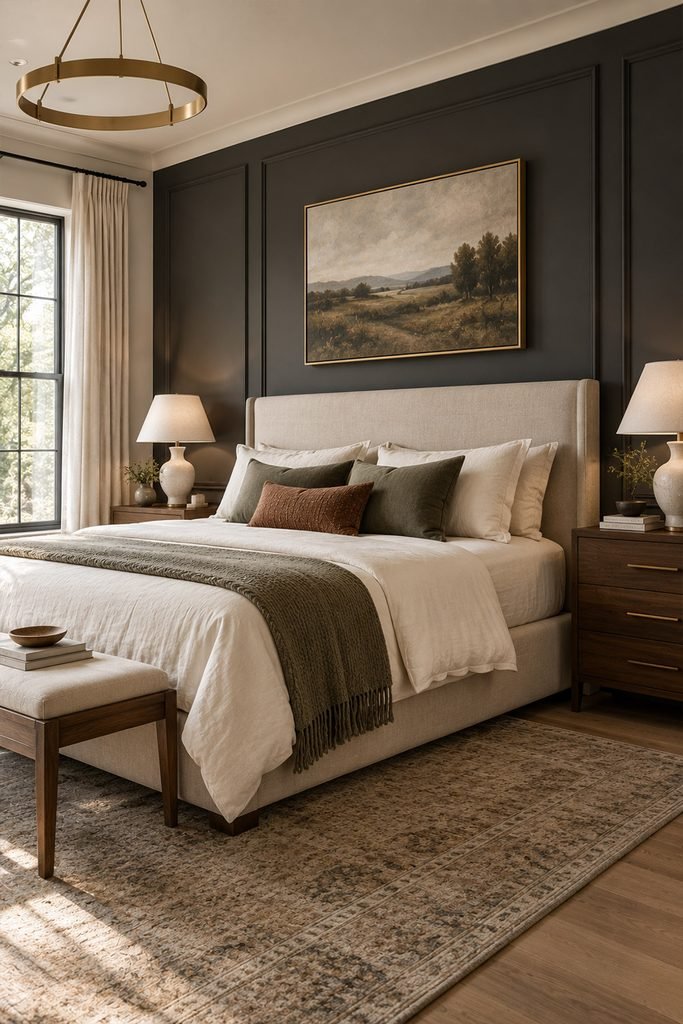
The wall behind the bed is one of the easiest places to introduce a dramatic design because the bed already establishes the room’s focal point. A deep paint color, patterned wallpaper, wood paneling, or decorative molding can visually frame the bed and make the bedroom feel more intentional. Consider extending the treatment beyond the width of the bed so it feels like a complete architectural feature rather than a small decorative area. Simple bedding and restrained bedside styling will help keep the overall look balanced.
10 Black Accent Wall Ideas to Create a Bold, Stylish & Modern Home
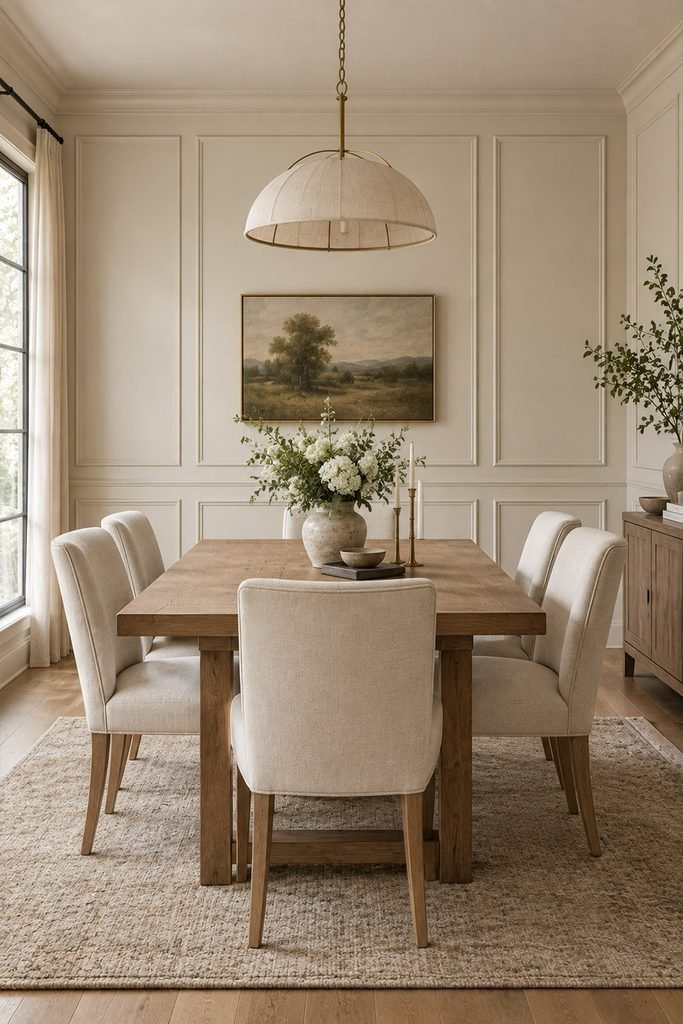
Wall molding can give a newer home the character of a more traditional interior without requiring major construction. Picture-frame molding, board-and-batten, and simple rectangular panels are versatile options for living rooms, dining rooms, bedrooms, and entryways. Painting the wall and molding in the same color creates a subtle designer effect, while a contrasting color makes the pattern more noticeable. The key is to keep the spacing consistent so the finished wall looks intentional and professionally planned.
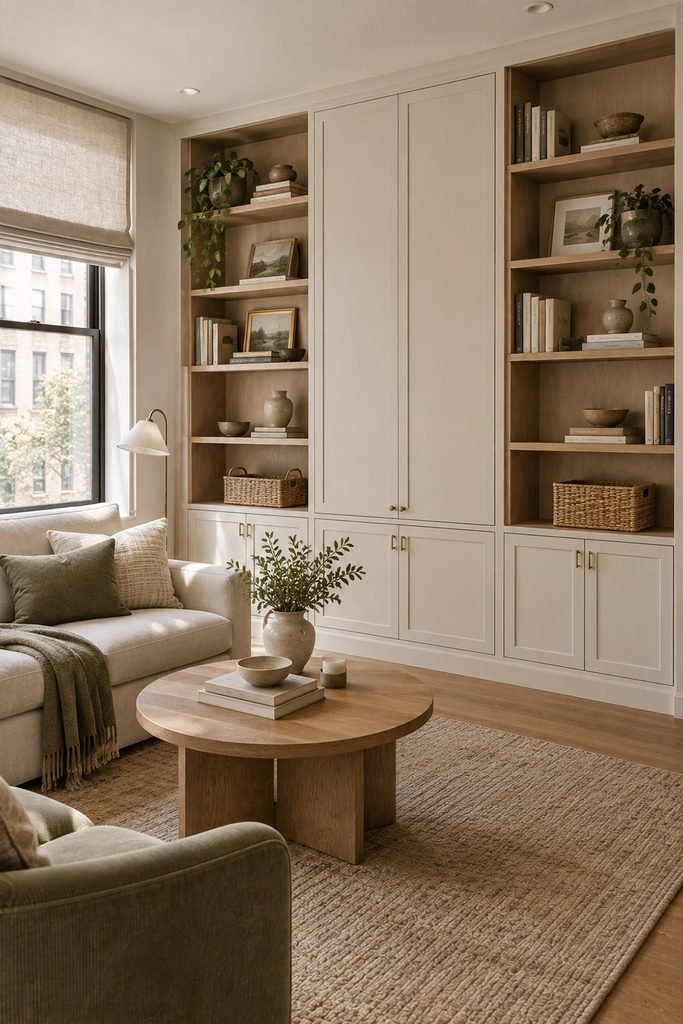
A feature wall does not have to be purely decorative. Floating shelves, built-in storage, or modular shelving can transform an empty wall while providing useful storage at the same time. Style open shelves with books, ceramics, framed artwork, plants, and a few meaningful objects, but avoid filling every available space. Leaving areas of the wall visible creates breathing room and helps the arrangement feel more like an intentional display than ordinary storage.
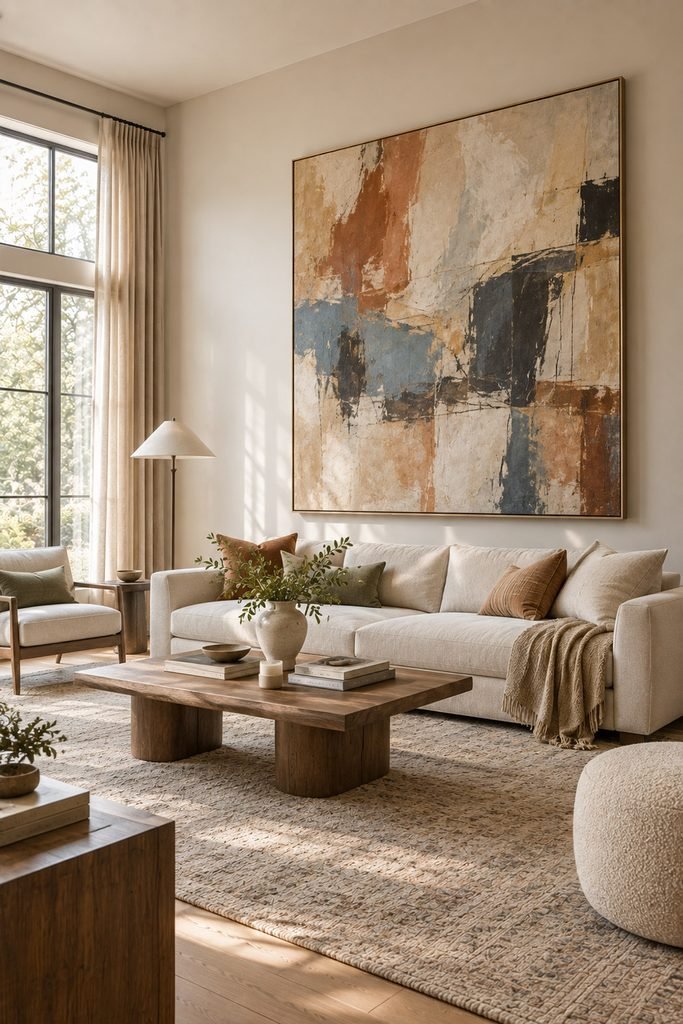
Sometimes a single large artwork can have more impact than an entire collection of small decorations. An oversized abstract painting, landscape, vintage-inspired print, or large photographic piece can instantly establish a focal point above a sofa, console, dining table, or bed. Choose artwork that connects with the room’s existing colors rather than trying to introduce an entirely unrelated palette. Give the piece enough surrounding space so it can stand on its own and become the visual centerpiece of the wall.
A feature wall does not need to involve an expensive renovation or an elaborate design. A beautiful result can come from something as simple as a carefully chosen paint color, while wallpaper, wood panels, molding, textured finishes, shelving, and artwork offer more distinctive ways to transform a space. The most successful feature walls work with the furniture, lighting, and architecture already in the room. Choose one strong treatment, give it enough visual space, and let the rest of the room support rather than compete with it.