Address
304 North Cardinal St.
Dorchester Center, MA 02124
Work Hours
Monday to Friday: 7AM - 7PM
Weekend: 10AM - 5PM

Address
304 North Cardinal St.
Dorchester Center, MA 02124
Work Hours
Monday to Friday: 7AM - 7PM
Weekend: 10AM - 5PM

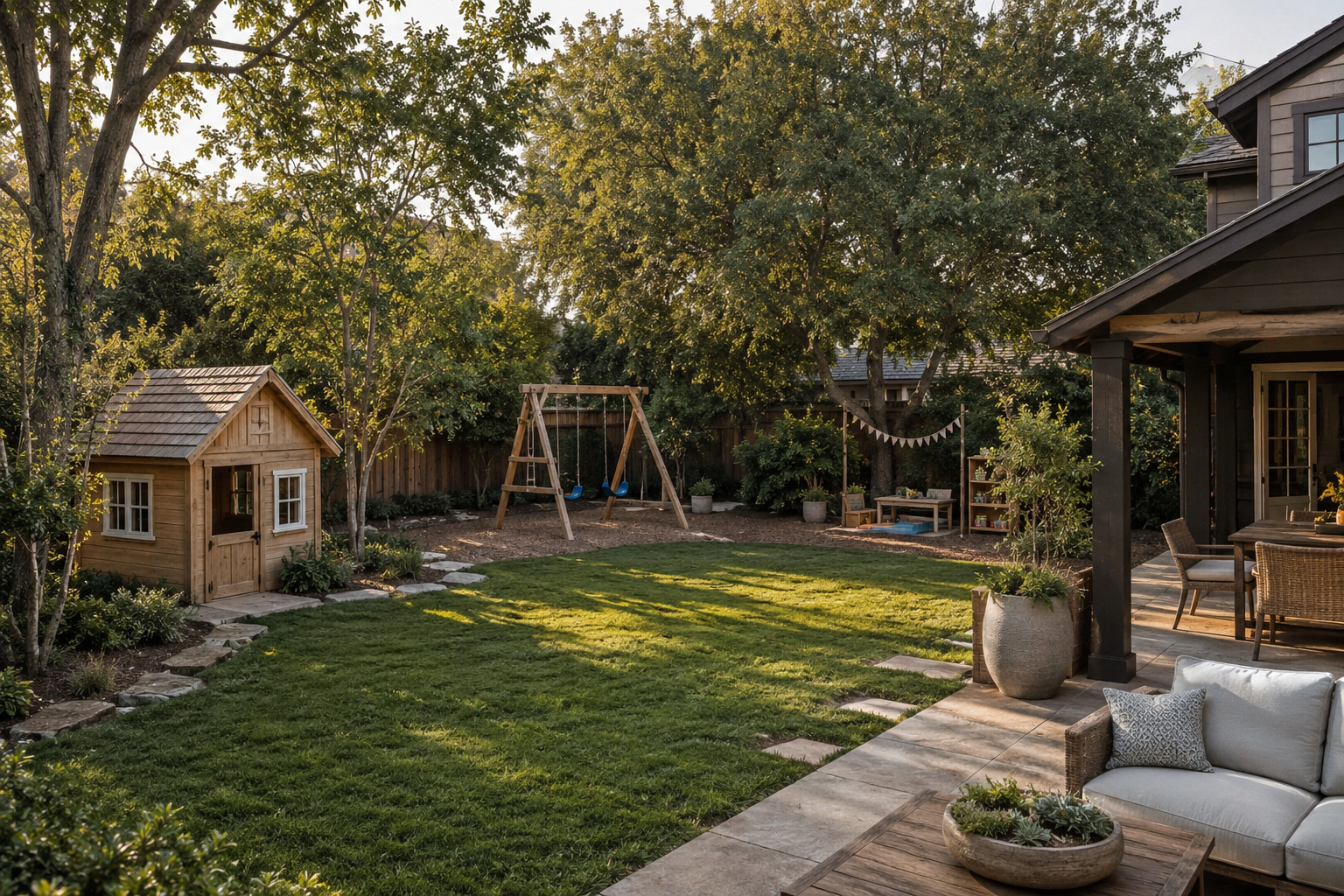
A backyard play area can turn an ordinary outdoor space into a place where kids can play, explore, and spend more time outside. You do not need a huge yard or an elaborate playground to create an enjoyable setup. With thoughtful zoning, comfortable surfaces, shade, and a few age-appropriate features, even a modest backyard can become a fun and inviting play space.
These backyard play area ideas focus on practical, attractive additions that can work alongside the rest of your outdoor space. From simple play zones and climbing features to creative areas for imaginative play, these ideas can help you create a backyard that feels enjoyable for both children and adults.
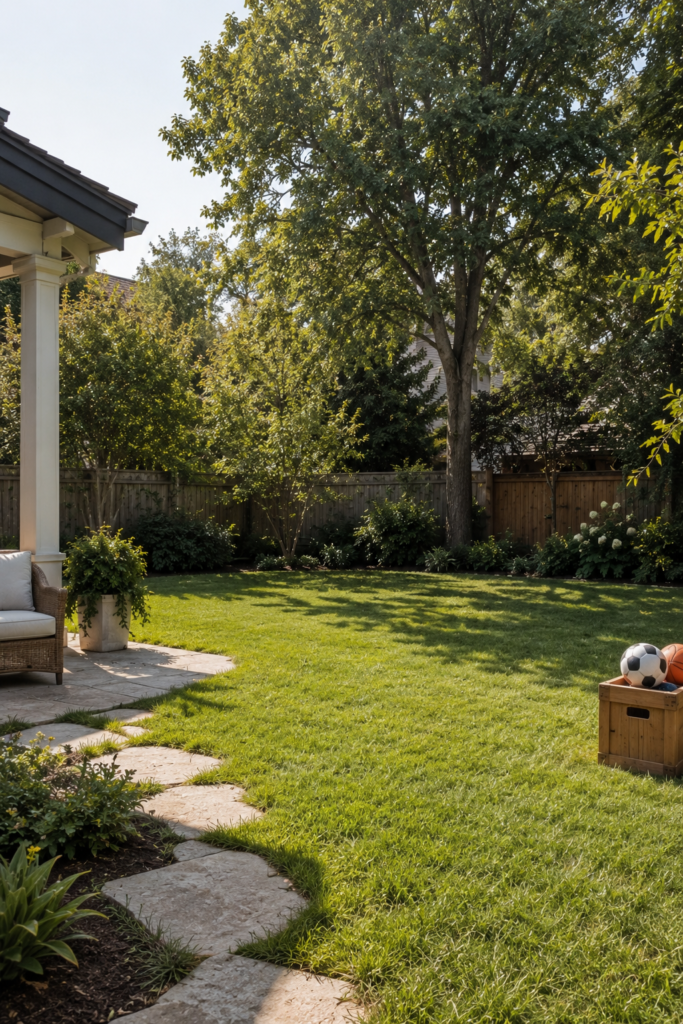
A dedicated section of open lawn can provide one of the most flexible play areas in a backyard. Leave enough open space for running, playing ball, or setting up temporary outdoor games. Keeping the area relatively free of furniture and permanent structures allows it to adapt as children grow. A soft, well-maintained lawn can also make the space feel natural and connected to the rest of the yard.
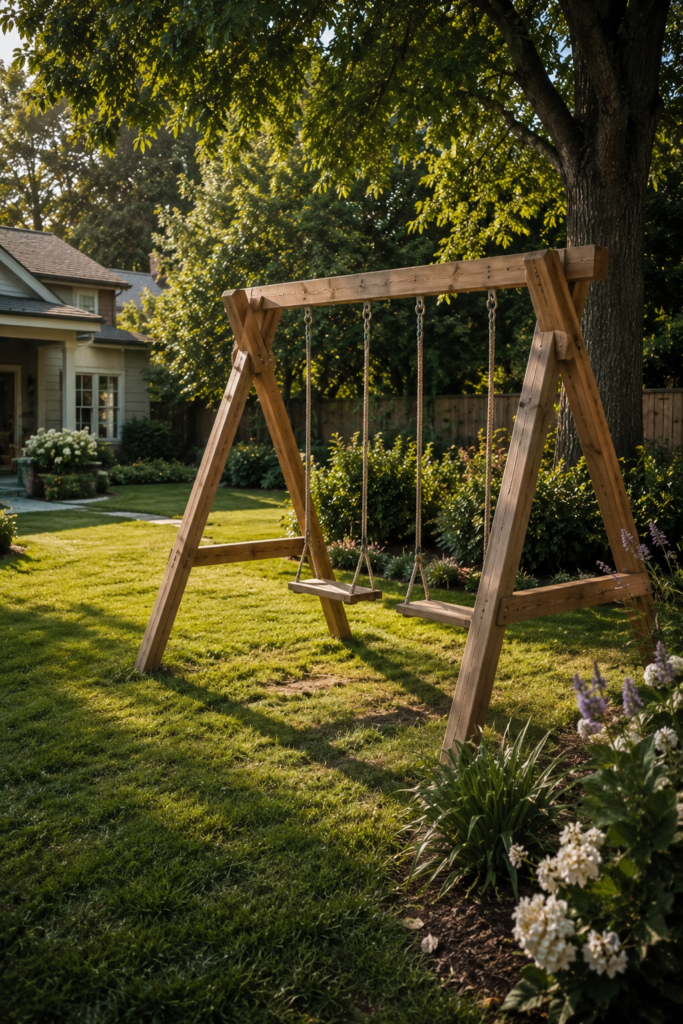
A swing can become a favorite feature without requiring an entire playground structure. Choose a sturdy swing designed for the appropriate age group and install it according to the manufacturer’s requirements. A simple wooden frame can blend naturally with landscaping and existing outdoor furniture. Position it where there is plenty of unobstructed space around the swing for safer movement.
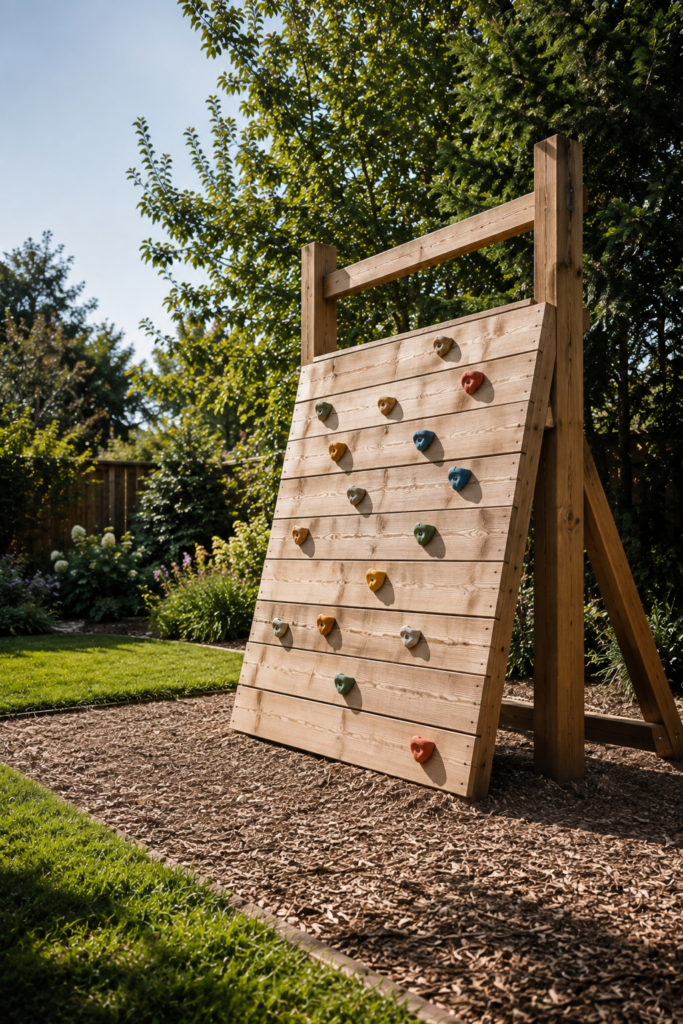
A compact climbing wall or low climbing structure can encourage active outdoor play. Choose equipment designed specifically for children and make sure the surrounding surface is appropriate for the equipment and installation. Natural wood can help the structure blend into a landscaped backyard. Keeping the climbing feature relatively simple can make it useful without allowing it to dominate the entire yard.
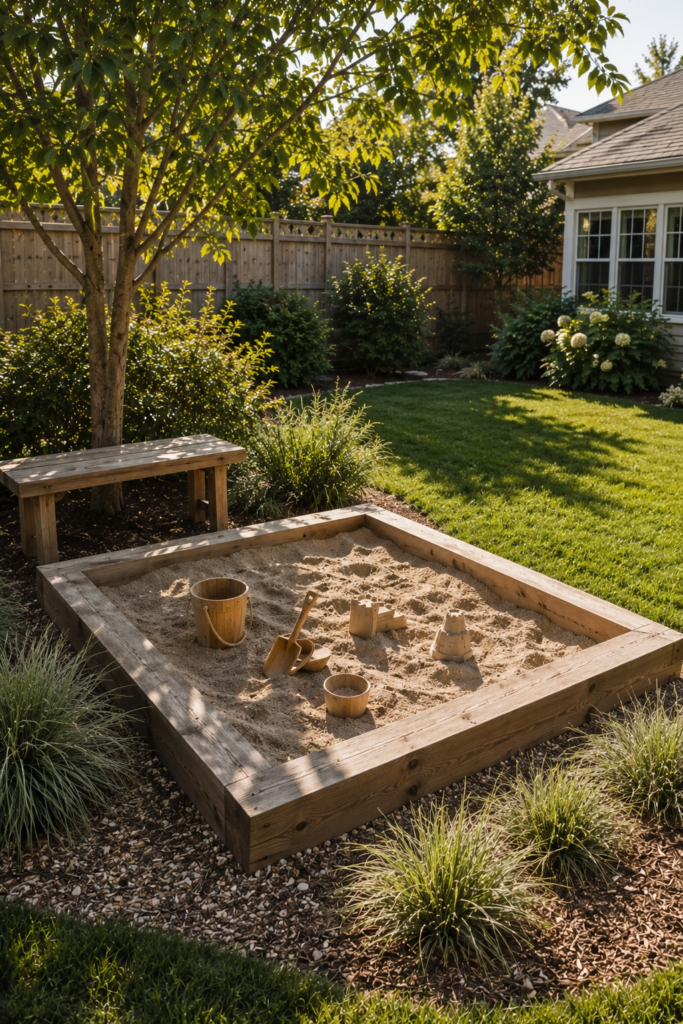
A dedicated sand area gives children a place for creative and sensory play. Use a covered sandbox or contained sand zone and place it somewhere that can be easily supervised from the house or patio. Add a few simple buckets, shovels, and molds rather than filling the area with toys. A timber border can help define the play zone while keeping the overall design neat.
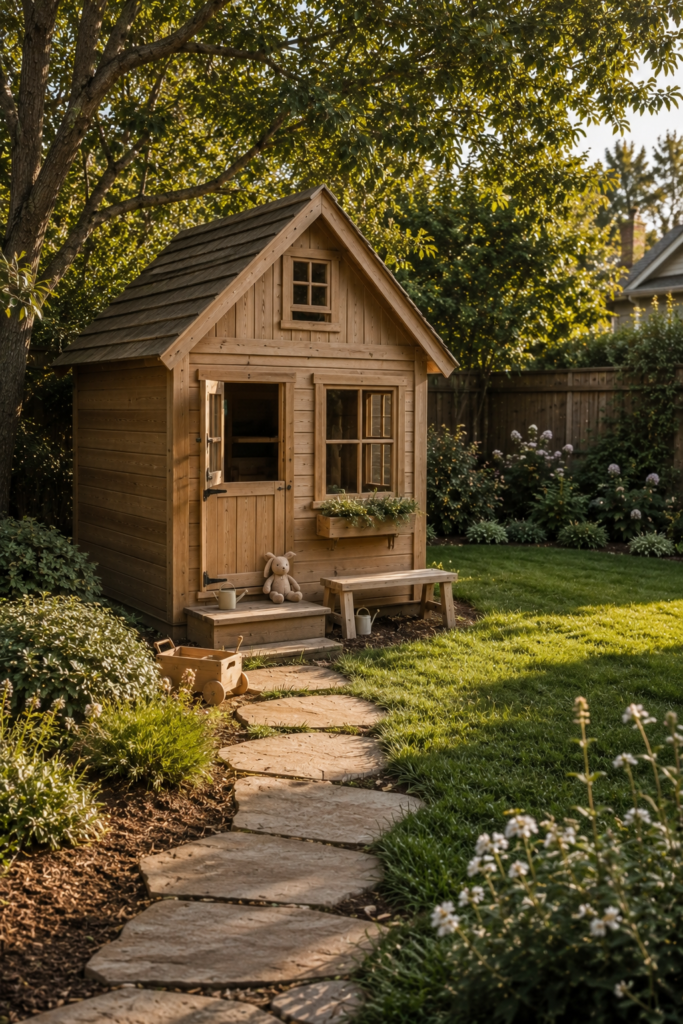
A small backyard playhouse can encourage imaginative games while creating a charming focal point. Choose a simple structure that fits the scale of the yard rather than an oversized playhouse. A small window, miniature door, and simple outdoor seating can make the space feel inviting. Neutral wood finishes can also help the playhouse blend with surrounding landscaping.
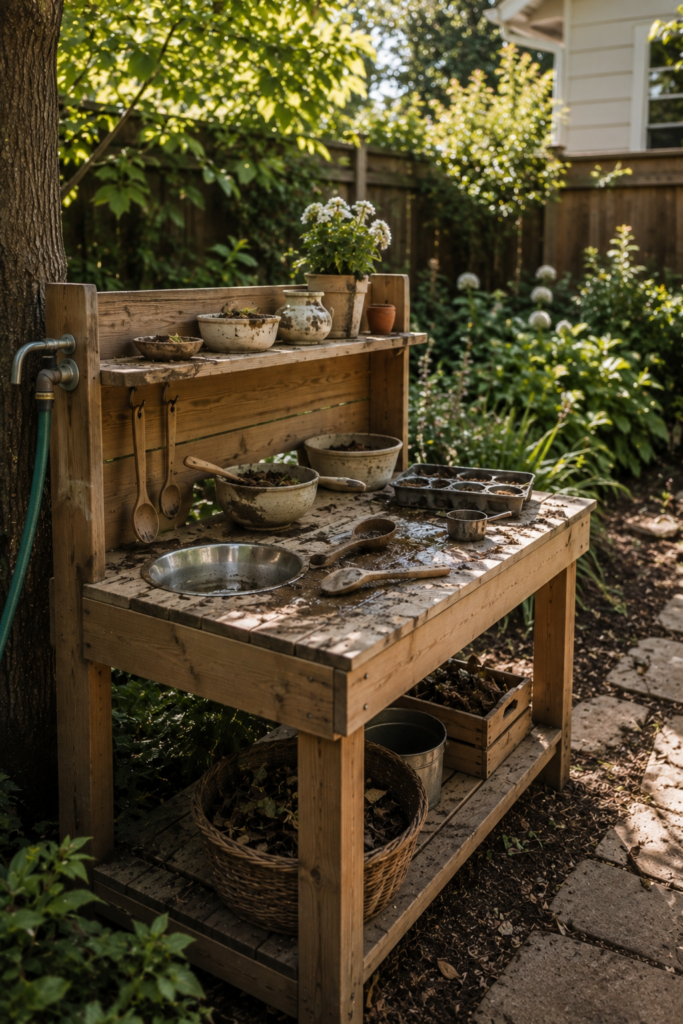
A mud kitchen can give children a dedicated place for messy outdoor creativity. Use a simple outdoor workbench with shallow containers, old bowls, wooden utensils, and space for natural materials such as leaves, sand, and water. Position it near a hose or another convenient water source if appropriate. Keeping the mud kitchen in its own zone makes cleanup easier while allowing children to experiment freely.
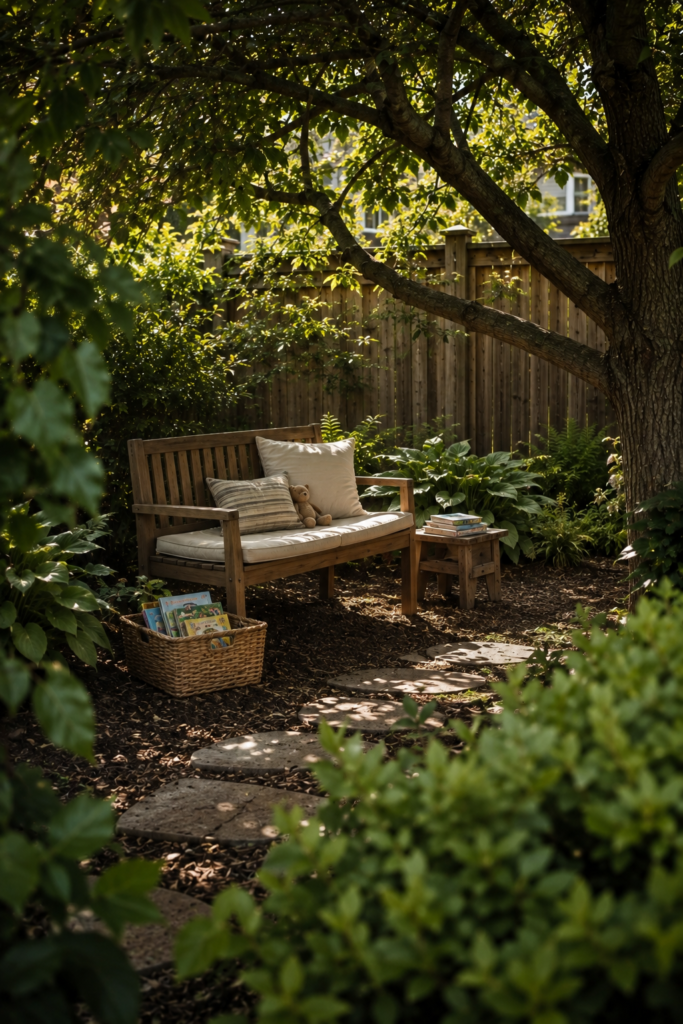
Not every backyard play area needs to involve active movement. A shaded reading corner can provide a quieter place for children to relax with books or spend time outdoors. Add a weather-resistant floor cushion, small bench, or child-sized seating beneath a pergola, shade structure, or mature tree. Keep the styling simple and choose outdoor materials that can withstand the local climate.
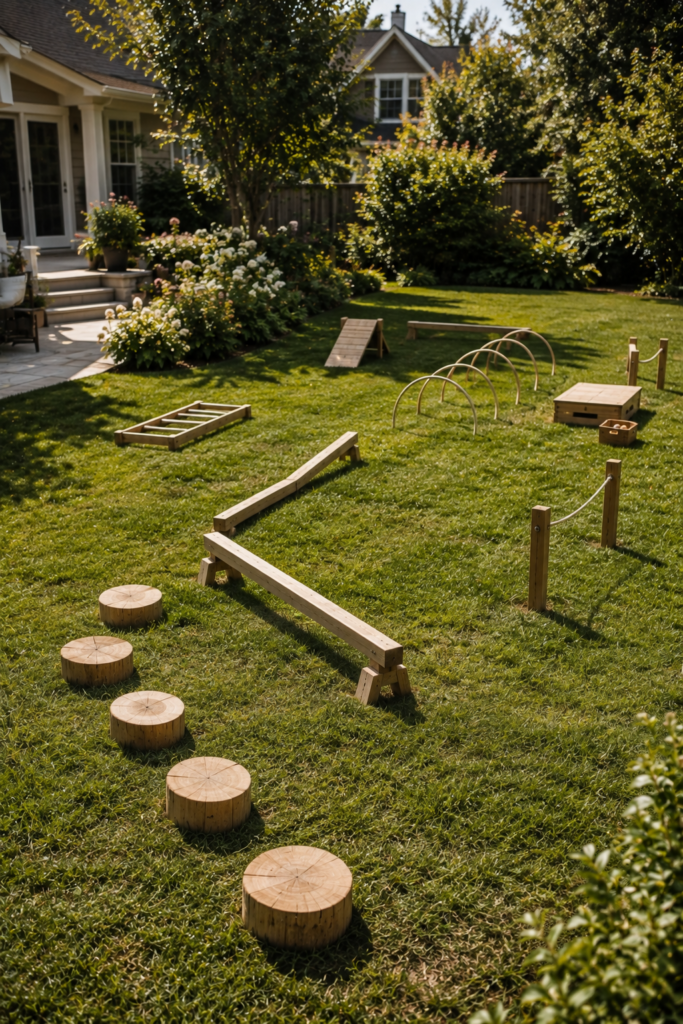
An obstacle course can turn a section of lawn into an active play area without requiring permanent playground equipment. Use age-appropriate stepping platforms, balance elements, cones, hoops, or low obstacles that can be rearranged over time. Creating different stations keeps the activity interesting and allows the setup to change as children grow. Leave generous space between elements so the course does not become crowded.
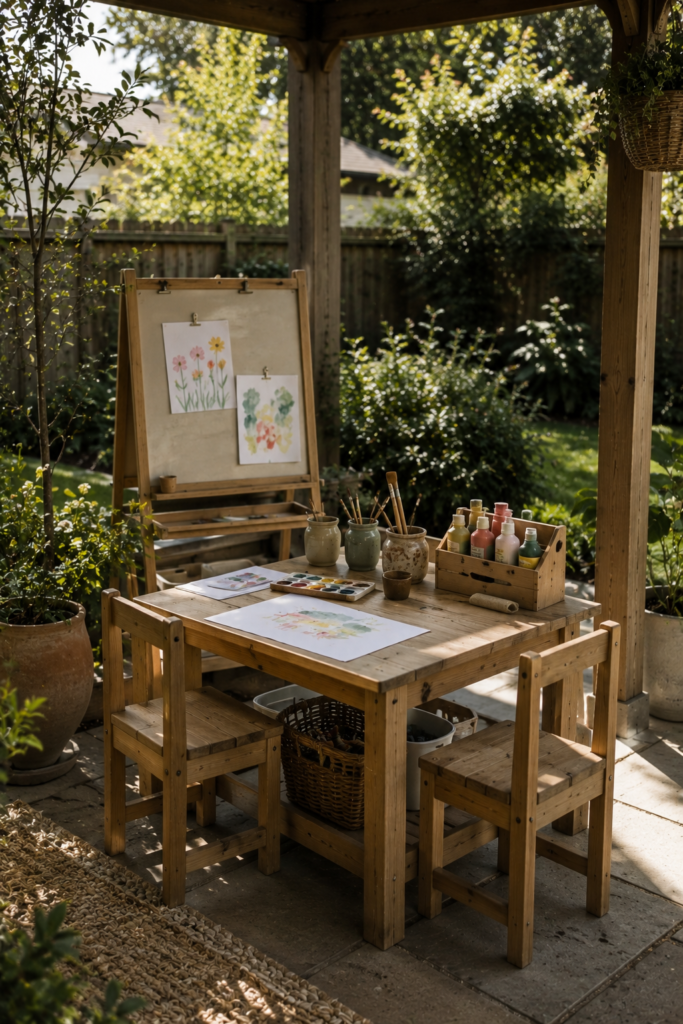
An outdoor art station can encourage creative play while keeping messy projects outside. Set up a small weather-resistant table with washable supplies and a simple vertical surface for drawing or painting. A covered area can protect children and materials from direct sun. Keep storage nearby so art supplies can be quickly put away after playtime.
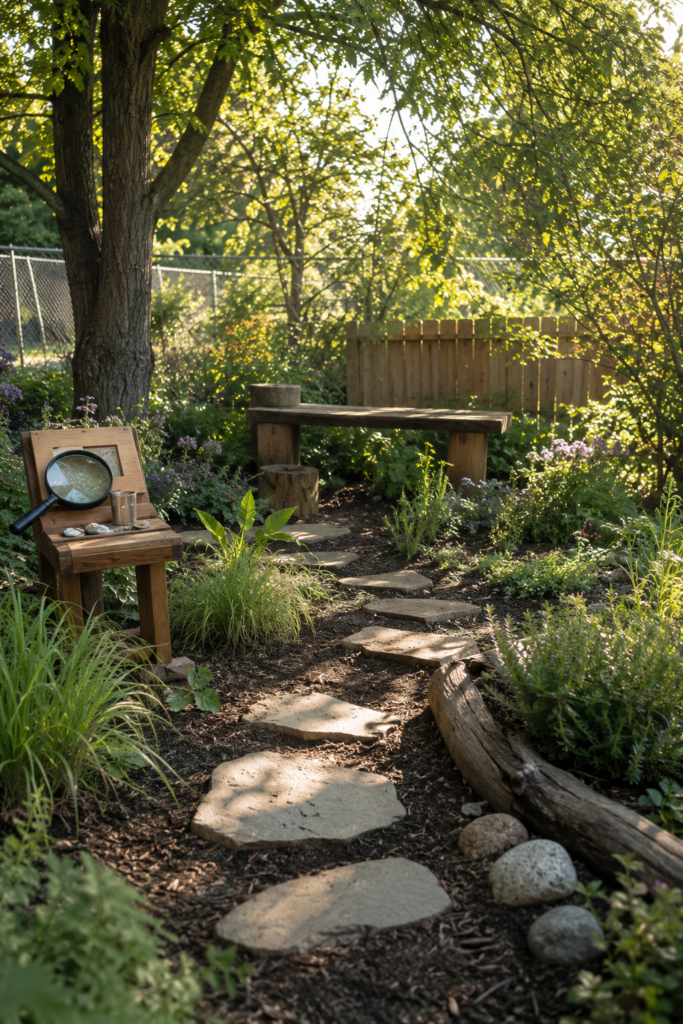
A small nature zone can encourage children to observe plants, insects, textures, and seasonal changes. Create a simple garden bed with child-friendly plants, herbs, flowers, or other suitable greenery. Add a small stepping path or observation area where children can explore without walking through the main garden. This type of play area can blend naturally into a landscaped backyard rather than looking like a separate playground.
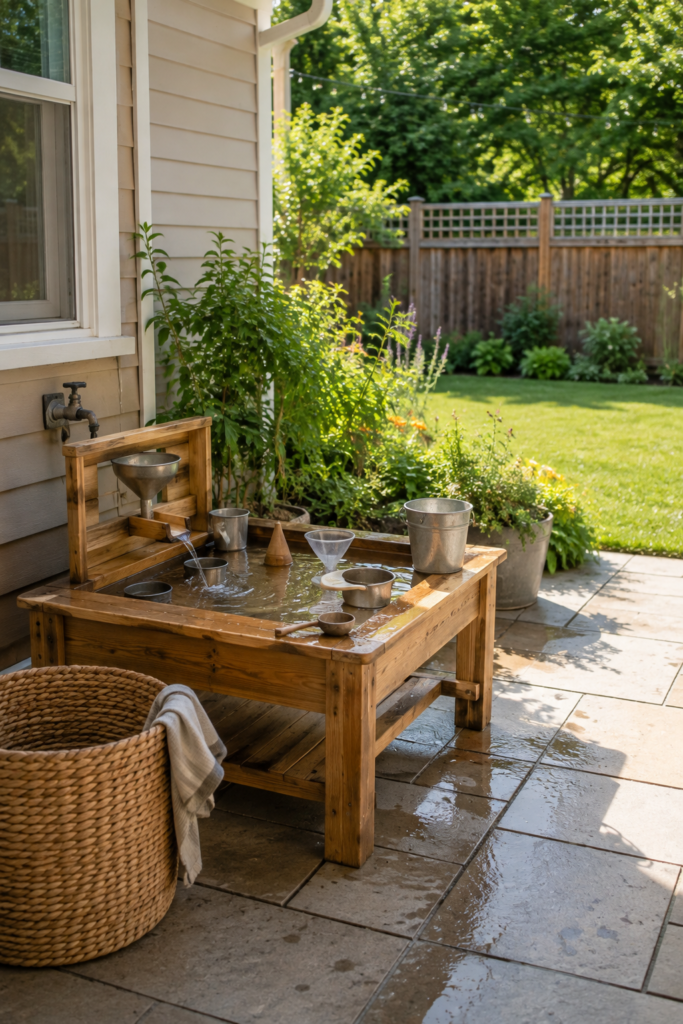
A small water-play area can provide plenty of entertainment during warm weather. Use a child-appropriate water table, shallow play basin, or outdoor play setup designed specifically for children. Place it on a suitable outdoor surface where splashes and spills will not damage nearby furniture or landscaping. Keep the area close enough to the home that supervision and cleanup remain convenient.
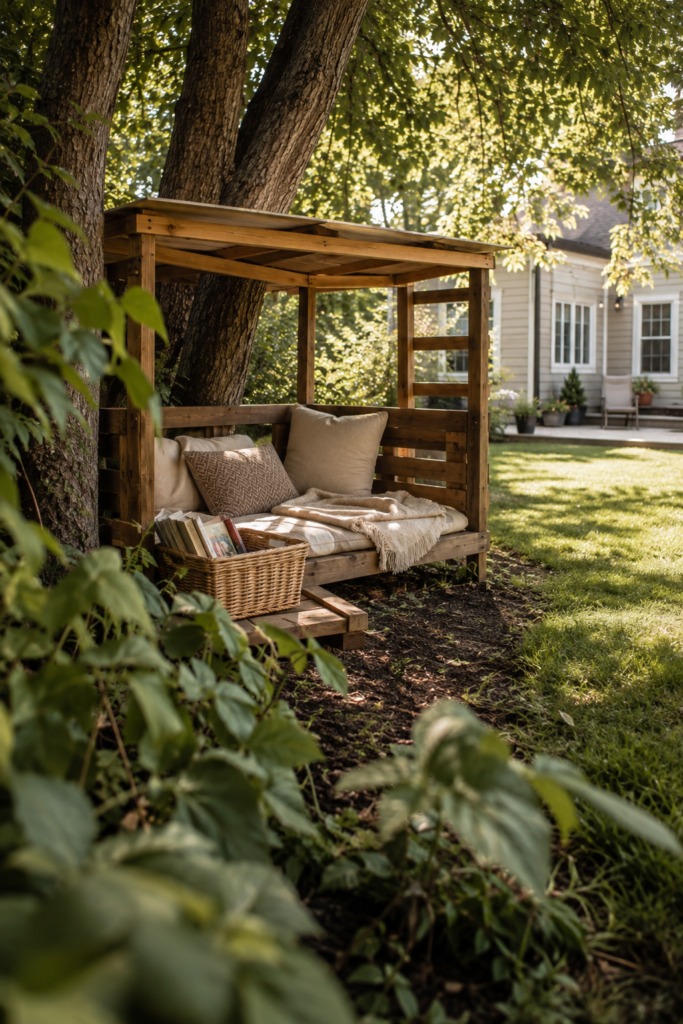
A simple outdoor fort can become a flexible space for imaginative play. Use a purpose-built play structure or a properly secured canopy-style setup rather than unstable makeshift construction. Add washable cushions and a few outdoor-friendly blankets to create a cozy retreat. Position the fort where adults can easily see it from the patio or house.
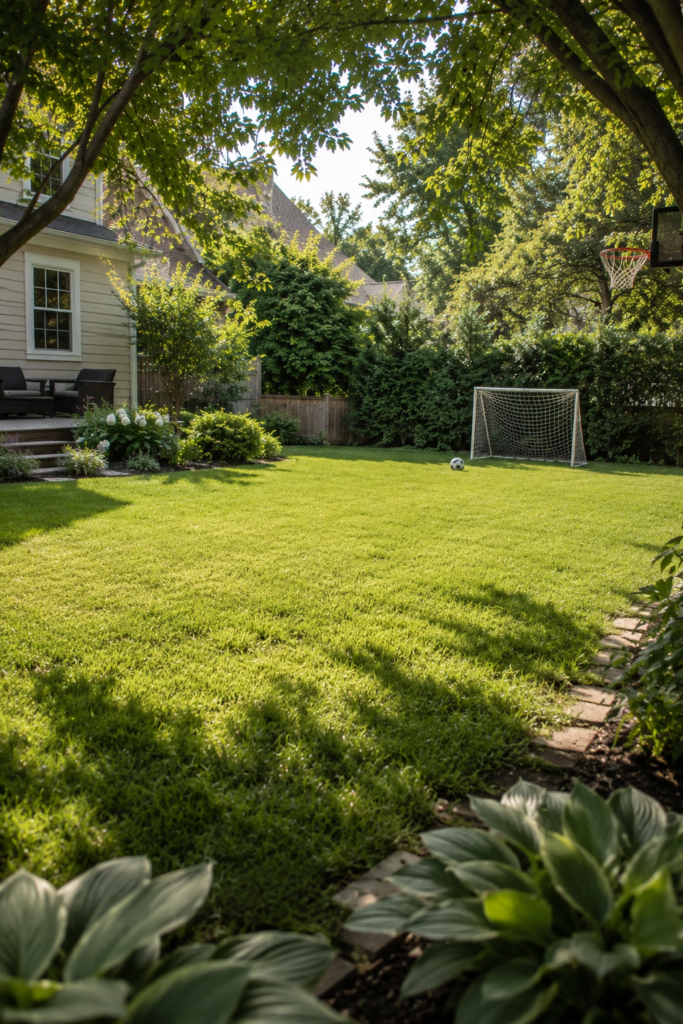
A dedicated ball-play area can help children stay active without interfering with seating or dining zones. An open section of lawn is often enough for kicking a soccer ball, playing catch, or practicing simple games. If space allows, a small portable goal or basketball hoop can add another activity. Keep equipment appropriately scaled to the yard and leave a clear boundary around the play zone.
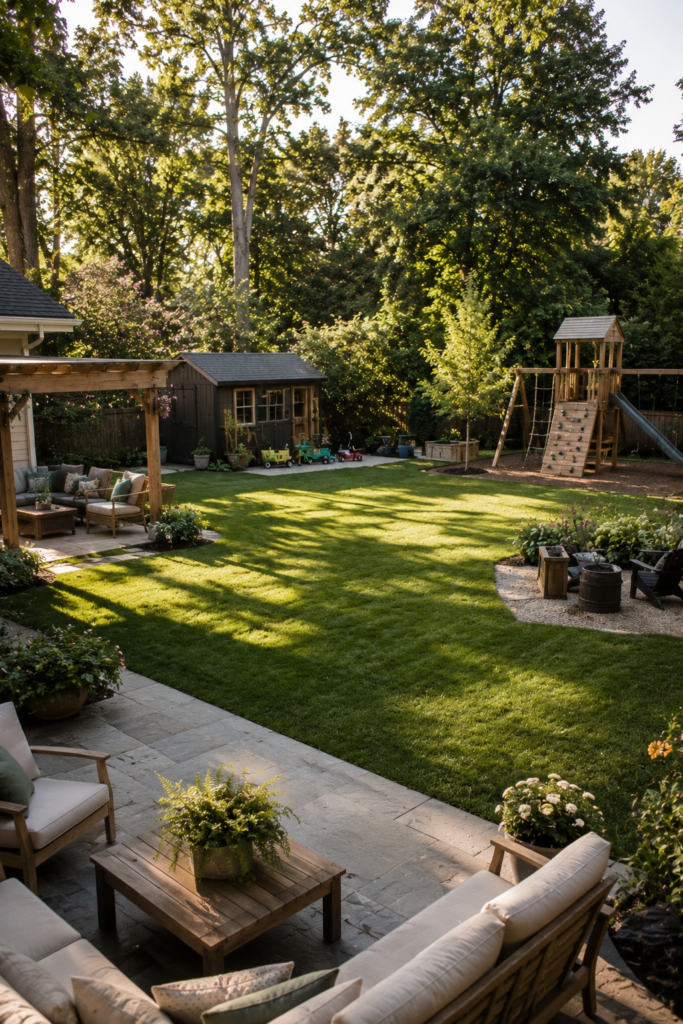
A backyard can work for children of different ages when the play area includes several types of activities. Combine an open lawn with a quieter seating area, a simple climbing feature, and flexible toys that can be moved as needed. Avoid filling the entire yard with permanent equipment so there is room for changing interests. A flexible layout can continue working well as children become older and their play preferences change.
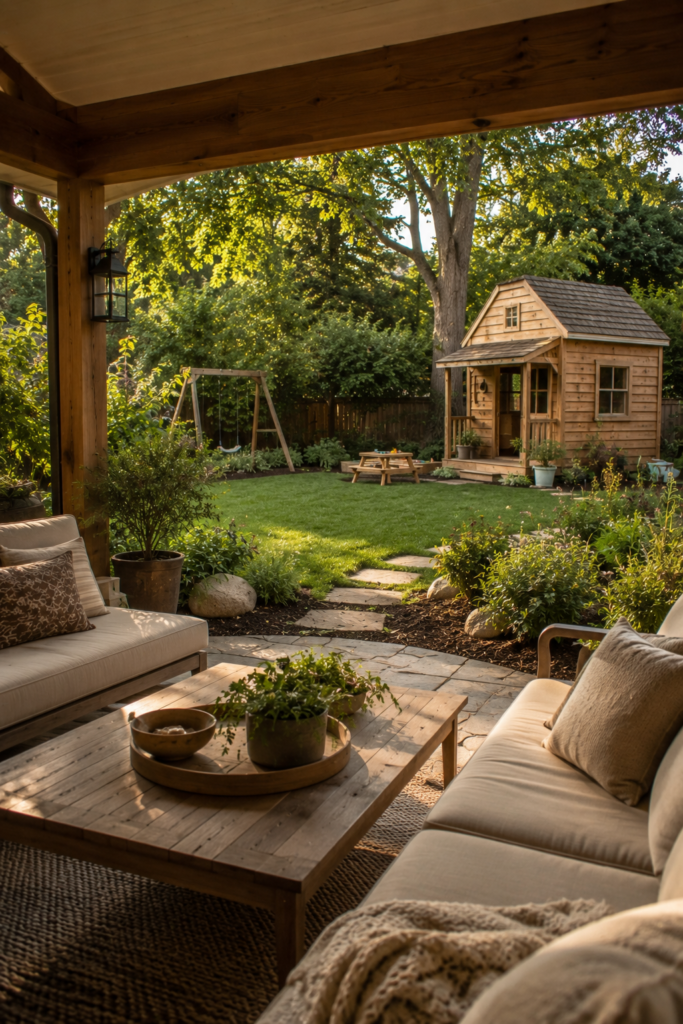
The most successful backyard play areas feel like part of the overall landscape rather than a separate playground dropped into the yard. Use natural wood, simple landscaping, coordinated colors, and clear pathways to connect the play zone with patios, gardens, and outdoor seating. Keep adult areas nearby so the backyard can function as one shared space. This approach creates a yard that works for family gatherings as well as everyday children’s play.
A great backyard play area does not need to be complicated or expensive. Start by considering how your children actually like to play, then dedicate specific areas to active games, imaginative activities, creativity, or quiet time.
The best layouts also leave plenty of open space and keep play areas visually connected to the rest of the backyard. With thoughtful planning, simple materials, and age-appropriate features, you can create an outdoor space that feels fun for kids while still looking attractive and functional for the whole family.
Cozy Backyard Ideas for a comfortable outdoor retreat