Address
304 North Cardinal St.
Dorchester Center, MA 02124
Work Hours
Monday to Friday: 7AM - 7PM
Weekend: 10AM - 5PM

Address
304 North Cardinal St.
Dorchester Center, MA 02124
Work Hours
Monday to Friday: 7AM - 7PM
Weekend: 10AM - 5PM

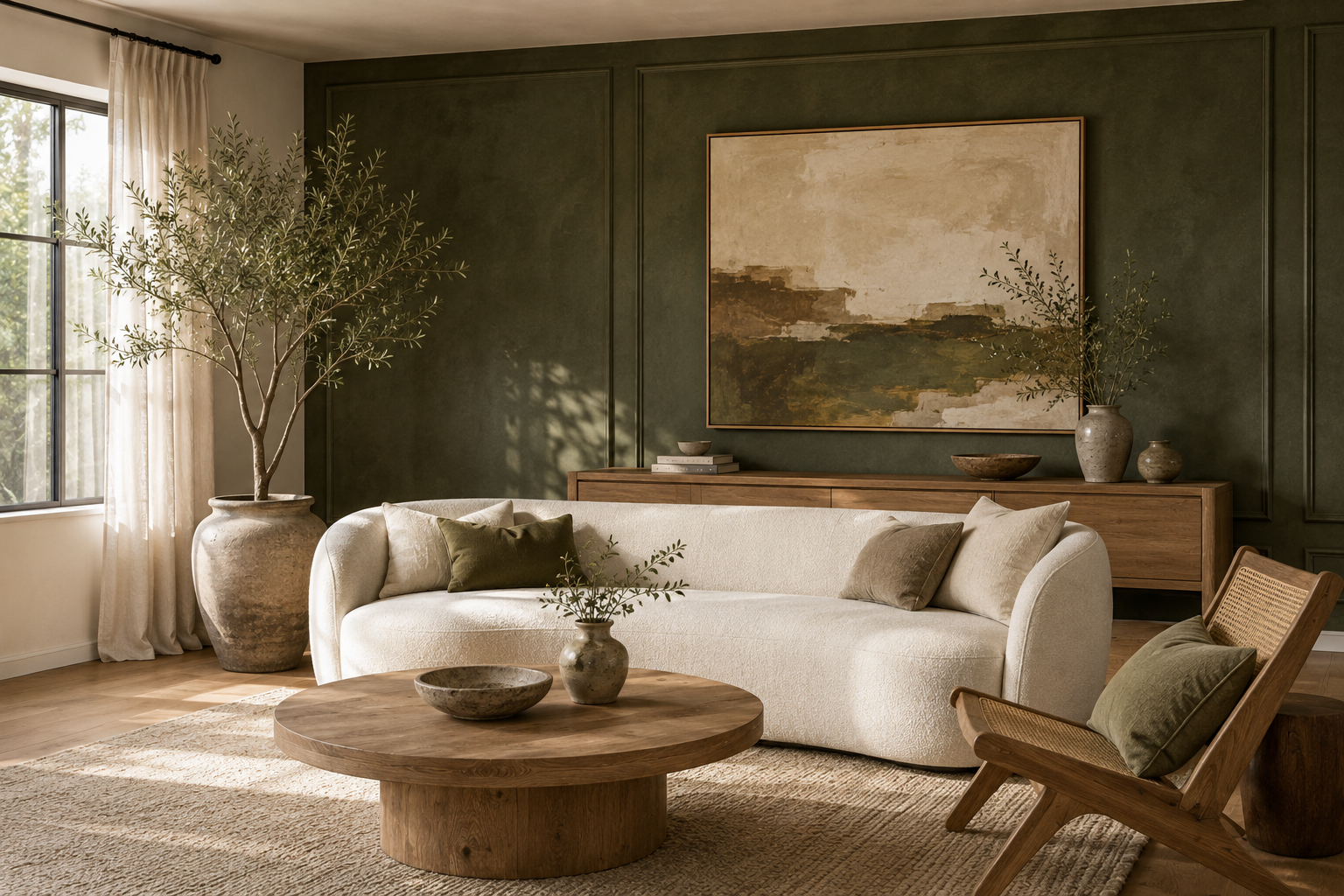
An accent wall can completely change the feeling of a living room without requiring a full room makeover. The two styles that stand out most are warm, earthy statement walls and deep natural green walls, especially when they are paired with light furniture, warm wood, natural textures, and simple artwork.
The key is making the accent wall feel like part of the room rather than simply painting one wall a bold color. From soft maroon and terracotta tones to rich olive green, these accent wall ideas show how color, texture, artwork, lighting, and furniture can work together to create a more beautiful and inviting living space.
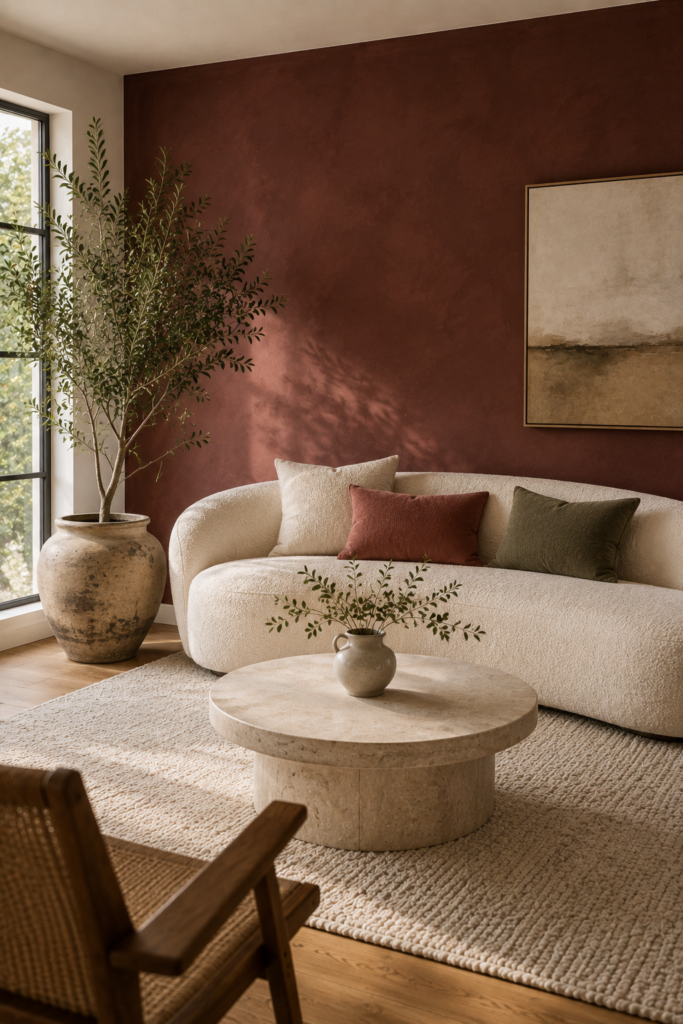
A muted maroon or earthy wine-colored wall can bring warmth and character to a living room while still feeling sophisticated. Choose a softened shade rather than a bright red so it works naturally with cream furniture, beige textiles, and warm wood. This type of accent wall is especially effective when the rest of the room stays relatively light and simple.
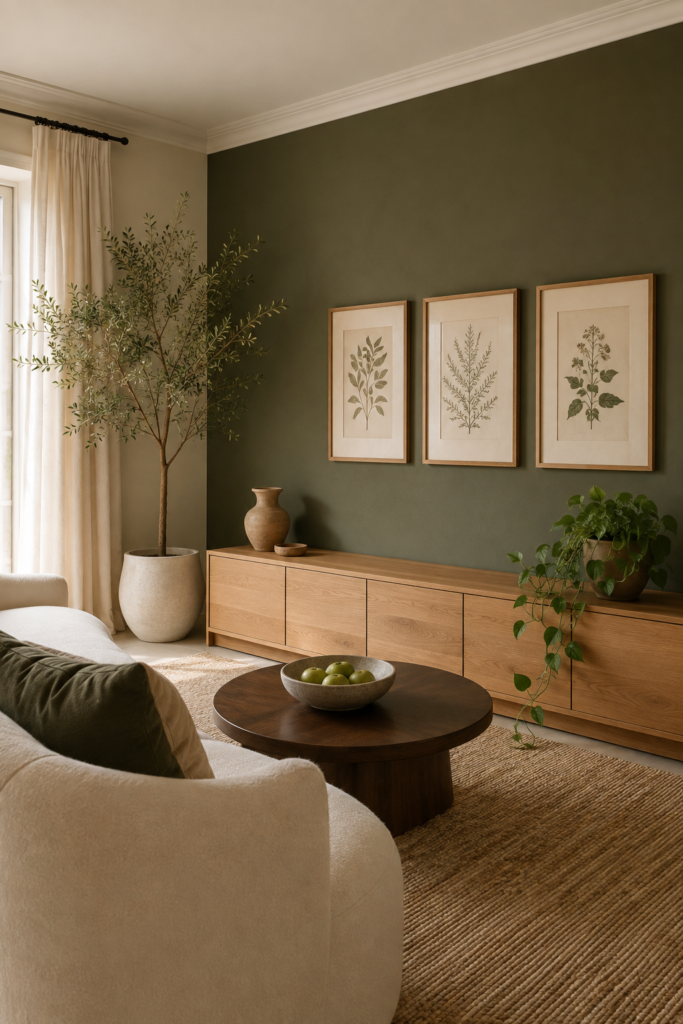
Deep olive or forest green creates a calm, grounded backdrop for natural wood furniture. A long oak console, wood coffee table, or simple side table can help balance the richness of the wall while keeping the room connected to natural materials. Add a few ceramic objects and leafy plants to make the overall look feel organic rather than overly coordinated.
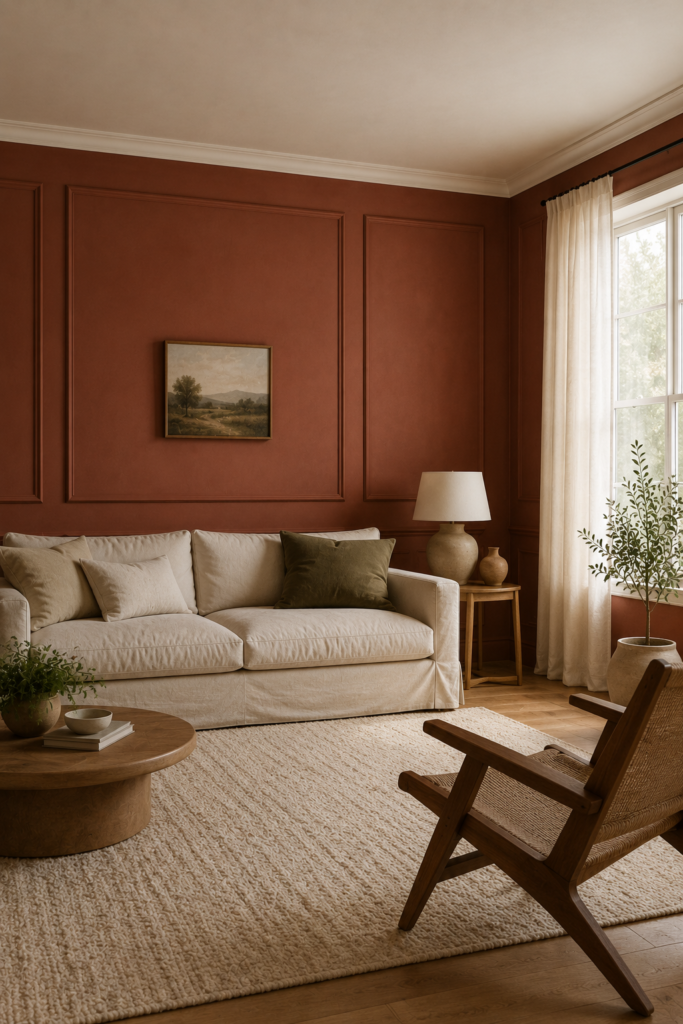
Wall molding can give an accent wall more architectural presence without making the space feel overly traditional. Large, simple rectangular panels work especially well with maroon, olive, terracotta, or other earthy shades. Keep the molding subtle and paint it the same color as the wall for a refined, cohesive appearance.
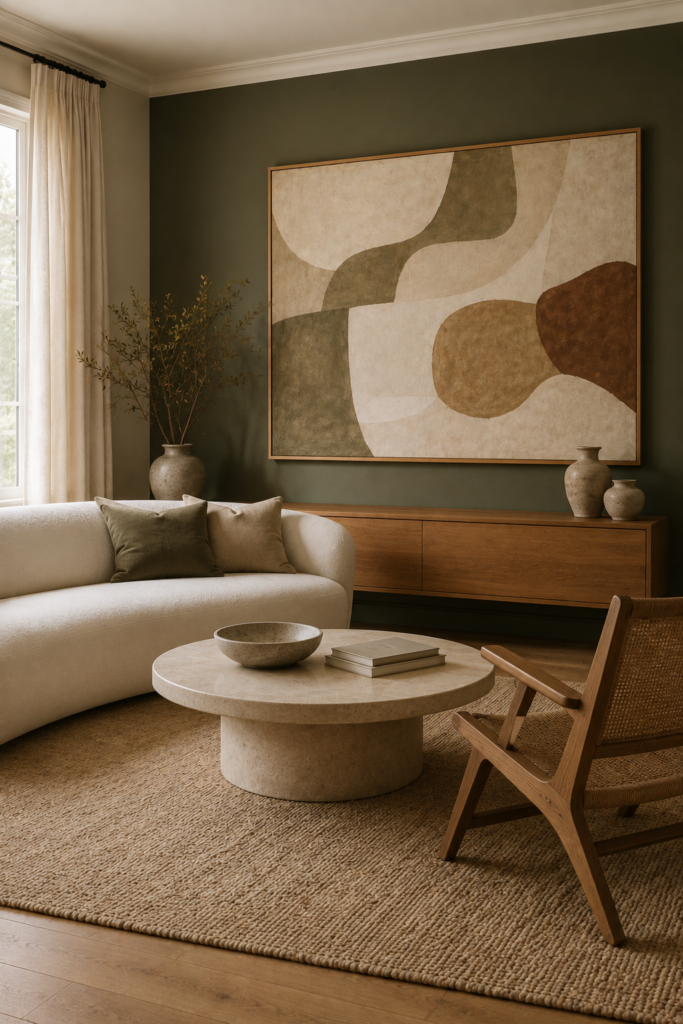
A bold accent wall provides the perfect background for one large piece of artwork. Choose abstract art, a soft landscape, or a minimal botanical print in colors that connect with the rest of the room. One oversized piece often looks more intentional than filling the wall with several smaller frames.
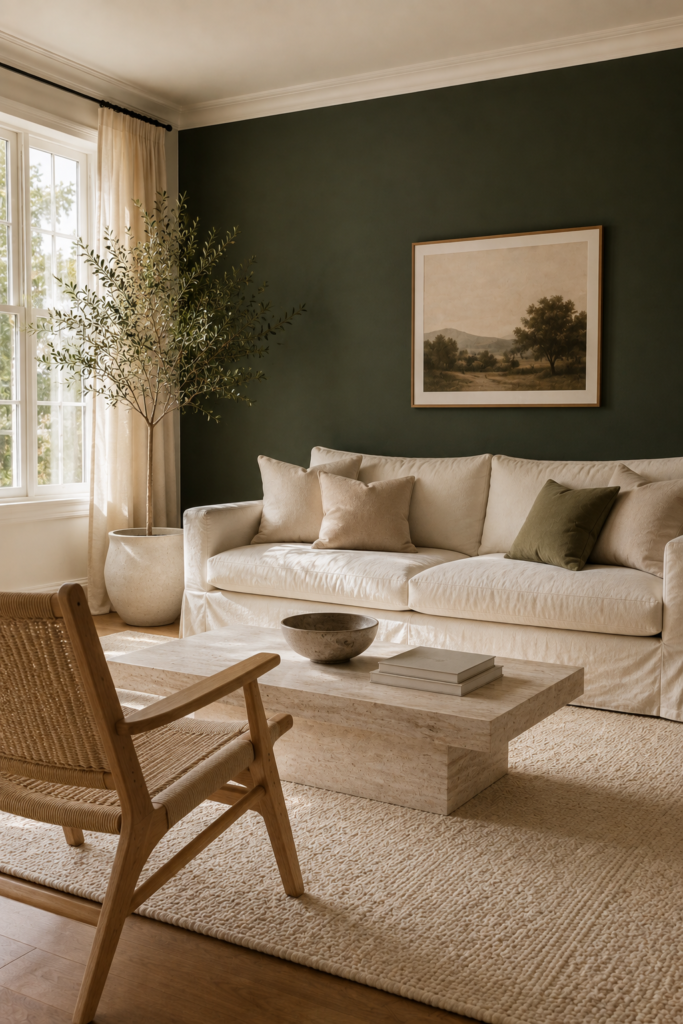
One of the easiest ways to make a dark accent wall feel balanced is by placing lighter furniture in front of it. A cream sofa, ivory chair, or light textured rug can create contrast and prevent the room from becoming too heavy. The combination of a deep wall and soft neutral furniture creates a warm, editorial look without requiring excessive decor.
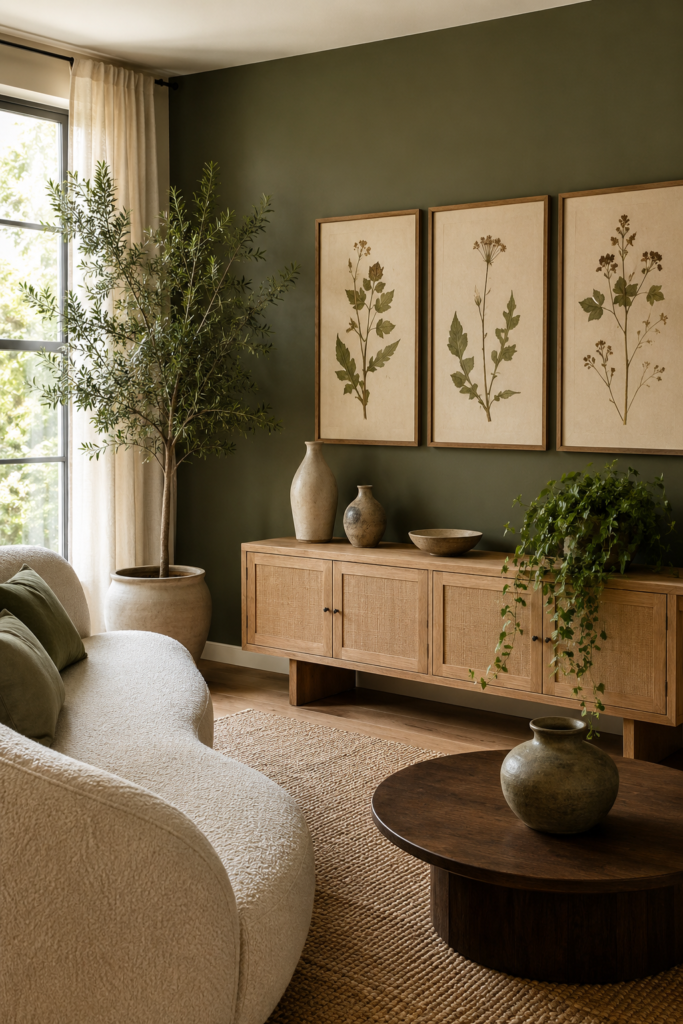
A dark green wall works particularly well when paired with botanical artwork and real indoor plants. Framed leaf prints, branches in ceramic vases, and a few naturally placed plants can reinforce the color palette without making the room feel themed. Leave enough empty wall space so the greenery still feels calm and intentional.
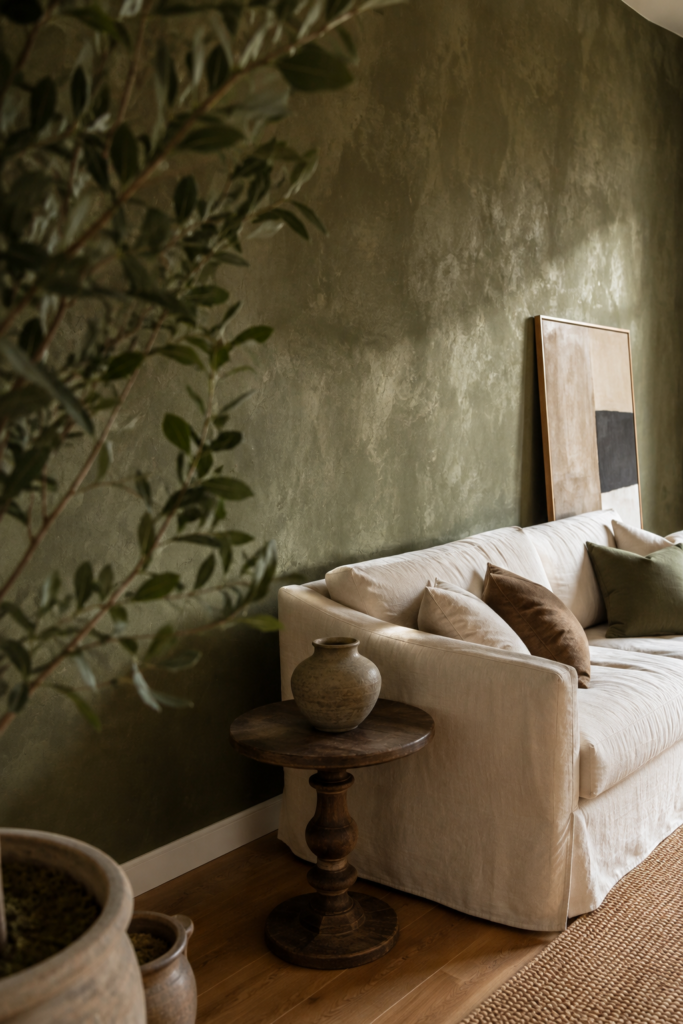
Instead of a perfectly flat painted surface, consider limewash, plaster, or another subtle textured finish. A softly varied maroon, terracotta, olive, or deep brown surface can add depth and make the wall feel more architectural. The texture should remain understated so it enhances the room without competing with the furniture and artwork.
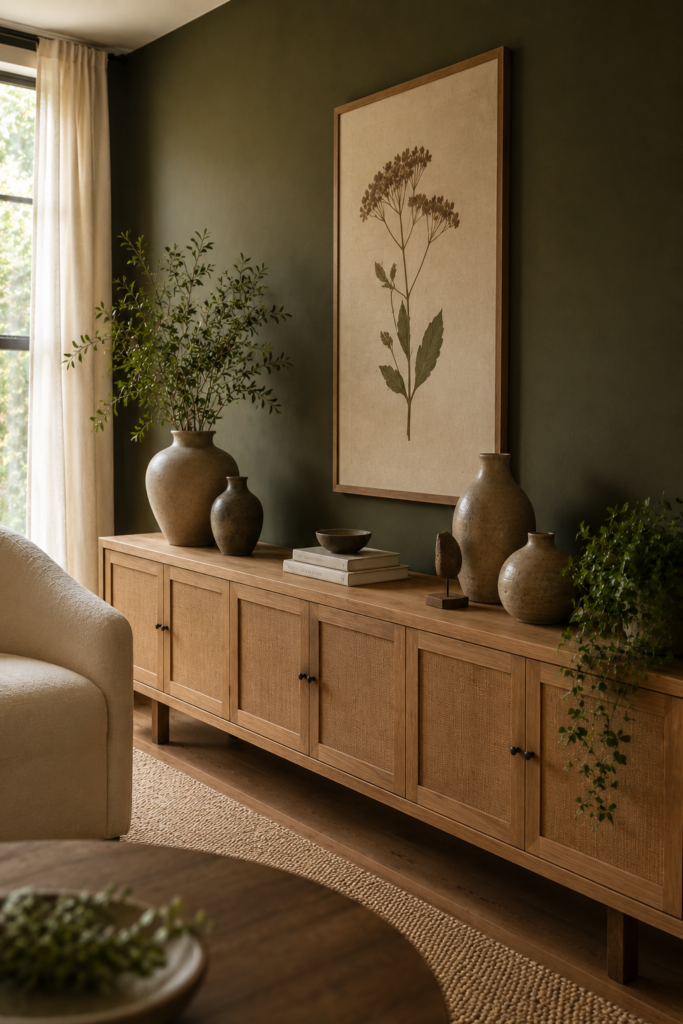
A long floating or low-profile console can turn an accent wall into a complete decorative focal point. Style it with a limited collection of ceramic vases, books, sculptural objects, or a small table lamp. Keeping the console simple allows the wall color and artwork above it to remain the main visual features.
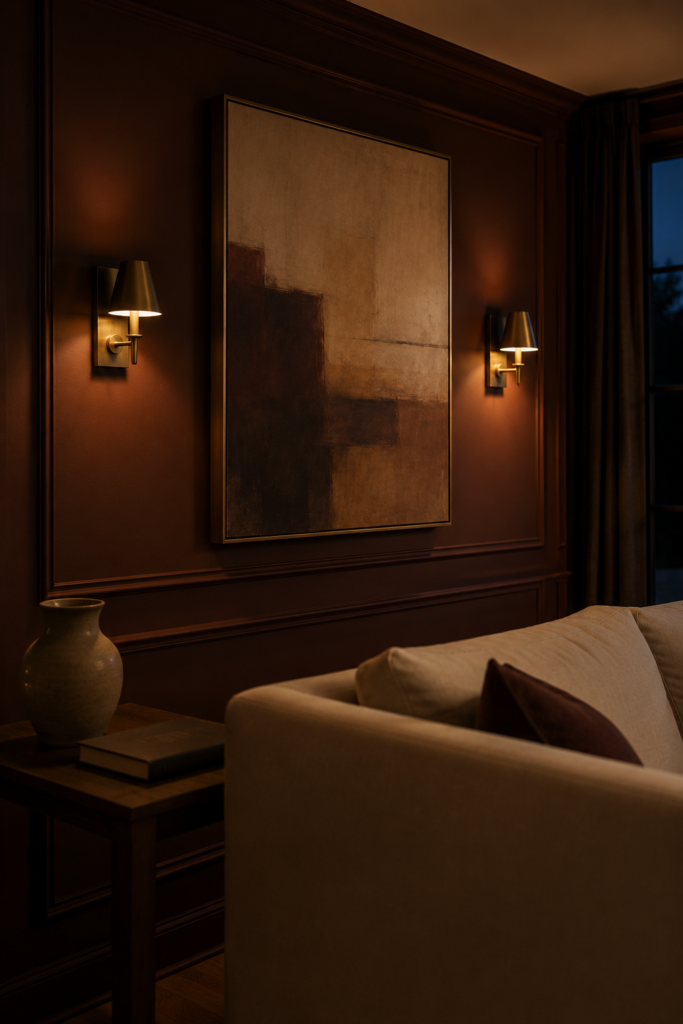
Wall sconces can make an accent wall feel more layered, especially when placed on either side of artwork. Choose simple brass, bronze, or dark metal fixtures that complement the wall color and surrounding furniture. The lighting should feel functional and subtle rather than creating an overly dramatic or theatrical effect.
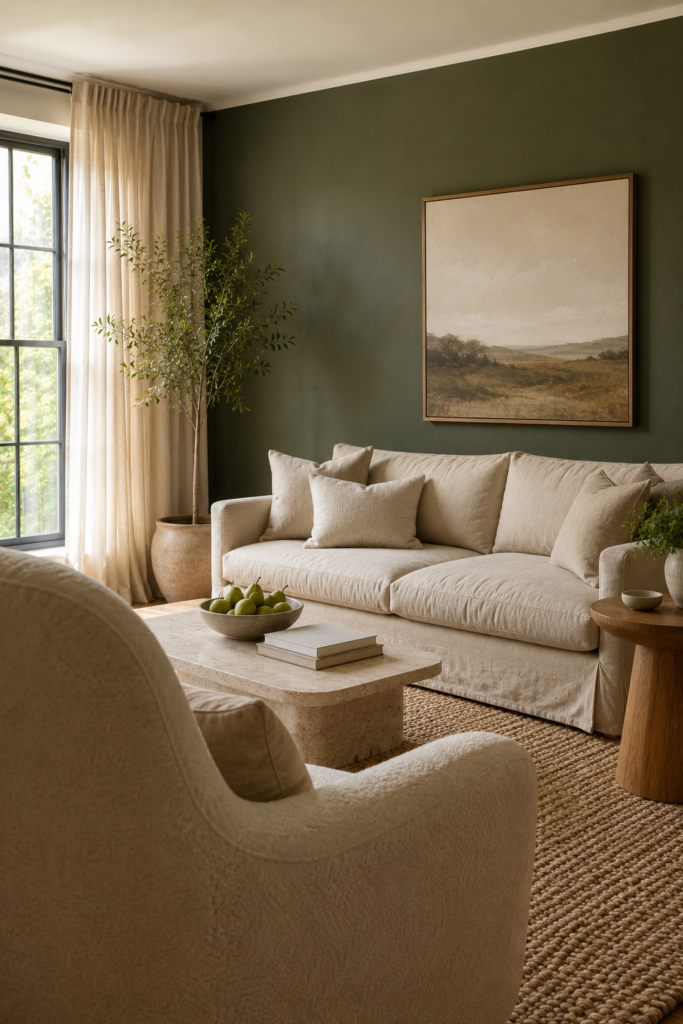
Dark green does not need to make a living room feel dark. Pair it with warm cream upholstery, beige rugs, natural oak, and soft neutral curtains to create contrast and brightness. This combination feels relaxed and timeless while allowing the accent wall to remain the strongest visual element.
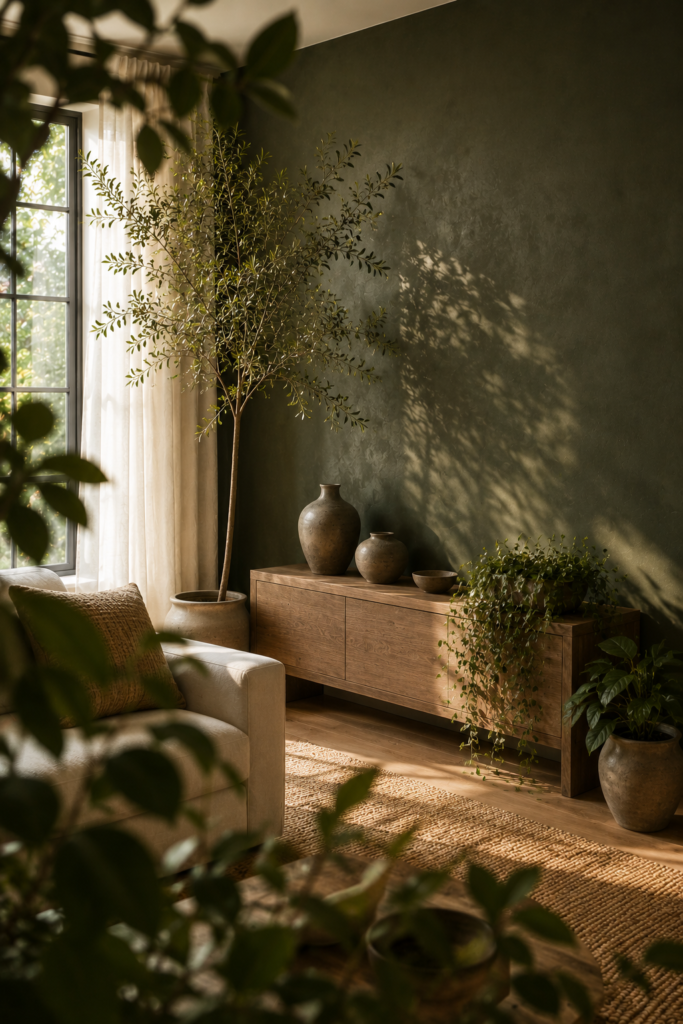
Indoor plants can help an accent wall feel more integrated into the rest of the living room. Place a tall tree near the wall, add a trailing plant to a console, or use a simple branch arrangement in a ceramic vase. Avoid placing plants everywhere—just a few well-positioned pieces can create a more natural connection between the wall and the room.
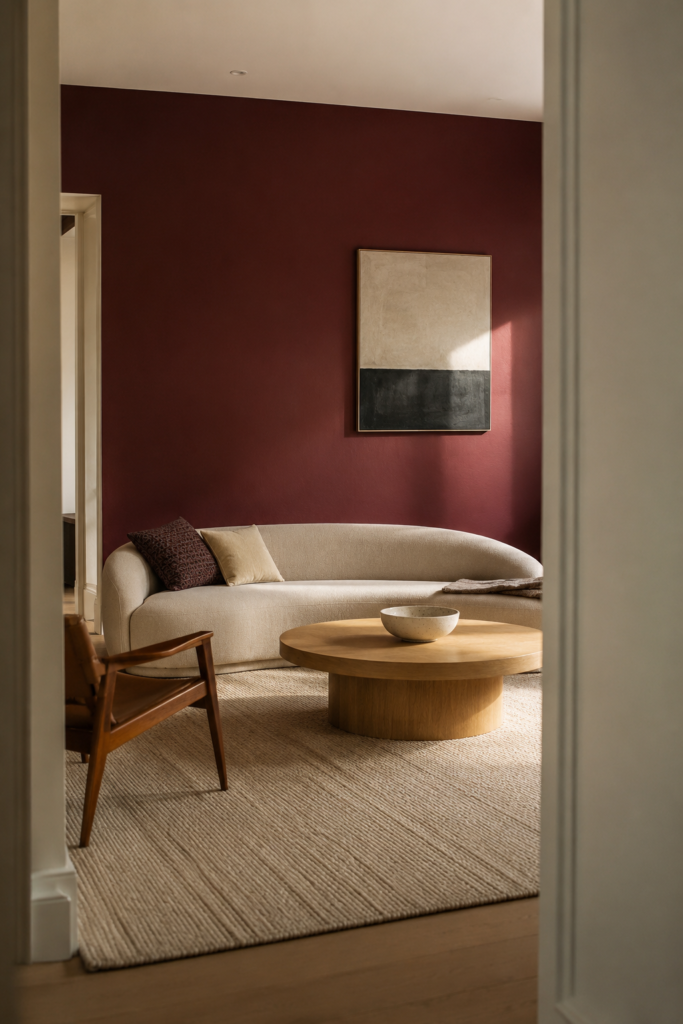
The most successful accent walls usually have one clear focal point instead of too many competing details. Once you choose a strong color, texture, or architectural treatment, keep the surrounding decor relatively restrained. Light furniture, natural materials, simple artwork, and a few carefully chosen accessories can make the wall feel dramatic while keeping the entire living room comfortable and livable.
A beautiful accent wall can add depth, warmth, and personality to a living room without changing the entire space. Whether you prefer a warm maroon wall with soft cream furniture or a deep green wall paired with natural oak and botanical details, the strongest designs balance bold color with lighter textures and simple styling.
Start by choosing a color that suits the atmosphere you want to create, then build around it with furniture, artwork, lighting, and natural materials. A thoughtfully designed accent wall can become the feature that gives the entire living room a more distinctive and memorable look.
12 Stairwell Decor Ideas to Transform an Overlooked Space